Commercial Restaurant Roof Repair and Inspection in Anchorage, AK
Overview
A ceiling spot above a dining room may lead to an unexpected service change before anyone knows where water entered. We inspect the affected zone, roof seams, drains, and equipment curbs, then compare those findings with the reported time and weather. Anchorage’s winter climate normals track recurring snowfall and snow depth, so the route water takes after a thaw matters as much as the visible stain. Downtown Anchorage is the municipality’s highest-intensity City Center, with commercial, office, residential, and public uses. The Midtown planning area spans Midtown and parts of Spenard and North Star, pairing a commercial core with adjoining neighborhoods. Its existing-conditions work documents several business areas and building types, so a restaurant’s receiving approach may differ from a site elsewhere in the district. We confirm site rules directly with the operator. The roof evidence still sets the repair scope.
Related Pages
Which kitchen details need a closer look?
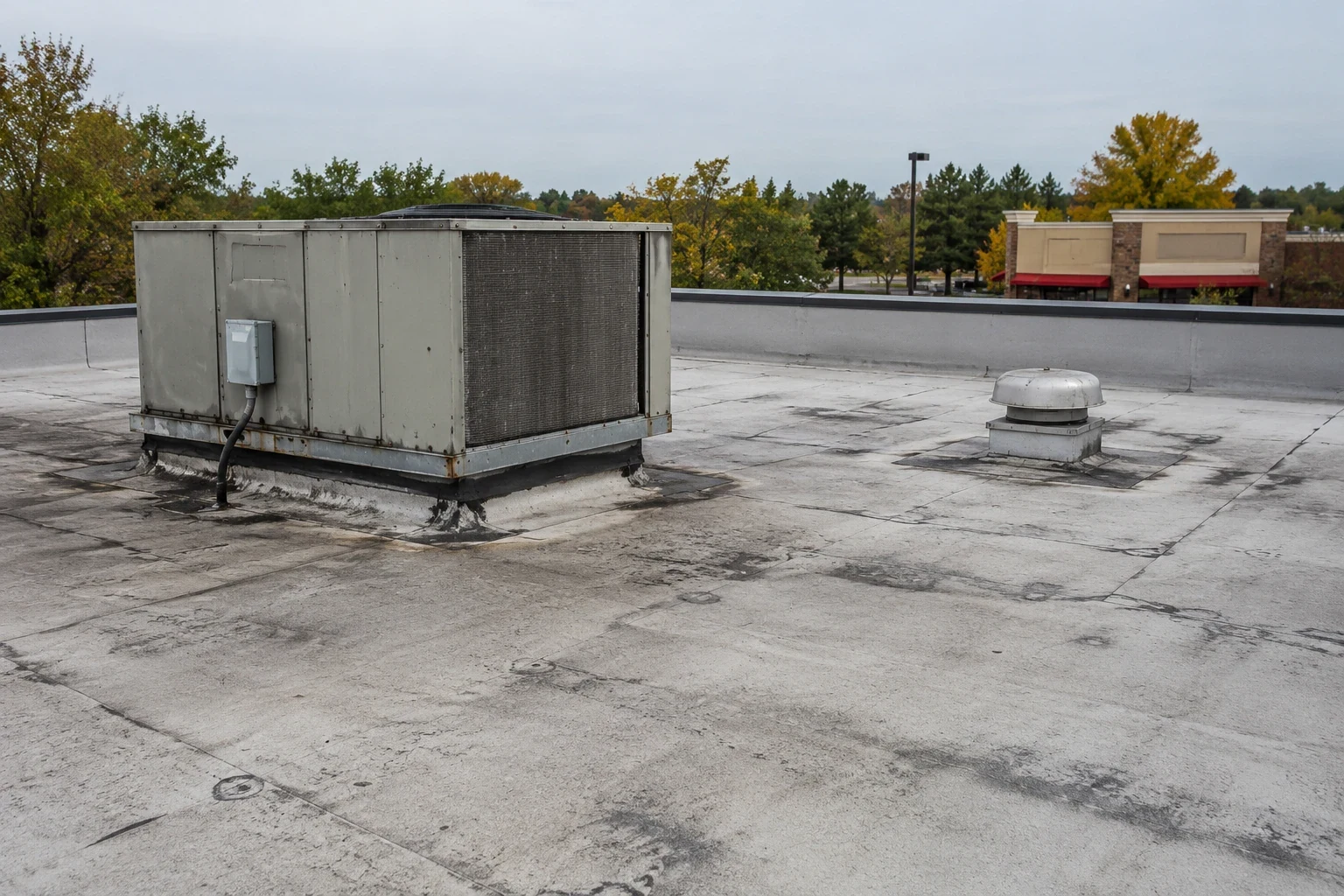
Kitchen exhaust, make-up air, plumbing vents, refrigeration lines, and electrical conduits create roof transitions that deserve separate inspection. We check the flashing base, counterflashing, fasteners, sealant condition, and membrane around each curb. Grease residue outside a hood discharge can show where exhaust travels, but it does not by itself establish a membrane failure. We compare the interior report with the roof detail and record the exact transition that needs attention.
Equipment changes can leave abandoned curbs or a new hood footprint that does not match the old opening. The restaurant’s mechanical contractor should identify which unit will move and when the work is complete. We coordinate roof exposure around that sequence and close each opening before the weather protection is removed. The written scope names the curb, flashing, and tie-in so the operator can connect the roof work to the kitchen shutdown window.
Where can water travel before it reaches a table?
Water can enter near a hood curb, follow a seam, or move through insulation before it appears at a ceiling joint. We map the stain to roof slopes, drain bowls, scuppers, and penetrations above it. A ceiling mark near the kitchen may originate farther uphill, so the inspection follows the drainage path instead of opening the nearest surface by default. If more than one route is plausible, a focused test opening can establish which layer is wet and where the repair boundary should end.
Downtown Anchorage’s land-use plan connects the City Center to surrounding neighborhoods through transit-supportive corridors. For a restaurant, the immediate access plan may need to account for customers, deliveries, and adjacent uses while a lift or work zone is active. We confirm property rules with the manager and place material staging away from the entrance and service route. When inspection shows debris or damage at the outlet, drain work can restore discharge; a slope or membrane defect needs its own scope.
How should roof access fit the service schedule?
Restaurant operations change by shift, delivery day, and meal period. Before roof work, we confirm the access point, alarm or key procedure, ladder or lift location, and the part of the kitchen or dining space below the work. The manager identifies food preparation zones and any interior protection needed. If an opening is required, the work plan states how the roof will be dried in before the crew leaves and who confirms that the room can return to service.
Material delivery and waste removal need a route that does not block receiving or customer access. In Downtown, nearby civic, residential, and employment activity may add constraints, but each property has its own loading and parking rules. We verify those details instead of assuming a uniform schedule. For an active leak, emergency roof repair can limit exposure while the permanent source is traced. The record distinguishes temporary protection from completed repair and lists any follow-up inspection still required.
Kitchen exhaust deserves its own observation because residue, vibration, and regular cleaning can affect the area around a hood. Record the discharge direction, curb condition, nearby membrane, and any service path used by technicians. A fan belt or motor replacement may require the contractor to cross the roof repeatedly. If a grease interceptor or plumbing line is involved, identify which work belongs to that trade and which roof connection needs attention. This keeps the repair from drifting into mechanical or interior work that the roofer has not inspected.
Before a crew arrives, the restaurant contact can mark the entrance, loading point, and portion of the kitchen that cannot be obstructed. If a temporary roof opening is planned, agree how food preparation will pause beneath it and who verifies protection inside. We record those limits in the daily plan and confirm the roof is closed at the end of the shift. The completion note should state whether the affected dining or kitchen area can return to normal use.
When is a repair enough for the roof assembly?
A localized repair can be appropriate when the defect has a clear edge and adjacent membrane, insulation, and deck remain serviceable. We remove or prepare the affected material, restore the compatible detail, and document the tie-in. If moisture extends under the surrounding roof or the deck has changed, the scope should include the confirmed conditions rather than sealing only the visible point. A replacement comparison becomes useful when recurring leaks or multiple wet zones show that isolated work will not address the pattern.
The estimate should separate removal, insulation, flashing, drain correction, equipment coordination, interior protection, and access. A manager can then compare the cost and closure window of each option. For restaurants sharing a larger commercial property, shopping-center roof planning may coordinate common access, while a grocery roof inspection may focus on cold cases and stock areas. This restaurant scope stays tied to its cooking equipment, customer routes, and roof findings.
What should the next service record capture?
Record the date, roof zone, weather, material removed, repair limits, and photographs of the completed transition. Note whether the hood, fan, or refrigeration equipment was moved and which trade restored its connection. A short record should identify any temporary cover, monitoring point, or condition that remains open. These details give the next inspector a starting point when the same ceiling area is reported again and help the restaurant distinguish a recurring roof path from a new equipment issue.
Set a seasonal inspection date that fits the roof’s access rules and the restaurant’s maintenance calendar. After snow cover or a major equipment replacement, check drains, exposed flashing, curb corners, and prior repairs when safe access is available. A preventive roof maintenance visit can record those areas and provide a dated condition log. Share the plan with the manager so roof access, food-area protection, and reopening steps are clear before work starts.
Commercial Roofing Questions
Can a kitchen hood cause a roof leak?
A hood curb or exhaust penetration can be a leak path if flashing, seams, or fasteners fail. We inspect the connection and compare its condition with the interior report before selecting a repair.
Should the restaurant close during roof repairs?
That depends on the roof opening, work area, interior protection, and the operator’s food-safety and access rules. We define the affected space and dry-in sequence with the manager before removing material.
Can roof work wait until after a kitchen equipment change?
When a hood or fan is being replaced, coordinate the roof tie-in with that work. The new curb or opening should be weather-tight before temporary protection is removed, and the closeout should identify who completed each connection.
What belongs in the repair record?
Keep the roof zone, observed failure, material installed, repair photos, equipment changes, and any follow-up item together. That record lets a later inspection compare the same curb or seam and check whether the condition returned.
Plan an inspection around the building
Share the roof plan, leak timeline, prior repairs, access limits, and winter maintenance history. We can use those records to define an inspection scope and identify the next decision for the facility.
Request a roof assessment or call 555-555-5555.