
Commercial Roof Inspection in Anchorage, AK
Overview
A useful inspection ends with a roof-zone map and a decision, not a stack of unlocated photographs. In Anchorage, AK, winter accumulation, thaw cycles, and roof access rules can change what a visual visit can confirm. We inspect the membrane, seams, edges, drains, penetrations, and interior signs of water entry. The findings distinguish observed defects from areas that need testing or a later safe-access visit.
Anchorage’s Downtown City Center, Midtown commercial core, and industrial areas around Ship Creek include different kinds of property and access conditions. We start with the building’s roof plan, leak history, and priorities, then organize observations by zone. A condition report can give a facility director a clear baseline for repairs, maintenance, or capital planning.
Related Pages
What does a hands-on inspection cover?
We walk accessible roof areas and check membrane condition, seams, patches, flashings, curbs, pipes, skylights, expansion joints, edge metal, drains, and scuppers. We note loose terminations, open laps, punctures, surface wear, debris, ponding evidence, and details that need closer examination. The inspection also considers roof type, drainage layout, equipment, prior repairs, and the relationship between reported interior leaks and roof features.
Anchorage climate records track snowfall and snow depth, which makes seasonal accumulation relevant to inspection planning. A snow-covered roof may conceal seams or outlets, and access may be restricted by the facility’s procedures. We record what could be examined and identify any area that needs a later visit. Snow conditions are context for the inspection; they do not prove that a defect exists on a specific building.
Interior review can help focus the roof walk. We compare leak dates, ceiling marks, mechanical spaces, and the roof plan. Water can travel beneath a membrane or across the deck before showing inside. If the likely path is unclear, a leak investigation may include targeted moisture testing rather than a broad, unsupported conclusion.
Which findings require testing?
A visual surface mark can be harmless wear, a prior repair, or evidence of a deeper condition. We explain what the observation supports and what it does not. If insulation may be wet, infrared imaging can help identify areas for test cuts. A test opening confirms the layers, insulation condition, and deck response at that location. We label every test point and photograph the opening before restoring the roof detail.
Not every inspection needs destructive testing. When seams are visible and the roof is accessible, hands-on review may be enough to define a repair. Testing becomes useful when moisture affects a larger zone, a recover is under consideration, or the repair boundary depends on concealed layers. Our infrared survey can help prioritize test locations, while the results guide the next step.
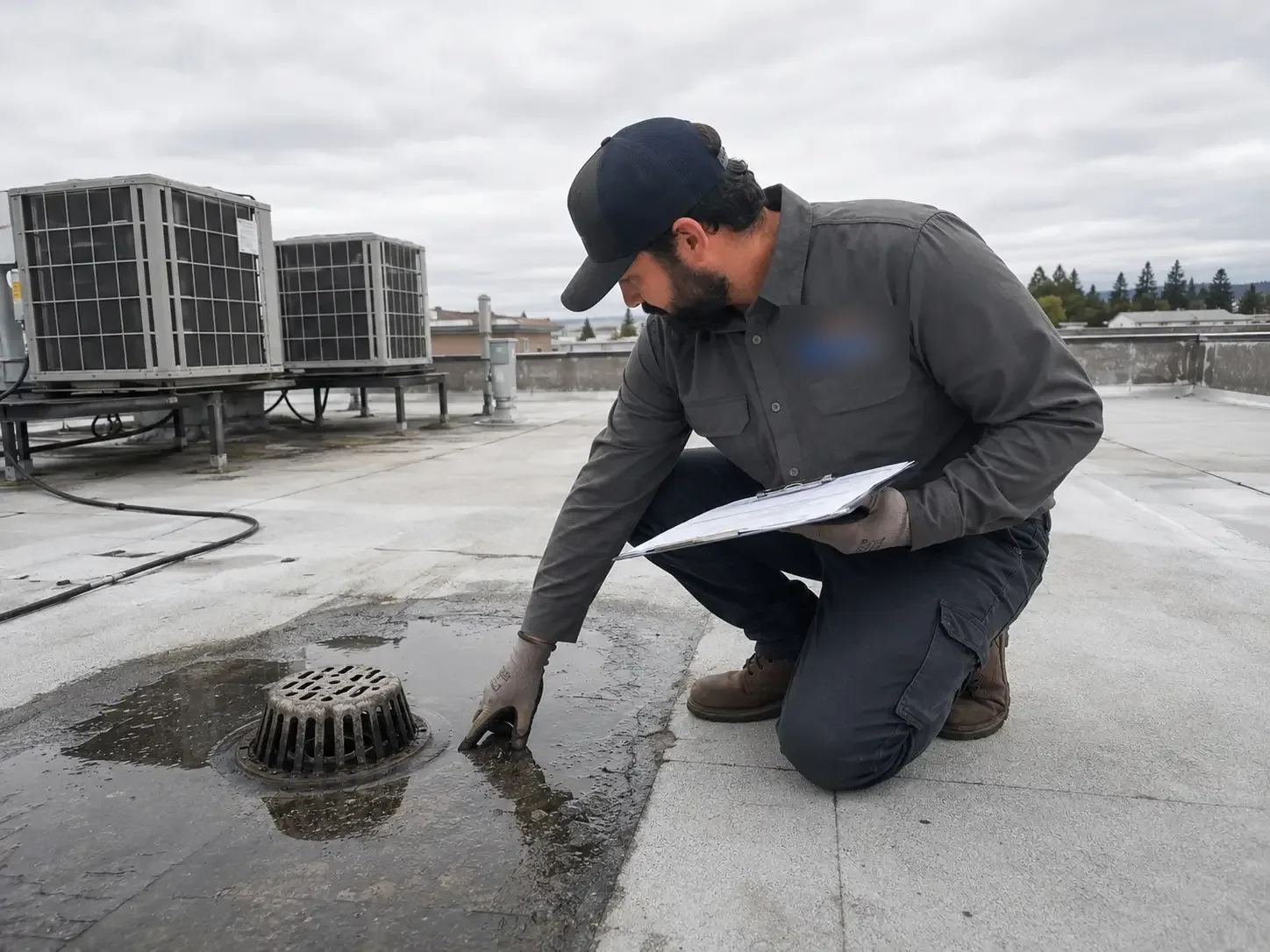
Drainage gets attention before a thaw and after heavy weather. We inspect bowls, sumps, strainers, scuppers, overflow paths, and nearby membrane transitions. A blocked outlet can hold water, but a low area alone does not establish a leak. We check the drain detail, identify visible obstructions, and note whether the roof’s shape directs water where the building design expects.
How does Anchorage context affect inspection planning?
Anchorage’s adopted land-use plan treats Downtown as the municipality’s City Center and connects employment areas with transit-supportive corridors. This can help describe the planning setting, but it does not reveal a particular building’s roof assembly. We confirm the roof plan, access point, and operating schedule with the owner. At a property near Downtown Anchorage, interior access and protected entrances may shape inspection timing.
Government Hill includes residential, commercial, and industrial edges near the Port of Alaska and Joint Base Elmendorf-Richardson. The neighborhood context may matter when coordinating access or delivery, but we do not assume a building’s use or condition from its location. A separate visit to Government Hill begins with the property contact’s access requirements and roof records.
Industrial areas along upper Ship Creek sit near rail yards and port-side activity. If a lift, delivery, or escort is needed, the facility team confirms its own process. The inspection scope records safe access, areas walked, areas deferred, and the reason for any limitation. That lets the owner understand how complete the findings are.
What should the report make clear?
Each finding needs a location, photograph, condition description, and recommended action. We use the roof plan to identify the zone and connect the note to a detail such as a drain, curb, seam, edge, or wall transition. The report distinguishes immediate repair from maintenance and monitoring. If a conclusion relies on testing, we name the test location and result rather than extending it to roof areas that were not sampled.
A condition report can rank work by water entry risk, safety, extent of damage, and the effect of waiting. It should identify the repair material, access constraint, and any trade coordination that changes timing. For a roof with many prior patches, we mark those locations so the facility team can tell whether new leaks are appearing in the same zone. Photographs and written findings can also support a roof asset record across multiple buildings.
After an inspection, the owner should know what to authorize first and what can wait for a planned budget cycle. We explain the basis for each priority and state where additional testing may change the recommendation. A recommendation does not become a repair scope until the owner approves the defined work.
When should the roof be checked again?
Inspection timing depends on the roof’s condition, recent repair activity, seasonal access, and the building’s own maintenance calendar. After a repair or replacement, a follow-up can verify the repaired detail and update the roof record. Seasonal reviews can focus on drainage before a thaw and visible conditions after snow-management work. We do not apply one calendar to every assembly; the owner’s records and observed conditions set the useful interval.
The NWS climate record for Anchorage includes snowfall and snow-depth measures over the 1991 to 2020 normal period. For facility planning, that supports keeping snow and thaw conditions in the inspection history. It does not substitute for a roof walk, load review, or building-specific snow plan. We can review the facility’s snow-management history and note how it affects access, drain visibility, and inspection sequence.
Share the roof plan, leak dates, prior repairs, access rules, and snow-removal history before scheduling. We will agree on the accessible areas, identify any testing needed, and deliver findings that show the roof zone and next action. For routine follow-through, a maintenance program can keep those records current between larger repair decisions.
Commercial Roofing Questions
Which roof conditions will the inspection record?
We review accessible membrane, seams, flashings, drains, edges, curbs, penetrations, rooftop equipment, and related interior leak observations. The report marks the roof zones inspected, photographs findings, and separates repair items from conditions needing more testing.
Can an inspection find moisture below the membrane?
Visual review cannot confirm every concealed condition. Infrared patterns can guide targeted test cuts, and an opening confirms the insulation and deck at that point. We identify the tested boundary so one sample is not presented as a finding for the entire roof.
Can you inspect during snow season?
The answer depends on safe access and what the snow cover allows us to see. We follow the building’s roof rules, document inaccessible zones, and schedule a follow-up when needed. Snowfall and snow depth are part of Anchorage’s climate record, so seasonal timing belongs in the inspection plan.
How does the report help with repair decisions?
A marked plan and photographs connect each recommendation to a location and observed condition. The facility director can see which work addresses active water entry, which item is maintenance, and where testing could change the scope before approving repairs.
Will an inspection include a repair price?
We can prepare a defined repair scope after confirming the condition and access requirements. The inspection report states the observed issue and recommended action; pricing follows the materials, removal limits, testing, and coordination required for that work.
Get a roof record the facility can use
Provide the roof plan, leak history, prior repairs, access restrictions, and snow-management procedures. We will set the inspection area, document findings by roof zone, and explain which next step fits the evidence.
Request a roof assessment or call 555-555-5555.