Infrared Moisture Survey in Anchorage, AK
Overview
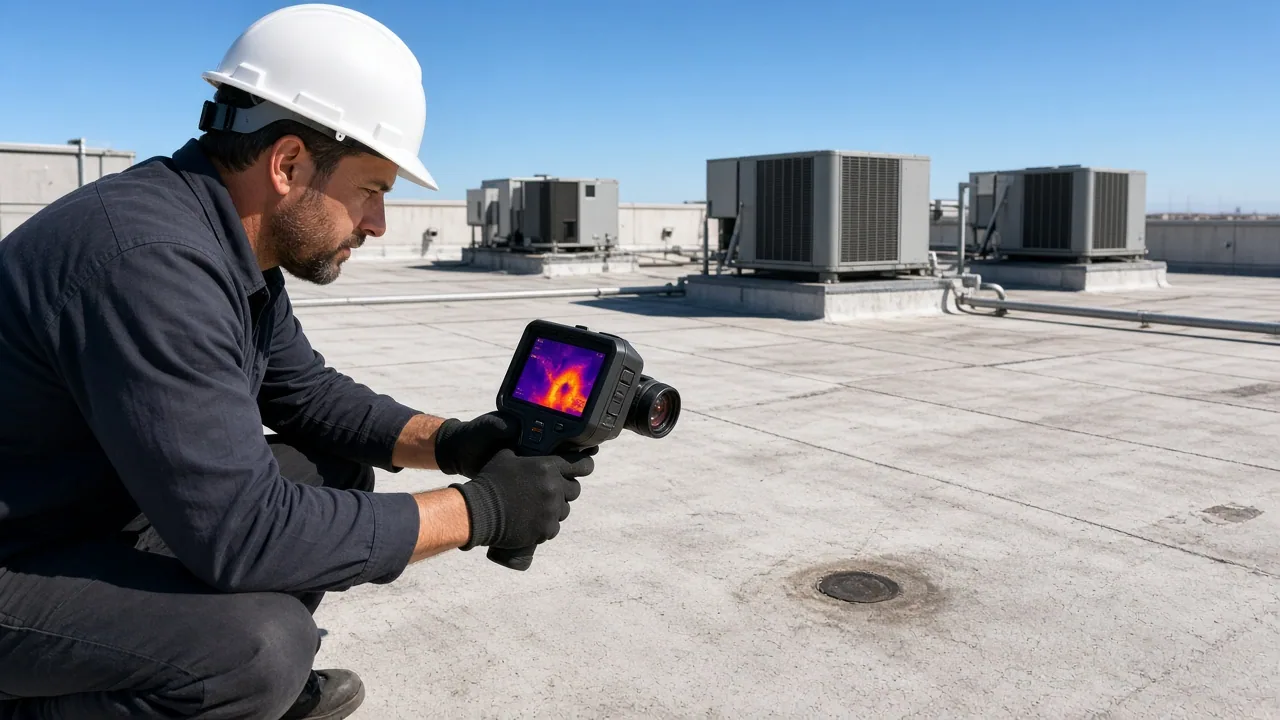
A temperature pattern is a place to investigate, not a moisture conclusion. In Anchorage, AK, snow cover and cold-to-thaw transitions can change roof temperatures across a short period. We plan infrared imaging around the roof assembly, recent weather, and the question the facility team needs answered. Where the pattern could affect a repair or recover decision, targeted test cuts confirm the insulation and deck at selected points.
Downtown office roofs, Midtown commercial properties, and the industrial areas near Ship Creek create different access and operating needs. The survey starts with the roof plan and recent leak history, then marks the image findings by zone. We explain the pattern, test point, and confirmed condition separately so the owner can see how each piece of evidence affects the next step.
Related Pages
What does infrared reveal?
Infrared equipment records surface temperature differences. Moisture can change how an assembly warms or cools, but many other conditions can create a similar pattern. Insulation type, attachment, shade, wind, rooftop equipment, and recent precipitation can affect the image. We note those conditions before interpreting a scan and select representative locations for closer review.
Anchorage’s NWS climate records include recurring snowfall and snow-depth measures. Snow and ice can limit direct visibility or change when a useful scan can be performed. A winter scan may document the accessible surface, while a thaw-period survey may reveal a different thermal pattern. We record capture conditions with the image set so results are not treated as a permanent map of hidden moisture.
The roof plan provides the frame. We divide the surface into zones, locate drains and equipment, mark scan boundaries, and note areas that were inaccessible or visually obstructed. On large roofs, this map helps the facility director compare an image pattern with known repairs, leak reports, or membrane transitions. A hands-on inspection reviews details that an aerial or infrared view cannot physically evaluate.
How are suspected areas confirmed?
We select test points based on the image pattern, leak history, roof construction, and practical access. A core or test cut exposes the layers so we can check insulation condition, deck response, and the relationship between the surface pattern and the assembly below. Each opening is photographed and labeled. The roof is restored with a compatible repair after the sample is taken.
One test point does not define the entire roof. We place samples in a way that compares suspected areas with a nearby control where the scan looks different. If both locations show similar dry layers, the original pattern may have another cause. If one sample is wet, we determine whether the moisture boundary can be followed by additional testing. The results support a repair limit or a recommendation for more investigation.
When a recover is proposed, testing should answer whether existing layers are dry, attached, and suitable to remain. A recover assessment uses that evidence to compare overlay with selective tear-off. If the survey finds wet insulation, we identify the material to remove and show what remains untested rather than extending one result across a large roof.
When should the survey take place?
Timing depends on temperature history, precipitation, snow cover, sun exposure, and the roof’s daily operating conditions. The survey window should create a meaningful thermal contrast without confusing temporary surface effects with a concealed assembly condition. We review recent weather and roof access before scheduling. If conditions change sharply, we may recommend rescheduling or documenting the limits instead of forcing a weak scan.
For a roof near Downtown Anchorage, roof access may need coordination with building security or occupied spaces. A site in Midtown may have another access plan. The survey scope records who provides entry, which zones are included, and whether any equipment or roof areas remain off limits.
Snowfall and snow-depth normals provide local context for the seasonal schedule, but they do not tell us whether a particular assembly is wet. The scan conditions and test results are building-specific. We keep those distinctions in the report so a facility team can use the survey without confusing climate context with proof of a leak.
How do results change the repair scope?
A confirmed wet area may require removal of membrane and insulation to reach dry material. The repair plan should show the tested boundary, removal limit, deck condition, and rebuilt assembly. If several test points are dry, the owner may avoid unnecessary tear-off and direct funds toward a separate defect. If results are mixed, we explain what additional test would resolve the question.
Moisture findings matter differently across a property. A wet zone near a drain can point to a local flashing or drainage issue; a broad pattern across an assembly may change the choice between repair, restoration, or replacement. We connect the results with seams, terminations, and water routes rather than treating all colored areas alike. A condition report can record the test map, photos, and repair priorities for future comparison.
For the facility team, the key output is a location and scope it can act on. We state which insulation is confirmed wet, which areas were sampled, where the scan pattern remains uncertain, and how the repair would proceed. The report can also be added to a roof asset record so later inspections can compare the same zones and test points.
What records come with the survey?
The deliverable includes the roof-zone plan, scan date and conditions, infrared images, selected test locations, photographs of each opening, and the observed layer condition. We identify the method used to interpret patterns and note obstructions, snow cover, or access limits. Test results are labeled at the sample point, not generalized to untested areas.
We also describe the next action for each zone: monitor, repair a visible detail, remove wet material, or gather more evidence. If a repair is authorized, a repair scope identifies the tie-in detail and materials. The owner can then compare the work with the roof map and track the area after the next seasonal inspection.
Send the roof plan, leak timeline, roof-system history, prior repairs, and access constraints. We will determine whether the conditions support an infrared survey, capture the selected areas, and verify patterns where needed. Anchorage’s climate record makes seasonal context useful, while the test locations tell the owner what is actually present in the assembly.
Commercial Roofing Questions
Does infrared confirm that insulation is wet?
No, temperature patterns identify areas that may deserve testing. A test cut or core exposes the layers and confirms the condition at that location. We label the sample points and do not treat one result as proof for untested roof areas.
What weather is best for an infrared survey?
Useful readings require enough thermal contrast. Recent precipitation, wind, shade, and snow cover affect interpretation. Before the scan, we confirm roof access, surface conditions, and the leak history, then label each image to its mapped roof zone. If the window is unsuitable, we will explain what the scan could and could not show.
How many test cuts will you make?
Roof size, assembly changes, scan patterns, and the owner’s decision determine the number of test cuts. We compare suspected locations with representative areas and add tests when the moisture boundary remains unclear. Every opening is documented and repaired after sampling.
Can this survey decide whether a roof can be recovered?
It supplies important evidence about moisture, while attachment, existing layers, deck condition, and compatible details also shape a recover decision. We combine test results with a roof inspection and identify what the assembly can support.
Will the report show which areas need removal?
The report maps confirmed test results and recommends a removal boundary where wet material is found. If the evidence does not establish the full extent, we mark the open question and explain what additional test would settle it before finalizing the repair scope.
Turn a scan pattern into a roof decision
Share the roof plan, leak history, known assembly, and access rules. We will set the survey conditions, map suspected areas, and confirm the findings with targeted testing where the result affects repair or recover scope.
Request a roof assessment or call 555-555-5555.