Emergency Commercial Roof Repair in Anchorage, AK
Overview
An active leak calls for quick protection and a clear route to permanent repair. Our emergency response is available at any hour, including weekends and holidays. In Anchorage, AK, snow, ice, and temperature can affect access as much as the leak itself. We confirm the building’s roof rules, identify the active area, and choose a safe way to protect the interior while permanent work is scoped.
We start with the reported time and location, interior impact, roof plan, and any access limits. The temporary repair should control water while preserving enough evidence to locate the source. A follow-up commercial roof inspection can document the full assembly after the immediate threat is managed.
Related Pages
What needs protection first?
We ask where water is entering, when it began, whether the leak is active, and what sits below the affected area. The facility contact can identify electrical equipment, stored materials, occupied rooms, and areas that must remain open. Inside, we may need a safe route to inspect the ceiling or protect contents. Outside, we confirm roof access, snow conditions, edge protection, and a weather window before moving tools.
Snowfall and snow-depth are recurring measures in Anchorage climate records. That makes a roof covered by snow a specific access concern, not a reason to assume either a failure or a safe load condition. We follow the building’s snow-management procedure and do not send people onto a surface that cannot be reached safely. If access is limited, we explain what can be protected from inside and what roof investigation remains outstanding.
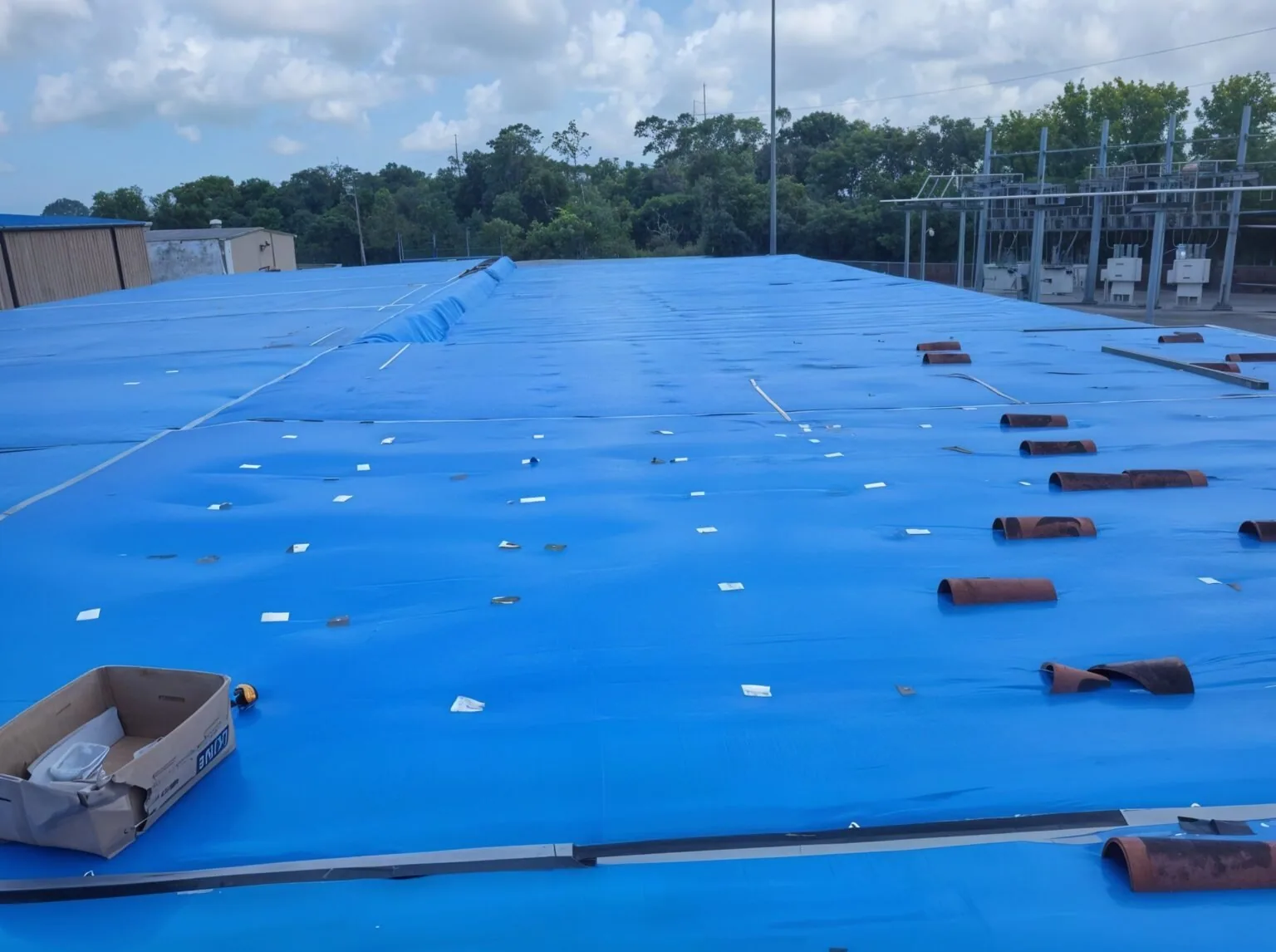
The immediate goal is to stop active water from reaching sensitive spaces. We may use temporary membrane, a secured cover, or another compatible dry-in based on the surface and conditions. The work note identifies the area protected, how it was secured, and the next inspection step. Temporary material is not described as the final repair unless the roof detail has been properly diagnosed and restored.
What can the first visit confirm?
We inspect the likely entry area and nearby details, including seams, drains, curbs, wall transitions, skylights, and penetrations. We compare those conditions with the interior report and mark the route water may have taken. A ceiling stain can sit away from the roof opening, so the visible indoor location does not set the repair limit. We photograph the condition before temporary protection covers it.
Some emergencies begin with an obvious opening. Others appear after thaw, wind, or a blocked outlet. We identify visible defects and separate them from conditions that require testing. Infrared imaging may help locate a pattern for a test cut, but it does not confirm moisture by itself. A moisture survey can add useful data when water appears across several zones or the insulation boundary is unclear.
In the Ship Creek industrial district, the Port of Alaska and nearby freight connections make access coordination a practical question for some properties. A building’s loading hours, yard restrictions, and lift locations still need to be confirmed by its own contact. We schedule the response around those conditions rather than assuming a facility’s operations from its location.
How do you keep a dry-in reliable?
Temporary protection must be secure against the conditions expected before permanent repairs can proceed. We choose an attachment method that fits the roof surface, avoid trapping water, and direct runoff away from the opening. The protected boundary should be visible in photographs and marked in the roof plan. If snow or ice limits access, the report identifies the area we could not inspect and the safe condition needed for follow-up.
We also consider how the emergency affects the building below. A cover can change where water sheds, so we look for a safe discharge path. If an interior collection point is needed while the roof is being protected, the facility team needs to know who will monitor it and when. We explain the limits of temporary protection and keep the permanent repair separate from emergency labor.
Once the surface can be inspected, we examine the layers and repair material around the opening. A compatible patch may be enough for a localized puncture; wet insulation or damaged deck can require removal and rebuilding. Our planned repair service sets that boundary and records the materials needed to restore the assembly.
How does the response fit the building?
Emergency work can involve an occupied office, a public building, a warehouse, or a roof with active mechanical equipment. We confirm who can authorize access, which areas must stay open, and whether a trade needs to isolate equipment before flashing is opened. Clear contact information matters when weather changes or a temporary cover needs review. The work plan records the site contact and the area protected.
Anchorage’s land-use plan preserves industrial areas for production, repair, wholesale, warehousing, and freight-related uses. That mix does not tell us which operation is at a particular property, but it is a reminder to verify loading and access directly. If a building is near Midtown or Downtown Anchorage, we still confirm its own entrances, roof access, and work-hour restrictions before placing equipment or barriers.
We keep the roof opening small enough to close securely at the end of the visit. If the repair must pause, we document the covered edge and assign the next action. That record prevents a temporary measure from being mistaken for a completed permanent fix.
What should happen after the emergency?
The next visit should answer what failed and what remains vulnerable. We inspect the area after temporary protection is removed, check surrounding seams and transitions, and test concealed layers when needed. If insulation is wet, we mark the extent and plan removal to a sound boundary. If the defect is confined to one detail, we document why the repair can remain local.
The owner receives photos, the roof-zone location, the temporary work record, test results, and a permanent scope. That record can support an insurance discussion, maintenance planning, or a decision to compare repair with larger restoration. A claim documentation service can organize event-related observations without substituting for the carrier’s coverage decision.
Anchorage connects air, rail, marine, and road freight through the airport, Alaska Railroad, Port of Alaska, and highway system. A supplier or lift schedule may therefore need additional coordination, but the actual delivery window depends on the property and selected materials. Share the roof plan, leak timeline, repair history, access rules, and snow-removal procedures when requesting service. We will protect the active area, explain what the first visit confirms, and schedule the permanent repair path.
Commercial Roofing Questions
Can your crew respond outside normal business hours?
Yes. Our emergency crews answer calls through nights, weekends, and holidays. The first call helps us understand the active leak, interior exposure, roof access, and building contact so we can plan the safest available response.
Can you work on a snow-covered roof?
Only when the access and surface conditions support safe work. Snow can hide drains and seams, while ice can change footing and runoff. We follow the site’s roof-access and snow-management rules, then explain what requires a follow-up once the surface is accessible.
Is a tarp or dry-in the permanent repair?
Usually it is temporary protection while the entry point and assembly are evaluated. We document the covered area, attachment, and limits, then inspect the roof again before specifying a permanent repair. The final scope may include membrane, flashing, insulation, or deck work.
What can the facility team do before our roof crew arrives?
Protect contents where safe, move people away from an affected area, and report the leak location and timing to the facility contact. Do not send staff onto a roof without the site’s approved access procedure. Photos from a safe interior position can help us plan the response.
Will an emergency visit identify every roof problem?
The first visit focuses on active water entry and immediate protection. Snow cover, limited access, or concealed layers may leave questions for follow-up testing. We state what was inspected, what remains unknown, and what evidence is needed to complete the permanent repair scope.
Get the active area protected
Call with the leak location, timing, interior exposure, access contact, roof plan, and snow-management requirements. We will coordinate the immediate response, document temporary protection, and set the permanent repair follow-up.
Request a roof assessment or call 555-555-5555.