KEE Commercial Roofing in Anchorage, AK
Overview
A membrane exposed to exhaust, oils, or frequent service traffic needs a specification tied to the actual roof conditions. KEE roofing is a PVC-alloy system that may be considered where flexibility and chemical exposure matter. In Anchorage, AK, seams and flashing also face snow cover, freezing temperatures, and meltwater paths. We inspect the existing assembly and exposure before deciding whether KEE fits, whether the present membrane can be repaired, or whether another system better suits the building.
The Spenard plan guides commercial reuse, while Government Hill planning identifies upper Ship Creek as a principal industrial area. Roofs in those settings can serve changing uses, but the roof type is not assumed from the land use. We start with the roof plan, repair history, and field condition. A commercial roof inspection identifies the details that shape a KEE scope.
Related Pages
Where does KEE fit among PVC membranes?
KEE means ketone ethylene ester. KEE roofing products are PVC-based membranes formulated with KEE resin. The specified sheet, attachment, flashing package, and accessories determine the assembly. A product name alone does not confirm suitability for a particular chemical or exhaust pattern.
We ask what contacts the roof, where it travels, and how often maintenance crews cross the zone. Restaurant exhaust can deposit grease around a fan curb, while service traffic can wear seams. The owner’s maintenance records and equipment layout help distinguish a material-selection issue from a curb, seam, or drainage defect.
Compared with PVC roofing, a KEE product may have different properties by formulation. TPO roofing uses another thermoplastic formulation and seam system. We compare product requirements with project specifications. Chemistry, sheet thickness, reinforcement, attachment, and warranty conditions must match the intended use.
Which exposure belongs in the roof specification?
Start with the source, not the discoloration. We inspect exhaust discharge, nearby equipment, cleaning products, stored materials, and the route service personnel use. A surface stain can have several causes, including dirt, weathering, foot traffic, or a chemical contact. We compare the affected membrane with a cleaner area, look for changes in texture or seams, and ask whether the exposure is still active.
If grease reaches a drain, the issue includes both the membrane and the path the residue takes. A coating or patch over the area may not address continuing discharge. The facility team can identify cleaning frequency, fan operation, and any planned equipment change. We then match those conditions against the selected product’s technical data and the project requirements. Where testing is needed, the result should answer a specific compatibility or condition question.
For a roof with several equipment curbs, the flashing detail can be more vulnerable than the field sheet. We check corners, vertical membrane, termination, and the curb cap. A curb and support repair may restore a failed transition when the field membrane remains serviceable. The scope should also note whether the equipment trade needs to move, clean, or modify an exhaust component.
How are KEE seams and patches joined?
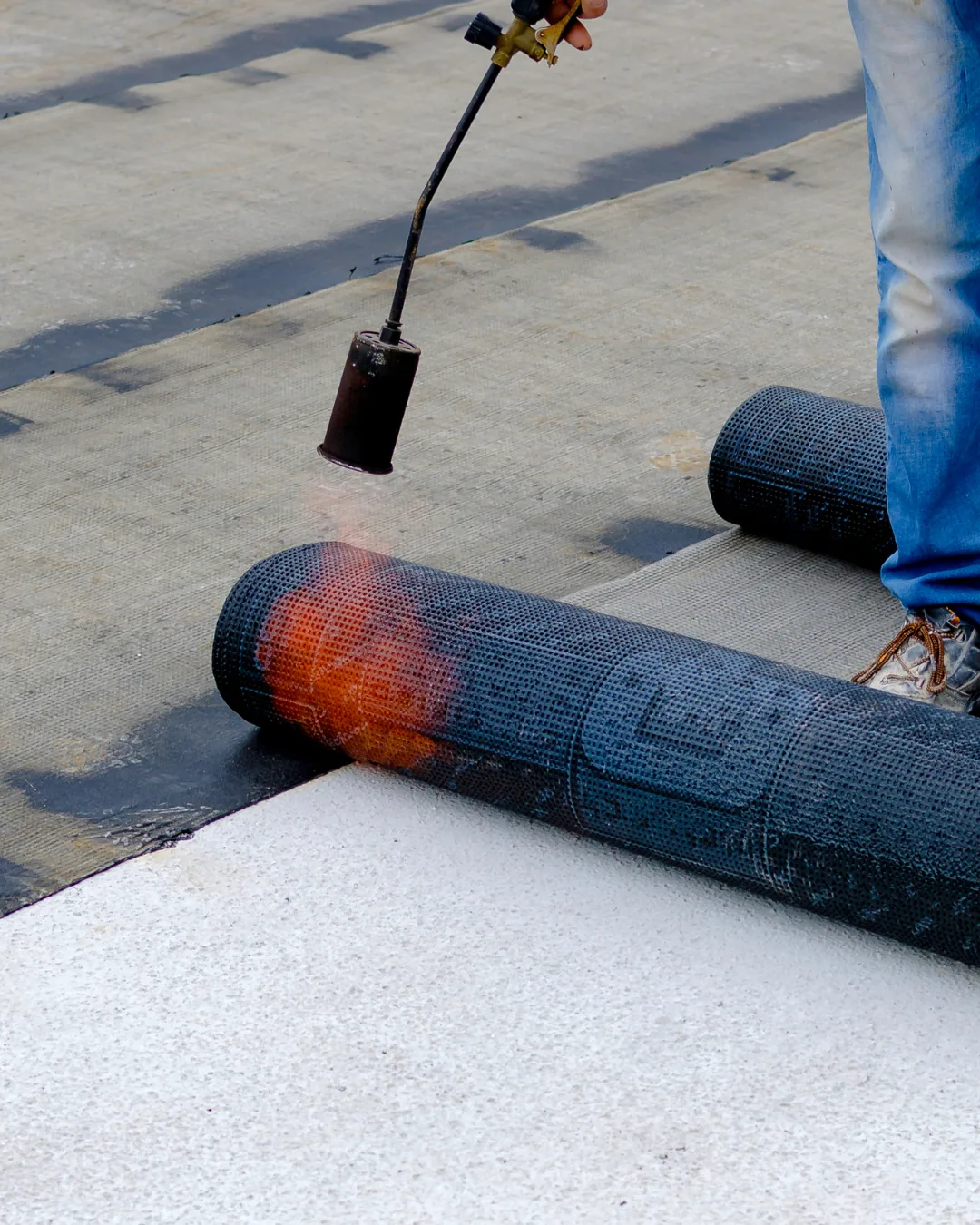
KEE roofing uses thermoplastic seam methods specified for the membrane. Field seams are commonly hot-air welded, and the surface must be clean, dry, and within the product’s installation conditions. A probe can locate an incompletely fused edge after it cools. The installer adjusts heat and travel speed to the material and weather, then checks corners, T-joints, and patches rather than relying on a quick visual pass.
A repair begins with removal of failed material to a clean, sound edge. The new piece must be compatible with the existing KEE sheet and sized with adequate overlap. Rounded corners help prevent a sharp patch point from lifting. If a coating, sealant, or unrecognized patch covers the area, we identify what is present before preparing a new weld. Adding material on top of an unstable layer only moves the failure line.
Anchorage winter conditions make surface preparation and safe access part of the repair plan. Snow can obscure a seam, while frost or moisture prevents proper preparation. We schedule permanent welding when roof and material conditions meet requirements, then protect the area until the detail is complete. A commercial repair should leave a boundary the facility team can find during maintenance.
What can snowmelt reveal around a KEE roof?
Anchorage’s long-term winter record tracks snow accumulation and snow depth, useful context when checking a KEE roof after a thaw. The Merrill Field normal table also reports recurring snowfall and subfreezing winter monthly means. For a KEE roof, those records point to practical inspection questions: can snow hide the lap, does thaw water reach the drain, and is a low transition holding moisture? We use the roof’s current condition and safe access to answer those questions.
After a thaw, we inspect the drain bowl, scupper, seam intersections, and low points where water may remain. If an interior report names a room or roof zone, we compare it with the likely water path rather than placing a patch directly above the stain. When wet insulation is suspected, targeted cuts can show whether moisture is confined or broader. A moisture survey may help direct testing when roof coverage or snow limits a visual review.
The Spenard Corridor includes adaptive reuse and commercial development under its adopted plan. A change in building use can alter equipment, access routes, and maintenance needs, even when the roof assembly remains. We review the current rooftop layout and planned service traffic before recommending KEE or another membrane. The project must address the building as it operates now.
Can a repair preserve the existing KEE roof?
A repair is a good candidate when the damage is localized, the KEE surface remains weldable, and the surrounding insulation and deck are sound. We inspect seams, penetrations, flashings, membrane attachment, and the water route. If the defect follows a single curb or puncture, a compatible detail may restore that zone. If several seams have opened or chemical exposure has changed the field membrane, repeated patches may not solve the underlying issue.
Replacement requires a closer look at the layers below the sheet. We record the deck, insulation, cover board, attachment, drains, and edge securement. Removal may expose wet material or deck repairs that were not visible from above. The scope should identify what is known, what needs testing, and how concealed conditions will be approved before expanding work.
A new KEE assembly needs details at walls, parapets, drains, curbs, and equipment supports. The same care applies to walk paths and roof access points where service traffic can wear the surface. A written roof condition report can connect photos to roof zones, while seasonal maintenance checks seams and drainage after installation.
Commercial Roofing Questions
Is KEE roofing the same material as standard PVC?
KEE products are generally PVC-based formulations that incorporate ketone ethylene ester. The specific membrane’s composition and performance depend on its product data. We compare that data with the expected exposure and project requirements instead of treating the name as proof of compatibility.
Will KEE roofing handle grease from a commercial kitchen?
The product and exposure must be checked together. We inspect where exhaust lands, how often the roof is cleaned, and whether grease continues to reach the membrane. The specification should identify the expected contact and any maintenance needed to protect the roof detail.
Can a KEE seam be welded in winter?
The membrane, surface, and air conditions must meet the product’s installation requirements. Snow, frost, moisture, and low temperatures can prevent a sound weld. We arrange a safe inspection and use temporary protection until a permanent seam can be prepared correctly.
When should a KEE roof be replaced instead of patched?
Replacement deserves review when deterioration spans multiple areas, seams repeatedly separate, moisture affects insulation, or exposure continues to damage the field. We map the condition and compare the repair boundary with full removal or recover options. The recommendation follows the assembly evidence and owner’s operating constraints.
What maintenance helps a KEE roof last?
Keep drains clear, inspect seams and curb corners, and protect the membrane where technicians travel. Record chemical or exhaust exposure and note where residue collects. Those details make the next seasonal visit more useful and help the owner address a source before it affects a larger roof area.
Match KEE to the roof exposure
Send the roof plan, membrane information, equipment locations, leak dates, and cleaning or process schedule. We will inspect the seam and exposure areas, compare the assembly with the project requirements, and outline repair or replacement options.
Request a roof assessment or call 555-555-5555.