Commercial Roof Repair in Anchorage, AK
Overview
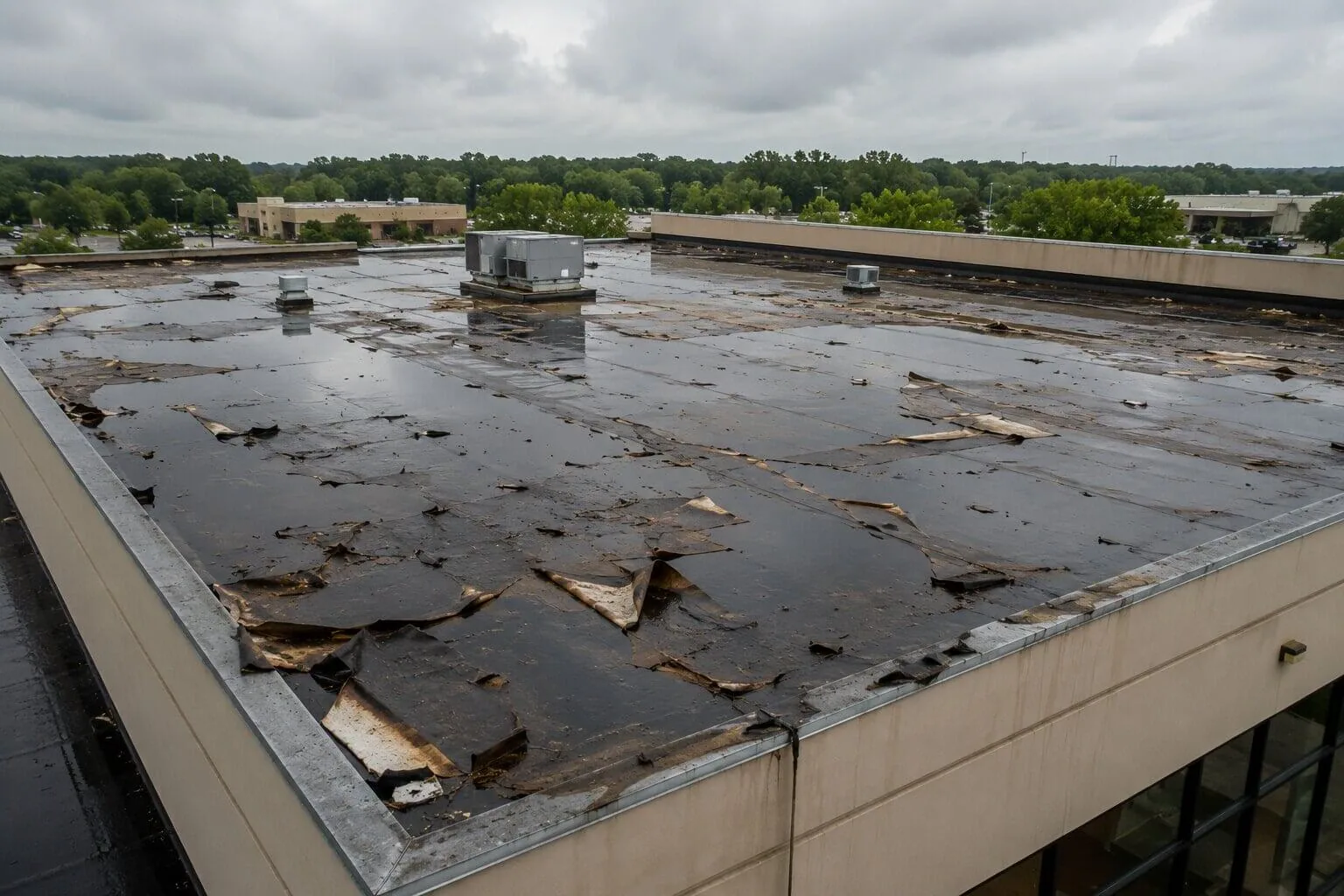
A repair boundary should follow the damaged roof assembly, not the ceiling mark below it. In Anchorage, AK, meltwater can move across a membrane, enter at a curb or seam, and travel before it reaches the interior. We inspect the surface, transitions, and nearby drainage before choosing a repair. The record shows where the water path begins, what material is affected, and which surrounding areas remain sound.
Commercial roofs across Downtown Anchorage, Midtown, and the Ship Creek industrial district serve different building uses, but each repair starts with the same evidence: roof construction, access, weather exposure, and the reported leak timeline. We map that evidence, then explain the repair options in plain terms. When a leak is still active, our leak tracing and repair work focuses on finding the entry path before closing the assembly.
Related Pages
Where does the repair boundary belong?
We follow seams, field membrane, wall terminations, drains, scuppers, curbs, skylights, and penetrations around the reported area. A split at a corner may be isolated. A wet insulation pocket can extend past the visible opening. We compare the surface condition with interior observations and repair records, then mark the inspection points on a roof plan. If the assembly is concealed, infrared patterns can help choose locations for test cuts, but a temperature image alone does not confirm wet insulation.
Anchorage climate normals track snowfall and snow depth along with temperature and precipitation. That makes the drainage route important when a thaw begins, but snow cover does not prove that a particular roof has a defect. We look for blocked drain bowls, ice at an outlet, displaced flashing, open laps, and signs that water has remained around a low point. We separate observed conditions from questions that need testing before setting the repair limit.
At a building near Downtown Anchorage, interior access may be needed to compare a ceiling mark with roof features above it. In a property closer to Ship Creek, the work area and equipment movement may affect how the inspection is staged. We confirm building-specific access with the facility contact instead of inferring conditions from the district.
Which materials can be repaired in place?
A sound membrane around a small puncture or open lap may accept a compatible patch after the area is cleaned and prepared. The repair material must suit the existing membrane, surface condition, and detail. A TPO roof needs welded seams and patches made with compatible components; a different membrane may use a different preparation and attachment method. We identify the system before specifying materials. Mixing incompatible products can create a new failure line rather than close the old one.
Metal edges and wall terminations need their own review. If coping has loosened, fasteners may have pulled, joints may have opened, or water may be bypassing the membrane at a transition. A surface bead of sealant does not correct a failed attachment or missing termination. We inspect the detail, check how it sheds water, and repair the underlying connection where the evidence supports it. Our edge and coping repair scope addresses those perimeter details directly.
When moisture extends into insulation or the deck, the repair may require opening a larger area. We remove unsound material to a firm boundary, inspect the substrate, and restore the assembly in the proper sequence. The owner receives the proposed removal limit and the condition that would trigger an added scope. That keeps a concealed deck issue from being silently covered by a surface patch.
How does winter access change the work?
Snow, ice, temperature, and wind affect access, inspection visibility, and the products that can be installed. We schedule roof work only when the area can be reached safely and the repair can be prepared and secured within the system’s installation requirements. A roof covered by snow may hide seams and drains. The building’s snow-management plan, roof-access rules, and qualified personnel determine whether clearing or a later inspection is appropriate.
A thaw can expose a drainage issue or send meltwater toward a weak termination. Before repairs begin, we identify the water route, check that the outlet remains open, and decide whether temporary protection is needed while a permanent repair is scheduled. If active water is entering, an emergency dry-in can limit exposure while the roof remains under evaluation. The temporary measure is recorded separately from the permanent scope so the owner knows what still needs inspection.
The Port of Alaska and Alaska Railroad connect Anchorage to freight movement across multiple transportation modes. A property’s own delivery schedule, loading area, and equipment access still need confirmation before materials or lifts are scheduled. We coordinate the work zone with the building contact, protect the roof at each shift change, and document the areas completed. We record completed areas when weather interrupts the sequence.
What should the repair record include?
A useful repair record names the roof zone, membrane or metal assembly, observed defect, test locations, removal limit, and material used. Photographs should show the condition before work, the prepared surface, concealed layers if opened, and the completed detail. We also note any nearby condition that was inspected but not included. That distinction keeps a future leak report from being mistaken for a repair failure when it originates in another roof area.
For a facility director, a marked plan is more useful than an isolated invoice description. It can show whether a patch sits near a drain, mechanical curb, expansion joint, or roof edge. If multiple repairs have accumulated, we compare their locations and dates to see whether they cluster around one assembly or represent separate issues. A condition report can organize those findings across roof zones and identify what warrants further testing.
When is a repair no longer enough?
One patch does not answer whether the surrounding assembly remains reliable. We compare repair frequency, moisture, seams, insulation, and deck response. If problems remain isolated and the layers around them are dry and stable, a targeted repair can be practical. If defects recur across multiple zones or moisture has spread beneath the membrane, we show the owner how a larger restoration or replacement scope differs.
For recurring damage or a leak outside the original repair zone, a hands-on inspection can establish a broader baseline before the next budget decision.
After a completed repair, scheduled checks can catch lifted edges, debris at outlets, or new damage before a leak reaches the interior. A maintenance visit records those conditions and keeps prior repair locations visible to the facility team. Send the roof plan, leak dates, prior repair notes, access rules, and snow-removal history. We will inspect the affected zone, define the work, and explain what evidence would change the recommendation.
Commercial Roofing Questions
When is a local repair enough for a leaking roof section?
Yes, when the failure is limited and the surrounding membrane, insulation, and deck remain sound. We inspect nearby details and state whether the patch can tie into stable material. If moisture or repeat failures extend beyond that boundary, we show the additional scope.
How can water move away from its entry point before appearing inside?
Water can travel along the membrane, insulation, deck, or framing before it reaches a ceiling. We compare the interior mark with drains, curbs, seams, and wall transitions above it. Photos and test locations help identify the entry path and keep the repair from stopping at the wrong point.
Can you repair a commercial roof during winter?
The roof must be accessible and the surface conditions must allow proper preparation and installation. Snow and ice can hide defects or make access unsafe, so we follow the building’s roof-access plan and the material requirements. If a permanent repair cannot be completed, we can assess temporary protection and document the remaining work.
What information helps you price a repair?
Provide the roof plan, leak dates, prior repairs, known membrane type, interior access limits, and snow-removal procedures. We inspect the zone and identify removal, insulation, flashing, and access needs so the owner can compare a defined scope.
Which test results show that insulation needs removal?
Visible conditions, infrared indications, and targeted test cuts help determine whether insulation is wet and how far the condition extends. We mark the results on the roof plan, remove material to a sound boundary, and explain concealed conditions before expanding the authorized work.
Set a clear repair limit
Share the roof plan, leak timeline, prior repairs, access rules, and snow-management history. We will inspect the affected area, document the repair boundary, and explain the work supported by the roof evidence.
Request a roof assessment or call 555-555-5555.