Commercial Roof Edge Metal and Coping in Anchorage, AK
Overview
The roof edge is a water-control detail, not a trim piece to seal and forget. In Anchorage, AK, snow, thaw water, and seasonal movement put the coping, edge metal, gutters, and membrane termination in the same inspection path. We check attachment, joints, laps, and discharge so the repair restores a continuous route from roof surface to exterior drainage.
Buildings across Midtown, Downtown, and the Ship Creek Industrial District have distinct roof layouts and site constraints. We use the facility’s roof plan and repair history to identify the edge sections that need work. A roof inspection can map loose metal, open joints, or water marks before a repair scope is set.
Related Pages
What can fail at a roof edge?
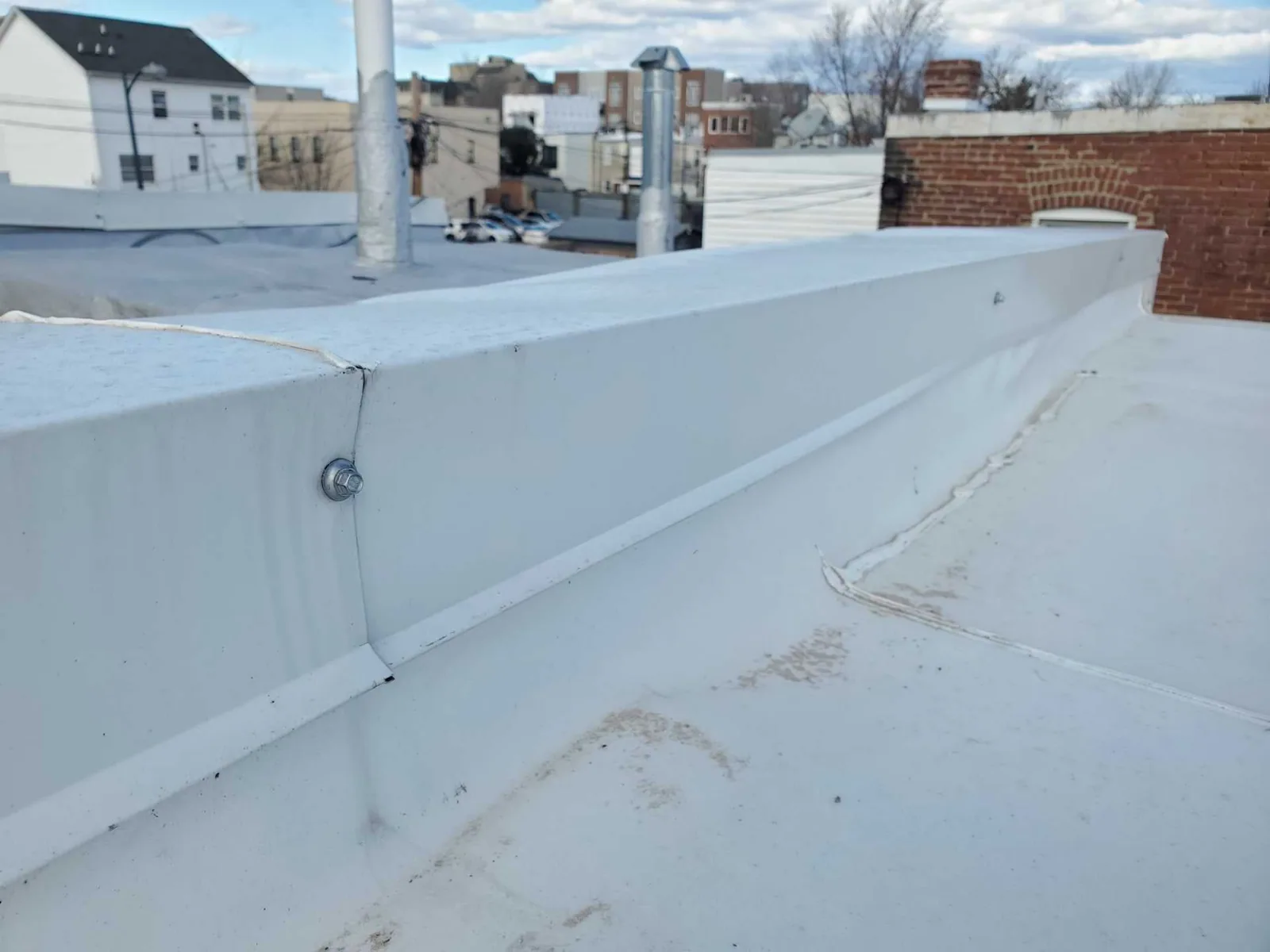
Coping joints can open, cleats can loosen, fasteners can back out, and metal can shift away from the wall. At a low-slope roof edge, the membrane termination needs a secure connection to the metal assembly. If water gets behind that transition, it can move into the wall or insulation. We look for lifted sections, gaps, corrosion, failed laps, missing end dams, and signs of movement beneath the cap.
Gutters and downspouts carry water beyond the roof line. We check the gutter slope, hangers, seams, outlets, and connection to downspouts. A blocked leader can cause overflow at the edge, while a loose gutter may pull away under accumulated debris or ice. The inspection records the condition and the discharge route instead of treating the gutter as an isolated piece of metal.
The Anchorage 2040 plan identifies transit-supportive corridors and employment centers across the city. A roof near Midtown may have a different access arrangement from one by the Ship Creek Industrial District. We confirm lift placement, work hours, and protection below with the building contact before removing edge components.
How does runoff cross the perimeter?
Water should move from the field membrane to the drain system or approved edge discharge without entering behind the termination. We inspect slope at the perimeter, edge metal overlap, gutter inlet, downspout outlet, and splash or collection area below. Where a roof uses a scupper, we check the membrane connection and metal throat. A new coping cap will not solve a low roof area that directs water toward the wrong edge.
Snow and ice can obscure fasteners and seams. Anchorage climate normals track snowfall and snow depth, which makes the timing of a safe edge inspection important. We record whether snow or ice limited visibility and return when details can be assessed directly. The climate record is not evidence of damage on an individual building, and snow removal remains governed by the facility’s procedures.
If water is entering around the perimeter, we follow it into the adjacent roof zone and inspect nearby membrane seams and wall flashings. A leak investigation can connect the interior mark to an edge defect before the removal limit is chosen. Photos should show the overall roof edge and close detail so the facility team can find the same joint later.
Which metal repair fits the condition?
A repair may involve refastening sound metal, replacing a failed section, rebuilding the cleat connection, restoring an end dam, or tying new membrane flashing into the edge assembly. We identify material type and movement joints before specifying the work. The detail needs to remain secure while allowing the metal to expand and contract. A sealant-only patch can fail if the underlying metal has lost attachment or the lap is wrong.
Where a gutter is deformed or disconnected, we check whether hangers, slope, outlet, and downspout can support the intended flow. Replacement sections must connect cleanly with the existing system and preserve a workable discharge. If a downspout empties near a walkway, loading zone, or foundation, the facility contact can identify the property’s preferred route before the installation.
Roof movement differs between metal panels and membrane systems. A standing-seam metal roof uses a different edge connection than a low-slope membrane. We verify the roof type and detail before choosing a flashing, cleat, or termination approach. If the membrane is involved, the repair uses compatible materials and a sound tie-in to the field sheet.
What should the work plan account for?
Edge repairs can affect entrances, sidewalks, loading areas, and equipment paths below the roof. We map the work zone, protect pedestrian or vehicle movement, and coordinate lift or ladder access. A building contact can identify hours when a door, loading bay, or public route cannot be blocked. We also plan how removed metal will be handled and how the roof will be secured if weather changes during the shift.
The Port of Alaska connects marine, air, rail, pipeline, and road cargo networks. That regional role does not tell us what a particular site receives or when it operates. We ask the owner about delivery windows, staging space, and site restrictions before bringing materials. This is especially useful when long metal sections, lifts, or temporary barriers must move through a busy service area.
During cold weather, ice at the edge can hide joints and create a fall hazard. We follow the property’s roof-access plan, inspect only areas that can be reached safely, and identify deferred details. The record states what was removed, which fasteners or cleats were replaced, and whether the water path was checked after the repair.
How should edge work be verified?
Before work begins, the scope should identify each roof edge, coping run, gutter, downspout, and transition. It should say whether existing metal remains, what attachment will be corrected, how the membrane will terminate, and what happens if concealed damage appears. Those limits help the owner compare bids and approve added work only when a field condition supports it.
Closeout photographs should show the full repaired run, joints, end dams, fasteners, membrane tie-in, and the discharge point. We note any areas that remain inaccessible or any drain or leader that another trade must test. The marked plan provides a baseline for the next maintenance visit. A maintenance check can revisit the same edge after winter exposure.
For broader water management, the owner may also need to review the roof drain and scupper layout. A drainage assessment can determine whether perimeter discharge ties into the overall runoff design. Share the roof plan, known leak dates, metal type, access rules, and snow-removal procedures. We will inspect the perimeter and write the repair around the actual water path.
Commercial Roofing Questions
Can loose coping be repaired without replacing the whole edge?
Yes, when the underlying cleats, substrate, and adjacent metal remain suitable. We inspect the joint and attachment, then define whether refastening or a localized section replacement will restore the connection. Widespread corrosion or substrate failure may require a larger scope.
Why does water get behind coping?
Open joints, failed end dams, loose cleats, and gaps in the membrane termination can create a path behind the cap. We inspect the metal assembly and roof transition together, then repair the detail that allowed water to bypass the edge.
Can gutters be replaced during roof work?
Yes. We coordinate gutter and downspout work with the roof edge so the membrane termination, metal, and discharge connection fit together. The scope identifies lengths, outlets, attachment, staging, and any access or trade needs.
Does snow make edge repairs harder?
Snow and ice can hide joints and limit safe access. We document what can be inspected and schedule the remaining work when the roof edge is accessible. The facility’s own snow-removal and roof-access procedures control how that area is cleared.
What details should the repair closeout show?
Keep photographs of the repaired run, joints, fastening, membrane tie-in, and water discharge. The record should identify the roof plan location and note any component that still needs inspection or testing by another trade.
Restore the perimeter water route
Provide the roof plan, edge and gutter history, leak locations, access rules, and snow procedures. We will inspect the metal and membrane connection, then define the repair needed to carry water to a safe discharge point.
Request a roof assessment or call 555-555-5555.