
Distribution Center Roofing in Anchorage, AK
Overview
A distribution center roof affects more than the space beneath it. A leak above a sort lane, conveyor, or dock can change receiving and outbound schedules while crews protect goods below. We map roof zones against the facility layout, then inspect membranes, drains, curbs, seams, and edges. In Anchorage, AK, snowfall, winter access, and thaw drainage shape when and how that work can proceed.
Anchorage is a goods-distribution hub supported by the port, airport, rail, and highway network. the Ship Creek Industrial District's industrial setting sits beside rail yards and port-side uses, while the airport corridor connects cargo activity with commercial areas. We use that context to ask about delivery windows and staging, not to assume anything about a facility’s roof. A commercial roof inspection can document the work zones and repair priorities.
Related Pages
Which roof zones sit above active operations?
Start with the building plan. We mark dock positions, conveyor routes, mezzanines, high-value storage, and areas where a temporary interior barrier would be needed. Then we align those areas with drains, seams, curbs, skylights, and previous repairs above. If a leak appears beside a conveyor, we trace the roof opening instead of assuming it sits directly overhead.
Distribution operations may run multiple shifts or have narrow windows between arrivals. We confirm when a lift can occupy a yard, whether roof access crosses a receiving area, and which bay needs interior protection. A defined sequence lets the facility team keep a path open where possible. We identify noisy or disruptive work before scheduling rather than changing a dock plan after materials arrive.
The Port of Alaska connects marine cargo with air, rail, pipeline, and road networks. That broader logistics context makes coordination familiar for local operators, but roof deliveries still depend on the actual property. We confirm truck length, staging limits, gate procedures, and how roofing materials will be lifted to the deck. A warehouse roof assessment may have different interior priorities; the distribution center plan follows the active flow of goods.
How will meltwater reach the outlets?
Drainage is a system of slopes, bowls, leaders, scuppers, and overflows. We inspect each route from the high point to the outlet, noting debris, ice, standing water, and low areas that could hold runoff. A roof drain can be clear at the bowl while a leader below remains restricted. We check the surrounding membrane and flashing where water collects so a drainage issue is not confused with a seam failure.
National Weather Service climate normals for Anchorage include repeated snowfall and snow-depth records. For a distribution roof, the operational question is when meltwater can drain and whether a covered outlet can be safely reached. Snow removal notes help show which zones were cleared and whether equipment may have scraped the membrane. We inspect the roof surface after access is safe and visibility allows the details to be checked.
A drain and scupper repair can address a blocked or damaged outlet. If the field drains slowly because of a depression, clearing debris will not restore slope. We document the basin and surrounding seams, then explain whether the correction is localized or part of a larger roof scope.
What openings need coordination with other trades?
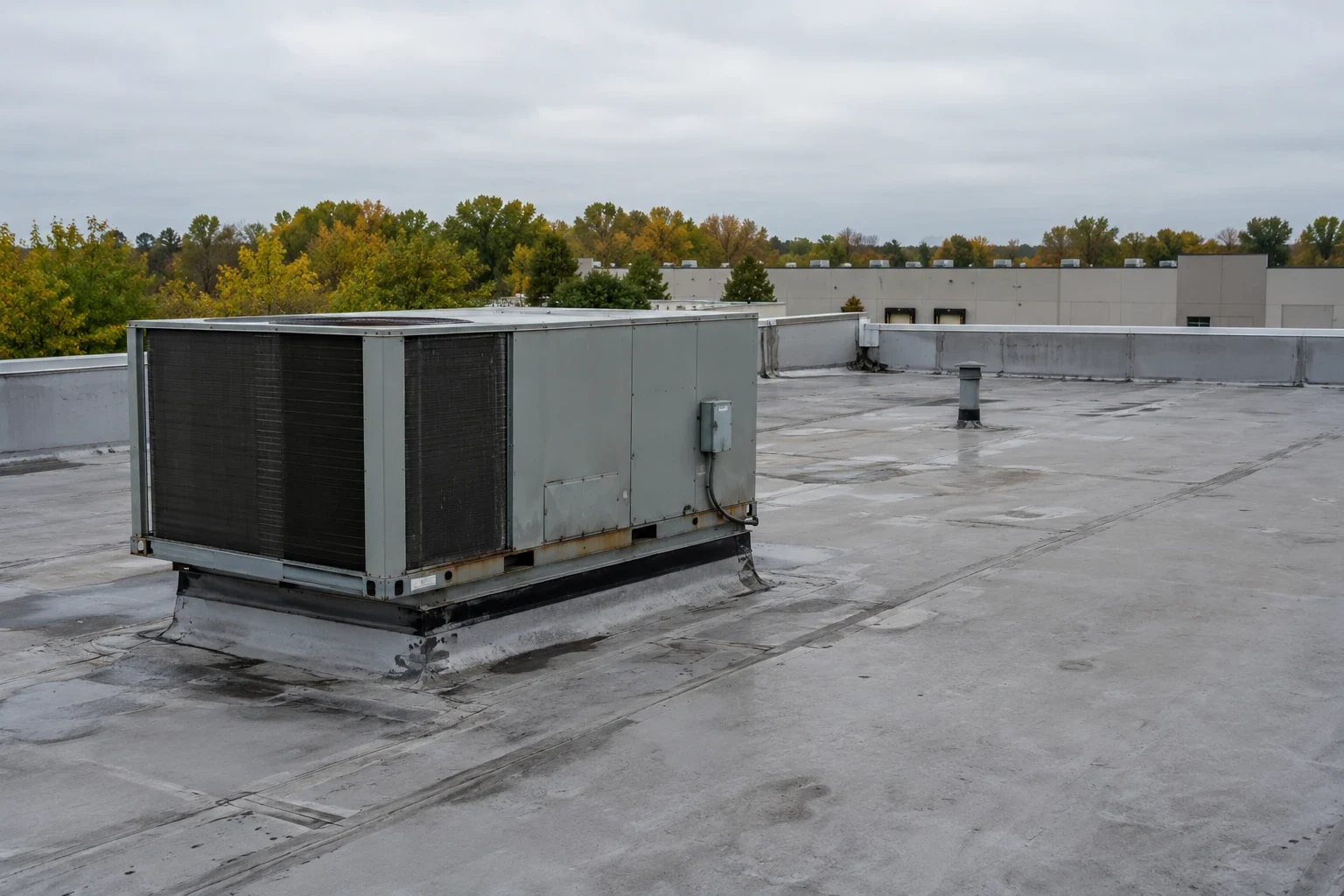
Conveyors, exhaust, refrigeration, and rooftop service equipment create curb and penetration details that need to stay watertight. We check flashing height, attachment, seam transitions, abandoned openings, and evidence of service traffic. A trade may move equipment or add conduit without restoring the roofing tie-in. The repair scope should identify who disconnects and reconnects equipment and which party closes each roof opening.
Where a curb is split or loose, we remove failed material and rebuild the transition with components suited to the roof. We coordinate access with the mechanical contractor so the equipment work and flashing work meet at a clear boundary. A curb and penetration flashing repair can restore the detail before a roof-wide project. If wet insulation is present, we open only enough to define the affected area and record what the deck shows.
Ship Creek freight activity can make arrival windows important for nearby facilities. We also confirm where roofing debris and removed materials can be held without crossing dock paths. Those logistics protect the flow of goods and help keep the repair zone clear, while the actual roof conditions determine material choice and repair limits.
Can the work be phased around shipment cycles?
Phasing depends on roof zones, weather, material lead time, and the building’s daily flow. We can group work by drain section, dock wing, or roof elevation when that sequence keeps open areas protected between shifts. The plan should state how the roof will be dried in at the end of each work period and what temporary protection is used if weather interrupts the work.
An active leak may require immediate stabilization before a permanent repair is ready. emergency roof repair can protect the interior while the roof source is verified. For recurring openings, scheduled roof maintenance can inspect prior repair zones, clear accessible debris, and record changes before peak shipment periods.
Replacement becomes a stronger option when several roof zones have wet insulation, repeated seam failures, or attachment problems. A TPO roof assembly may be evaluated for a low-slope facility, but the choice depends on deck, insulation, drainage, and the project design. A manufacturing roof plan may account for process exhaust and heat; distribution work centers on dock cycles and material movement.
What should the closeout record show?
Record the roof zone, leak or repair boundary, materials used, photos before and after work, and any condition left for follow-up. The facility manager can compare that information with the next interior report and avoid reopening a repaired area without evidence. Keep dock or shift restrictions in the work log only when they affect access or sequencing.
The Alaska Railroad identifies Anchorage as a freight yard and distribution hub connecting rail with other transportation modes. Airport Heights is a named Anchorage Bowl neighborhood. A portfolio with properties across the city should index each roof map by its place, dock layout, and access plan.
At the next seasonal visit, inspect drain outlets, seams, curb flashing, and the areas where equipment service occurred. Check the prior repair boundary after a thaw and compare it with the new roof map. That record helps decide whether the next project is a small repair, a scheduled maintenance visit, or a replacement phase.
Commercial Roofing Questions
Can roof repairs happen while distribution continues?
Often, if the work zone and access route can be separated from the active operation. We confirm dock schedules, shifts, lift locations, and protection needs with the facility manager. Weather, material delivery, or a large opening can require a temporary change to the sequence.
What should we do when a leak reaches a conveyor area?
Protect goods and equipment below, record when water appeared, and identify the affected roof zone on the building plan. We inspect above and around the symptom for a seam, curb, drain, or penetration that could carry water. Temporary stabilization may come before the permanent repair.
Does a distribution center need a different roof membrane?
The building’s deck, insulation, drainage, equipment, and project requirements determine the roof system. Operating schedule affects installation and phasing, but it does not select the membrane by itself. We compare the existing assembly with practical repair and replacement options.
How do snow-removal records help the roof inspection?
They show which areas were cleared, when equipment traveled across the surface, and where snow or ice remained. We can compare those notes with scraped coating, bent trim, blocked drains, or new leak reports. The roof still needs direct inspection before damage is confirmed.
Plan roof work around the flow of goods
Send the roof plan, dock schedule, leak locations, shipment windows, snow-removal notes, and access restrictions. We will map roof zones and water paths, then outline repairs or phases that fit the building’s operation.
Request a roof assessment or call 555-555-5555.