
Commercial Skylight and Penetration Flashing in Anchorage, AK
Overview
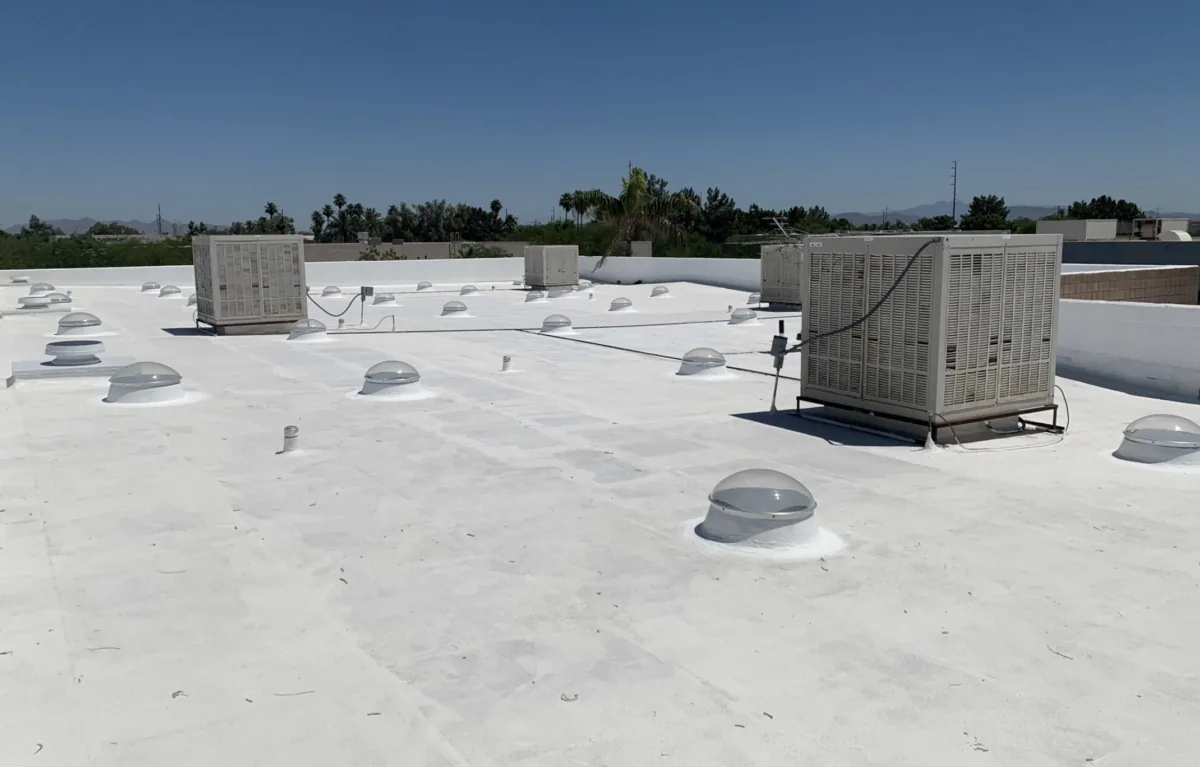
A skylight leak may begin at the curb, the glazing frame, or a membrane transition beside it. In Anchorage, AK, winter snow and thaw water can obscure where the assembly opens. We inspect the full connection, including corners, counterflashing, fasteners, sealant, and adjacent seams. The repair follows the failed detail instead of applying a surface bead at the point where water appeared indoors.
Commercial buildings in Midtown, Downtown Anchorage, and Airport Heights sit within varied neighborhood and employment contexts. Their skylights and rooftop penetrations still require a building-specific review. We use the roof plan, leak history, and interior location to identify the likely path. A leak investigation can add targeted testing when water may have moved inside the assembly.
Related Pages
Which part of the transition is open?
We examine skylight curbs, pipe boots, equipment supports, roof-to-wall intersections, and other penetrations where the membrane changes direction. The review checks flashing height, corner reinforcement, attachment, laps, termination bars, sealant condition, and any adjacent membrane movement. If a curb is loose or the frame has changed shape, coating over the joint will not restore the underlying connection.
Anchorage climate normals track snow accumulation and snow depth. Snow can conceal a curb corner, pipe penetration, or seam, while meltwater can follow a route that is not visible from below. We note whether the detail was directly accessible and schedule a return if snow or ice prevents a complete inspection. Climate history supports seasonal planning; the building’s own roof condition is established in the field.
Where a leak is reported near a skylight, we compare the indoor mark with curb corners, uphill seams, and nearby drainage. Water may run along the deck before reaching a ceiling. Infrared imaging can identify a pattern that merits testing, but a test cut confirms the moisture condition. A moisture survey can help select those test points when the suspected area extends beyond one opening.
How is a skylight curb repaired?
Repair begins with the curb and glazing assembly. We check whether the skylight frame, curb, fasteners, and counterflashing remain secure. The membrane must turn up the curb and terminate beneath a compatible counterflashing detail. A split corner or short flashing leg may require removal and rebuilding so water cannot reach the roof opening.
If the glazing itself leaks, the roof repair may need coordination with a skylight or glazing trade. We identify the apparent source and keep roof membrane work separate from frame or glass replacement. That avoids covering a condition that requires another component. The facility contact can confirm who owns the skylight system and arrange access if the frame needs inspection from inside.
Snow and ice at a curb deserve care during removal. The roof surface and glazing can be damaged by sharp tools or force. We follow the building’s snow-management rules and use a method suited to the assembly. If access is not safe, temporary interior protection may be appropriate while the roof detail is deferred to a suitable window.
What changes around pipes and equipment?
Pipe boots, conduits, equipment curbs, and supports each need a flashing that fits the component and membrane. We inspect the boot material, clamp, seal, membrane patch, and surrounding substrate. A deteriorated boot may need replacement; a loose curb can require mechanical correction before flashing is restored. Every penetration should be mapped because a leak at one item can be confused with a nearby seam failure.
Mechanical or electrical work can reopen a roof detail after a repair. We ask whether equipment service is scheduled and coordinate the sequence with the responsible trade. If a new penetration is planned, the roof tie-in needs to be part of that work rather than an afterthought. The closeout record identifies the roof zone and the component around which the flashing was rebuilt.
Near the International Airport Road Corridor, airport-related land use is part of the broader west Anchorage setting. It does not tell us what equipment sits on a particular building. The facility contact confirms the equipment inventory, service windows, and access rules before the roof work is scheduled.
How can the repair fit active spaces?
Skylights bring daylight into occupied space, and water around a curb may affect offices, service areas, or storage below. We coordinate interior access to identify stains, protect contents, and see whether the leak path aligns with the roof opening. On the roof, we protect the glazing and keep tools or materials from loading the skylight frame. Work boundaries are set before removal begins.
Anchorage’s Midtown planning area includes Midtown and parts of Spenard and North Star, while Downtown is the municipality’s City Center. The districts describe commercial settings, not the construction or operation of a specific building. We confirm access with the property contact. In Midtown or Downtown Anchorage, the owner may need to coordinate roof entry with tenants, building security, or scheduled deliveries.
We keep the opening protected if the repair spans more than one shift or weather interrupts the work. The record identifies temporary protection and the point where permanent flashing will continue. If a second trade must access the skylight, the closeout notes how that work should avoid disturbing the roof tie-in.
What should the completed detail show?
Photographs should capture the curb or penetration before removal, the exposed substrate if opened, the completed flashing, and the finished membrane tie-in. We mark the detail on the roof plan and note material type, fastening, and any test result. If the frame or equipment needs separate service, the report identifies that outstanding item without assigning a roof repair to the wrong component.
A repeated leak at one skylight may point to a recurring movement or flashing issue. If several penetrations show similar failure, a broader roof inspection can compare boot materials, curb height, and membrane transitions. The owner can then determine whether each detail needs a localized repair or whether the roof assembly requires a larger scope. A roof inspection can map related conditions across the property.
For future planning, the maintenance record should include each skylight and penetration by zone. A seasonal maintenance visit can check corners, boots, clamps, and sealant condition after the roof becomes accessible. Share the roof plan, leak dates, skylight or equipment records, access rules, and snow-management process. We will inspect the transition and define the repair around the component that failed.
Commercial Roofing Questions
Can sealant stop a skylight leak?
Sealant can be part of a compatible repair, but it will not correct a loose curb, failed flashing leg, or damaged membrane tie-in. We inspect the full transition and state whether rebuilding the curb flashing or servicing the skylight frame is needed.
Does a skylight leak always come from the glazing?
No. Water can enter at the curb, corners, counterflashing, nearby membrane seam, or an uphill detail and travel before it reaches the room below. We compare the interior mark with roof conditions before choosing which component to repair.
How do you repair a leaking pipe penetration?
We identify the roof membrane, inspect the boot or curb, and check the clamp, fastening, and surrounding patch. A failed boot may be replaced and tied into sound membrane. If the component has shifted or needs service, that trade work is coordinated before closing the roof detail.
Can the flashing be replaced during winter?
Safe access and installation conditions set the timing. Snow and ice may conceal the detail or prevent proper surface preparation. We follow the building’s access procedure, protect the interior if needed, and schedule permanent work when the roof can accept the repair.
What should facilities prepare for a flashing inspection?
Send the roof plan, leak dates, interior photos, skylight or equipment records, previous repairs, and access requirements. The facility contact can also identify snow procedures and upcoming trade work so we can inspect the right transition and plan the sequence.
Repair the whole roof transition
Send the roof plan, leak dates, interior photos, skylight or equipment history, access rules, and snow procedures. We will trace the water path and define the curb, boot, or membrane repair supported by the inspection.
Request a roof assessment or call 555-555-5555.