
TPO Commercial Roofing in Anchorage, AK
Overview
A TPO roof depends on seams that remain continuous through cold weather and seasonal movement. In Anchorage, AK, snow cover can hide a lap while meltwater tests the drain path below it. We inspect membrane condition, attachment, insulation, flashing, and edge details before recommending repair or replacement. The product name alone does not tell us whether the roof is sound or whether the existing assembly can accept another layer.
Anchorage’s commercial properties include Downtown offices, Midtown business areas, and industrial buildings near Ship Creek. Each roof sees the same broad winter climate, but drainage, equipment, and exposure differ by building. We map the actual assembly and identify the evidence behind the recommendation. A commercial roof inspection can document seams, penetrations, and wet areas before the owner selects a scope.
Related Pages
What makes a TPO assembly work?
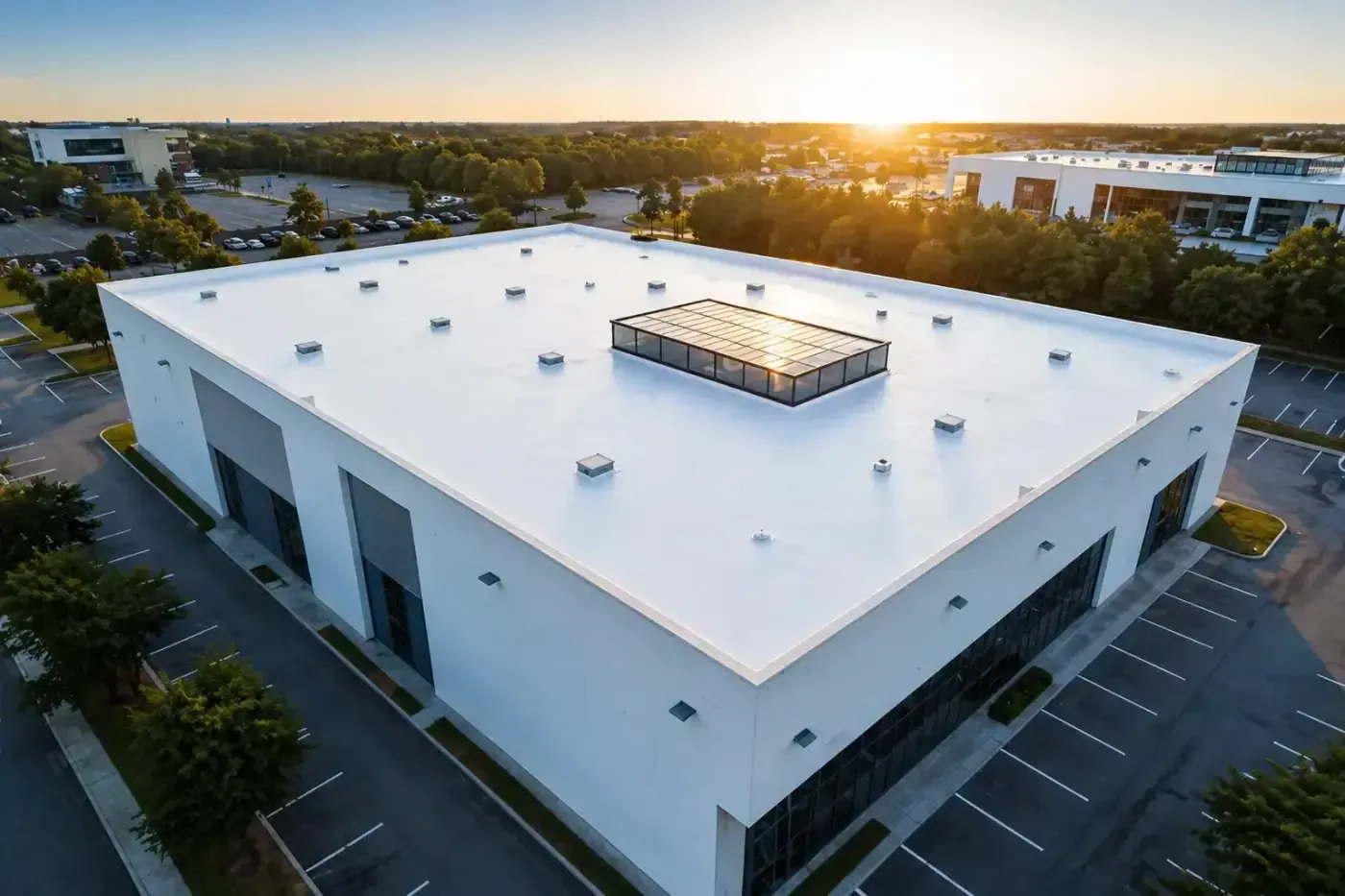
TPO is a thermoplastic single-ply membrane. Its field seams are typically joined with hot air, while edge metal, penetrations, curbs, and wall transitions use system details designed for that membrane. The roof may be mechanically attached or adhered, with insulation and cover board below. We identify those layers before planning a repair because a seam weld, a fastener pattern, and a flashing transition solve different problems.
At a welded lap, the surface must be clean and the heat setting must suit the membrane and conditions. A probe check after welding can find an incomplete seam that is hard to see from standing height. Corners and patches need the same attention as long straight laps. If a prior patch sits over loose or contaminated material, adding another patch may hide the weakness instead of restoring a dependable connection.
The assembly also includes the deck, air and vapor control layers, insulation, slope, and drainage. A membrane can shed water while an underlying layer remains wet or a drain stays blocked. We inspect the roof-to-wall edge, scuppers, drain bowls, penetrations, and equipment curbs as one water-management system. A moisture survey may help identify areas for targeted testing when the roof surface does not show the full extent.
How does Anchorage weather change the inspection?
National Weather Service normals for Anchorage include snowfall and snow-depth measures, making winter accumulation part of roof planning. On the roof, we look for seams stressed by movement, lifted flashing, snowmelt routes, and water that remains near drains after a thaw.
The 1991 to 2020 NOAA normal table for Anchorage Merrill Field reports recurring snowfall and subfreezing winter monthly mean temperatures. We distinguish ice, meltwater, and a leak path by noting visible conditions, interior staining, and when water appeared. If snow hides the membrane, we return when access is safe and the detail can be inspected.
Downtown buildings may have limited staging around entrances and sidewalks, while a roof near Midtown can sit among several active business areas. The land-use framework treats Downtown as a civic and employment center. We size the work from the roof plan, tenant constraints, and field observations.
When can a TPO roof be repaired?
A localized repair can make sense when damage is limited, surrounding membrane remains sound, and the patch can bond to a clean, compatible surface. We remove failed material to a firm edge, prepare the substrate, and weld a patch with proper overlap and rounded corners. Open seams, punctures, loose flashing, and failed terminations each need a detail that addresses their cause. Sealant spread across a lap is not a substitute for a welded repair.
Wet insulation changes the scope. We mark the affected area, make test cuts where appropriate, and check how far moisture extends before deciding what to remove. A repair that closes the top while leaving saturated material can trap water and compromise the assembly. If testing shows a broader wet zone, the owner can compare a larger repair with replacement rather than paying for patches that leave the main condition in place.
Our commercial roof repair work can address seams, flashing, and penetrations when the surrounding assembly supports a local fix. If the leak follows a failed edge or drain detail, the repair needs to restore the water path as well as the membrane. For a roof with repeated leak calls, a maintenance program can track the same locations between seasonal visits.
What does replacement need to resolve?
Replacement is more than selecting a membrane roll. We review existing layers, deck, insulation, attachment, drainage, and transitions to walls and equipment. Removal may expose wet insulation, deteriorated cover board, or deck repairs that change scope and timing. The proposal separates known work from conditions confirmed after removal.
A new TPO assembly can be attached or adhered according to design and substrate requirements. Cover board can protect the membrane from rooftop traffic, but it does not correct a weak deck or poor drainage. We confirm attachment, edge securement, and penetrations before installation. If technicians regularly reach rooftop equipment, the walk path and protection details should be included before the membrane is installed.
At drains, scuppers, curbs, and parapets, the new membrane needs a compatible tie-in. Snowmelt can expose a low point or blocked outlet. We verify the water route and include needed corrections. Owners can compare the PVC assembly with an EPDM system when its documented properties fit the building’s needs.
What should the owner keep on file?
Keep the roof plan, membrane and insulation details, attachment notes, repair dates, photos, and warranty documents with the building record. Each entry should identify the roof zone, finding, repair boundary, and material installed. If a new interior mark appears, the record helps show whether water has returned to a known seam.
Seasonal checks look for open laps, lifted flashings, loose edge metal, blocked drains, and damage from service access. Matching photo locations improves comparison between visits. A roof condition report can record findings and priorities, with drain and scupper inspections supporting ongoing checks.
A TPO roof needs clear drains, protected walk paths, sound penetrations, and timely attention to seam or flashing changes. Dated roof-zone notes help the facility team distinguish a new defect from an earlier repair.
Commercial Roofing Questions
Can a TPO seam be repaired in cold weather?
The surface and ambient conditions must support the membrane manufacturer’s welding requirements. Snow, moisture, contamination, and temperature can interfere with a durable weld. We check the roof condition and choose a safe work window; temporary protection may be needed until permanent welding conditions return.
How do you tell a failed seam from a leak near the seam?
We inspect the lap, nearby flashing, drains, penetrations, and interior water path. A ceiling mark may sit away from the roof opening, so we trace the likely route before assigning the cause. Probe checks and targeted testing can separate an open weld from moisture entering at another detail.
Does a white TPO membrane prevent winter ice?
No membrane color prevents ice. Drainage, shade, insulation, interior heat loss, and freeze-thaw conditions affect where ice forms. We inspect the drain bowl and water path, then address the roof detail or maintenance issue supported by the findings.
When is a TPO recover possible?
A recover depends on the existing assembly, moisture, attachment, deck condition, and applicable project requirements. We verify how many layers are present and whether wet insulation or loose membrane would remain below the new roof. If those conditions are unsuitable, removal may be the sounder scope.
What should be checked after rooftop equipment work?
Inspect the curb flashing, membrane tie-in, fasteners, and any area where tools or service traffic crossed the roof. The mechanical work can disturb roofing even when the unit itself is functioning. Record the equipment location and any roof restoration so later service can protect the same detail.
Check the TPO assembly before choosing a scope
Share the roof plan, leak dates, prior repairs, and any membrane or insulation records. We will inspect the seams, drainage, attachment, and transitions, then show which repairs or replacement details fit the conditions found.
Request a roof assessment or call 555-555-5555.