
Commercial Roof Membrane Puncture Repair in Anchorage, AK
Overview
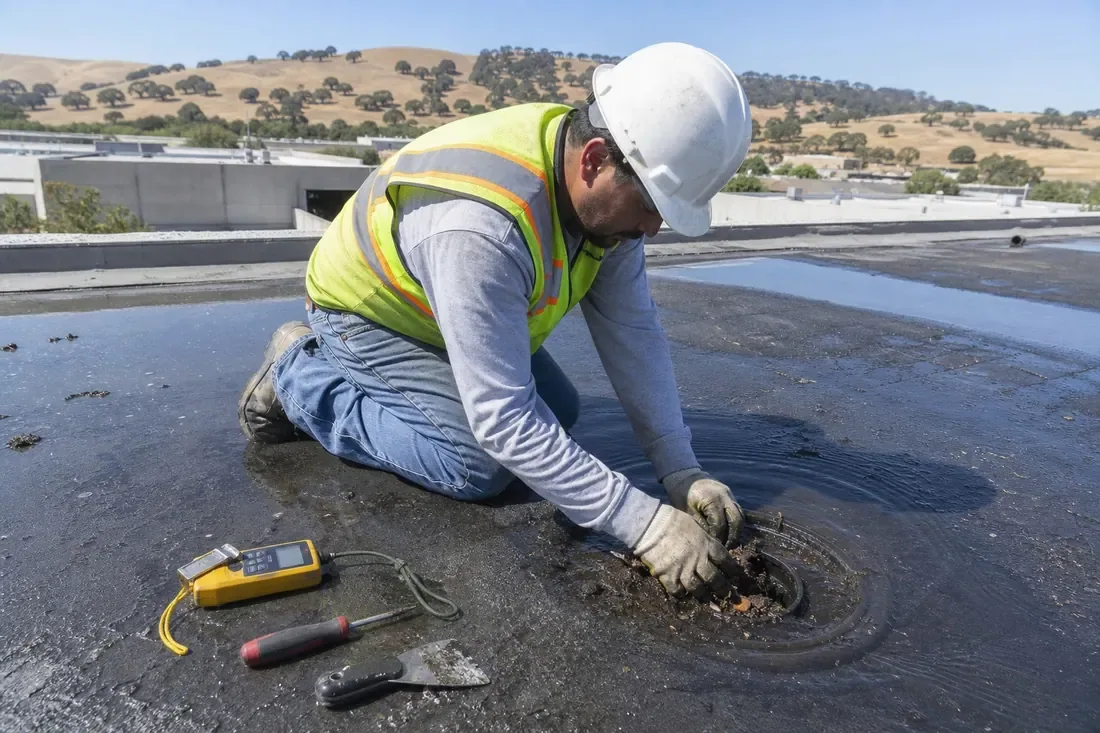
A puncture may be small, but choosing a patch before identifying the membrane and substrate can create a second problem. Start by protecting the affected interior if authorized, recording the reported location, and inspecting the roof safely. Look for a discrete opening, nearby tools or debris, equipment traffic, and signs of moisture below the surface. In Anchorage, seasonal cover can limit visibility; note that limitation and return when the membrane can be checked without unsafe access or guessed-at repairs.
Related Pages
What information helps locate a puncture?
Ask when water or damage was first noticed, which room or equipment is affected, and whether any rooftop work happened recently. Mark the roof zone and correlate the ceiling location with the building layout, recognizing that water may travel. Photograph the suspected opening without moving debris until its position is documented. A commercial leak investigation can preserve this chain from report to roof observation.
Keep a record of the roof surface condition, weather, and access route. If water is active, the owner may arrange interior protection and electrical or equipment coordination. Do not ask staff to climb the roof, retrieve sharp debris, or step through a wet or icy area. The first visit can still be useful if it identifies the safe boundary, the likely zone, and what must be revisited after access improves.
How is a puncture distinguished from another defect?
Look for a discrete cut, hole, impact mark, or abrasion and inspect nearby seams, flashings, drains, and prior patches. A seam assessment is appropriate if the opening follows a joint; a flashing review addresses a transition.
Do not enlarge an opening or peel back a patch without owner approval and a defined restoration method. Note any loose aggregate, metal fragments, dropped fasteners, or trade activity that may help explain the condition, without assigning blame. If no opening is visible, record that result and consider a controlled test rather than documenting an unconfirmed puncture as established fact.
Why does membrane identification matter?
Different membranes, reinforcement, attachment, and surface treatments require different repair details. Check owner records, product labels, and roof documentation, then compare them with visible conditions. A TPO roof review and an EPDM roof review are not interchangeable repair instructions.
If the exact system cannot be confirmed, request additional documentation or manufacturer input. Identify any coating, ballast, cover board, or insulation visible at the repair location. A small surface hole can expose a wet or damaged substrate, which may alter the scope. The proposal should explain what is included and how a hidden condition would be reported before any expansion.
What happens before installing a patch?
Define a work area, keep it clear of traffic, and prepare the surface using the compatible manufacturer method. Check whether the area is dry, clean, and sound enough for the selected repair. A commercial roof repair scope should list preparation, material, attachment, and closeout checks.
Coordinate with facilities staff if equipment or later trades cross the roof. If a puncture is near a curb or walkway, protect the assembly against further abrasion and establish a temporary boundary. Do not use an unapproved tape or sealant as a substitute for the system repair. If weather or surface temperature falls outside requirements, secure the area and reschedule or use an owner-approved temporary method.
What should the permanent repair cover?
The repair should address the opening and any compromised material needed to create a sound, compatible lap or detail. Define the patch dimension and shape through the approved system method rather than a generic rule. If insulation or cover board is wet, document the limits and obtain authorization for additional investigation. A follow-up inspection can verify the completed area.
Repair the puncture without covering a drain, seam, or existing detail that needs separate attention. Record product identification and the installation conditions. If the source of damage is apparent, describe the observation neutrally and recommend roof-traffic protections where warranted. Avoid a promise that one patch restores the whole assembly or resolves moisture that may have traveled beyond the opening.
How is the patch checked and documented?
Use the verification method suitable for the material, such as visual review, probe check after cooling, or a specified adhesion or water test. Record the area checked, conditions, and result. A roof condition report can keep before-and-after photographs tied to the roof-zone plan.
A test must not introduce water into an occupied building or damage a sound membrane. Confirm owner authorization and protection before testing. If the result is inconclusive, identify the uncertainty and propose the next controlled step. Closeout should state whether the puncture was repaired, what substrate was visible, what was not opened, and whether additional monitoring is appropriate.
How can future punctures be reduced?
Review routes used by maintenance and mechanical trades, rooftop storage, discarded fasteners, and equipment service zones. Add protection boards where the system design and owner approve them; do not improvise a walkway that blocks drainage. A maintenance program can record traffic-related findings and schedule repairs before water reaches interior spaces. Related records may include Anchorage service-area coverage.
National Weather Service normals for Anchorage include snowfall and snow-depth measures, so winter visibility and access should be part of the maintenance record. Anchorage Downtown and Midtown are broad district references for service coverage, not site-specific claims. At each property, use the owner’s roof plan, assign a safe access contact, and ask every rooftop trade to report dropped tools or surface damage promptly.
A repair plan can also reduce avoidable disruption by confirming where the crew may stage materials, which entrances remain open, and whether noisy work or equipment shutdown needs a scheduled window. Ask the building contact to notify other rooftop trades about the repaired zone and any temporary access restriction. Keep discarded membrane samples and product labels with the closeout record when they help identify the assembly. If an adjacent seam or flashing is also damaged, map each condition separately and state whether it is included. Anchorage coverage may include Downtown and Midtown districts, while each work order remains tied to the owner’s approved site information and roof plan.
The work order should also identify how the repaired zone will be protected after the crew leaves. Facilities staff can mark a temporary no-traffic boundary and notify vendors who service rooftop equipment. If access is unavoidable, the owner should specify an approved route and protection method compatible with the roof assembly. This small handoff helps avoid a repeat opening caused by tools, carts, or discarded fasteners. A later condition check can confirm that the repair remains visible and that adjacent seams or flashing have not been disturbed.
Crews traveling between Midtown and East Anchorage should confirm the owner’s entry contact, roof key, and approved equipment route before arrival.
When inspection identifies more than one suspected opening, number them separately and show each on the plan. That prevents a repair proposal from merging confirmed damage with areas that still need testing. The owner can then approve a limited patch, a targeted investigation, or a coordinated trade visit with a clear cost and access boundary.
Commercial Roofing Questions
Can a small puncture be patched with roof cement?
Material and method depend on the verified membrane system. An incompatible surface patch may fail or complicate a later repair.
Can the crew identify the puncture from an interior stain?
The stain helps narrow the search, but water can travel. The roof opening must be confirmed or reported as unconfirmed.
What if insulation beneath the hole is wet?
Document the visible limit and seek owner approval before opening or expanding the repair.
Can other contractors walk over the repaired area?
The closeout should identify protection and access restrictions. Facilities staff can relay them to later rooftop trades.
Locate and document the membrane opening
Share the roof plan, interior report, recent rooftop work, access controls, and any system records. We can inspect safely and define a compatible repair boundary.
Request a roof assessment or call 555-555-5555.