
Commercial Roof Seam Repair in Anchorage, AK
Overview
A seam that looks open needs a system-specific inspection before heat, adhesive, tape, or a patch is selected. Roofs can use different membranes, attachment methods, and seam details, and a surface appearance alone may not show what failed. The first visit records the assembly, location, seam condition, nearby water evidence, and safe access limits. Anchorage seasonal snow and melt may conceal portions of the field, so the report should identify what was visible and what still needs a clear-weather review.
Related Pages
How is the roof system identified?
Start with owner records, closeout documents, product labels, and visible attachment or reinforcement details. Compare that information with the roof plan and prior repairs. Do not assume a material from color or texture alone. A commercial inspection can document what is confirmed and list missing records before repair products are chosen.
A seam repair depends on membrane type, age, surface condition, temperature, and whether the seam was welded, taped, or adhered. If the assembly remains uncertain, request a manufacturer or qualified system specialist review. Photograph a representative intact area as well as the suspect seam. Keep test cuts or destructive inspection outside the initial scope unless the owner approves them and the repair method is ready to restore the opening.
What should the seam inspection examine?
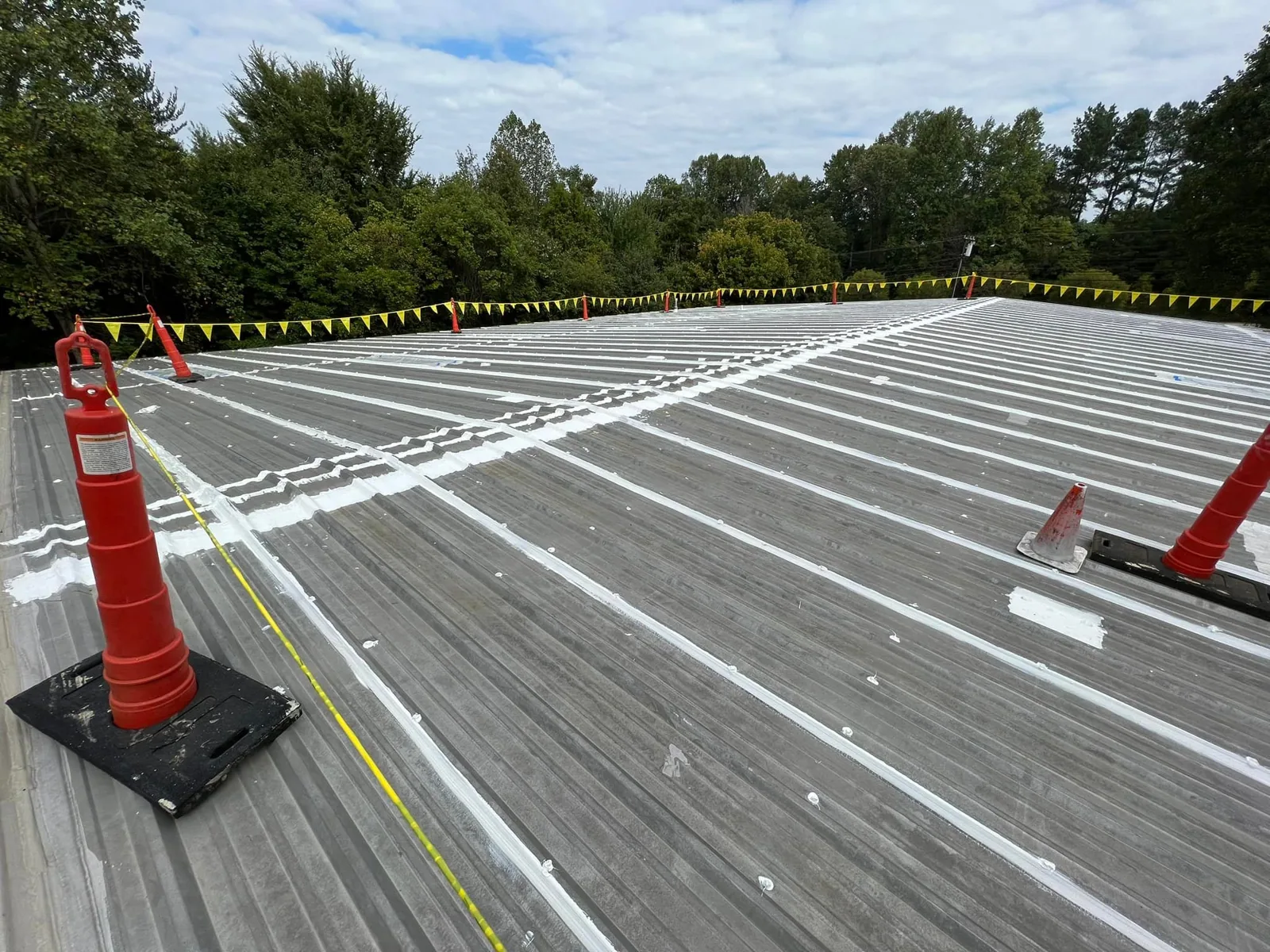
Look along the seam for visible separation, fishmouths, contamination, wrinkles, edge lift, loose fasteners, or an earlier patch. Check the adjacent field for movement or impact and note if water is present. A wind damage review may be relevant when a recent event coincides with displacement.
A simple probe can reveal an opening but does not identify its cause or the condition of the full seam. Use only a method appropriate for the roof system and authorized by the owner. Mark the tested length, pressure or technique when specified, and result. If the seam is inaccessible or covered, do not report it as sound. The report can define a follow-up inspection window after snow or stored materials are removed safely.
How should moisture evidence be related to a seam?
Map each interior report and compare it with seam direction, roof slope, drains, penetrations, and previous repair areas. Water may move beyond its entry point before appearing in a room. A leak investigation can document that relationship without treating proximity as proof.
Note whether the roof was wet or dry and whether the building team has records of earlier symptoms. Infrared or electronic testing may help answer a specific question but can have system and weather limitations. Any test needs a stated scope and interpretation boundary. Keep readings and images tied to roof zones, and distinguish a suspected path from a confirmed seam opening so repair authorization is based on evidence.
What preparation makes a seam repair reliable?
The repair area generally needs a clean, dry surface and a sound substrate, subject to the system manufacturer’s method. Identify any coating, contamination, oxidation, or aged membrane that could affect adhesion or welding. A TPO system assessment and an EPDM system assessment involve different compatibility considerations.
Before work, confirm access, weather limits, fire or hot-work controls where applicable, occupant protection, and storage restrictions. The crew should have the specified products and tools onsite, not select a substitute after the roof is opened. If moisture or substrate damage extends beyond the visible seam, stop at the approved boundary, secure the roof, document the condition, and obtain a written change decision.
How is the repair method selected?
Use the method supported by the verified membrane and detail: welding, compatible tape, adhesive, replacement strip, or another specified system repair. Avoid mixing methods simply because materials are available. A commercial repair proposal should state the method, limits, preparation, and any manufacturer requirement.
The repair should address the actual seam opening and preserve drainage and adjacent details. It should not conceal a broader attachment or substrate issue. Define the length to be repaired, what overlap or probe test is required, and how the completed work will be protected from foot traffic or equipment service. If the manufacturer calls for specific quality controls, include them in the work plan and retain the documentation with the building roof record.
What does seam repair verification include?
Follow the approved quality check for the system, such as a probe review after cooling or an adhesion check where specified. Record the test location and result, then photograph the completed seam and nearby transition. A condition report can preserve this evidence without overstating the entire roof’s condition.
Testing should occur under suitable conditions and should not damage the completed work. If a result is inconsistent, isolate the segment and correct it before moving on. The closeout should list materials, date, weather, work limits, test method, and any area not completed. A repair acceptance is limited to the observed work and test; it is not a blanket certification of unrelated seams or concealed assemblies.
What helps prevent repeat seam failures?
Track seam locations that have opened before, rooftop traffic, later trade penetrations, and repairs that may affect adjacent membrane. Inspect after authorized rooftop work and during scheduled maintenance, using safe access and manufacturer guidance. A maintenance visit can add the seam map to the next inspection record. Related records may include Anchorage service-area coverage membrane puncture assessment.
Anchorage climate normals from the National Weather Service include snowfall and snow-depth measures, which supports noting seasonal visibility and access conditions in a roof record. The Downtown City Center and Midtown planning district are useful broad coverage references, not claims about a particular customer. For any building, compare like-for-like photographs and investigate the cause of repeated openings before approving another surface patch.
A repair log should preserve more than a completion date. Include the affected roof zone, system identification, seam length examined, method used, test conditions, materials, weather, and photographs before and after work. If rooftop service teams return later, provide the owner’s access and traffic rules so tools or equipment do not cross the repaired joint without protection. When a seam is adjacent to an opening, distinguish the membrane field from the curb or wall flashing. Anchorage service planning includes broad districts such as Downtown and Midtown, but the field record must identify only the actual roof zone inspected.
When a roof has several membrane fields, identify whether the suspect seam sits in an original installation, a later addition, or a prior repair. Changes in substrate, attachment, and roof age can matter even where surfaces look alike. Mark transitions between phases and compare available closeout drawings before specifying one repair for all areas. If information is unavailable, list the assumption and ask for owner records or manufacturer direction. In Anchorage, note whether snow or surface moisture limited that comparison and whether a return visit is needed after conditions improve.
Anchorage response planning may include Downtown and Government Hill business districts, while the actual dispatch window depends on the service address and owner access rules.
Commercial Roofing Questions
Can an open seam be sealed with any roofing adhesive?
No. The membrane and seam construction must be identified so the repair method and materials are compatible.
Does a probe test prove the whole roof is sound?
No. It checks the tested seam segment under stated conditions. The rest of the roof needs its own inspection scope.
Can seam repair proceed over wet membrane?
The approved system method governs surface and weather conditions. If the repair zone is wet or unsafe, work should wait or follow an authorized temporary plan.
What if a seam keeps reopening?
Review movement, attachment, substrate, prior material, and rooftop disturbance before repeating the repair.
Identify the seam system and repair boundary
Provide roof records, seam photographs, prior repair details, and any interior moisture report. We can document the system evidence and proposed test or repair limits.
Request a roof assessment or call 555-555-5555.