
Wind Damage Roof Repair in Anchorage, AK
Overview
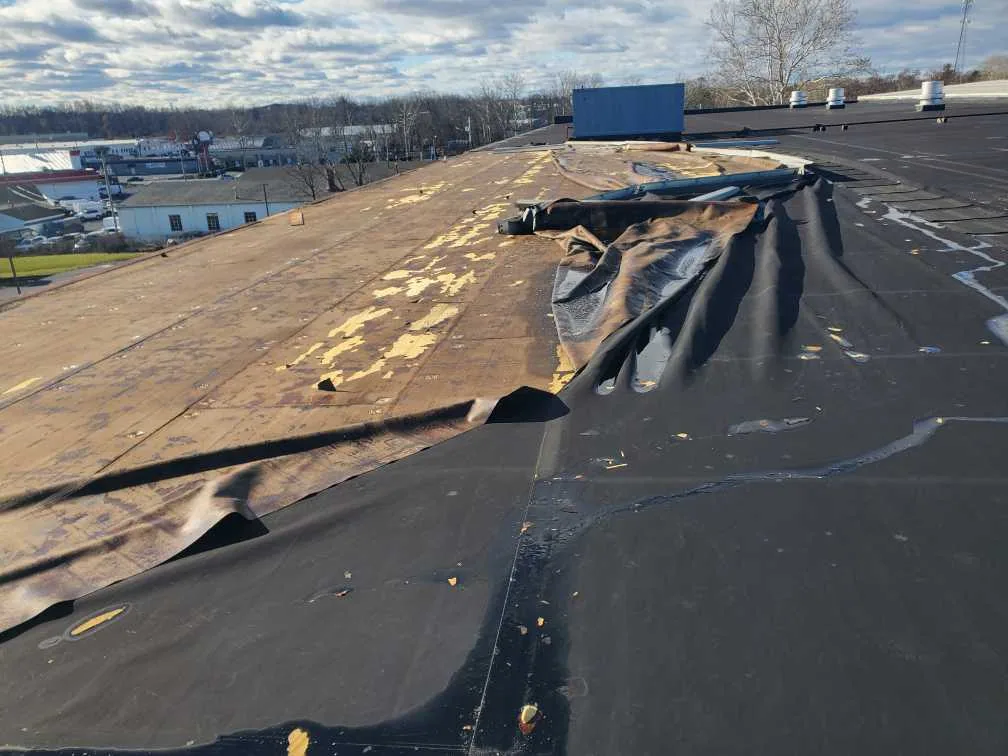
After a wind event, a displaced edge, loose metal, or new interior stain deserves a mapped inspection before anyone assumes the entire roof has failed. Wind can move rooftop equipment, pull at perimeter details, carry debris, or expose an older weakness. We document what is visible, what the building team reports, and what cannot be confirmed safely. Anchorage conditions can include winter snow and shifting access windows, so a prompt response still begins with site rules, roof access, and a secure work boundary.
Related Pages
What should happen before anyone climbs the roof?
The building contact should record when the condition was noticed, what doors or rooms are affected, and whether water is active. Photograph loose materials from a safe location and keep staff away from overhead hazards. Do not send an untrained employee onto a roof to retrieve debris or test an edge. Confirm roof access, escort rules, and any lift restrictions. A commercial emergency response can start with safe containment while the crew prepares a controlled inspection.
A roof after wind can present unstable panels, exposed fasteners, lifted membrane, or unsecured equipment. The field lead should assess access before approaching the damaged zone. If conditions are unsafe, isolate the route and arrange a later visit. Record what was visible from the ground and what requires direct inspection. This keeps an urgent report accurate without implying that a visual observation has already established the repair scope.
Which areas deserve close review?
Inspect perimeter edges, corners, parapet caps, coping, roof hatches, curbs, skylights, pipe supports, and field seams. Look for fresh displacement, broken attachment, open flashing, debris impact, and areas where older repairs have lifted. Compare the condition with prior photographs or work records when available. A roof inspection should mark each observation on a plan and identify where access or surface conditions limited the review.
Wind can create several separate issues on one roof. A loose metal panel is different from a membrane seam that has opened or a puncture caused by debris. Keep each finding on its own photo label and avoid bundling unrelated items under a single “storm damage” description. If a component may be structural, request qualified engineering review. A roofing contractor can document attachment and water-management conditions within the agreed scope.
How can the team trace new water entry?
Interior moisture may appear far from the point where wind-driven rain entered. Record the room, time, weather direction if known, and whether the symptom repeats. Trace roof paths around walls, drains, penetrations, equipment, and seams. Do not assume the nearest opening is the source. A flashing review can help when water may have crossed a parapet, curb, or wall transition.
If the roof is wet, icy, or covered, note the limitation and do not use a hazardous surface as evidence. Inspect the accessible zones, protect the interior where authorized, and return when the roof can be evaluated safely. National Weather Service climate normals for Anchorage record snowfall and snow depth; that seasonal context can affect visibility but does not prove a wind-related defect. Field observations and reported timing should guide the investigation.
What temporary protection is appropriate?
Temporary measures should limit water entry without hiding an unresolved condition or creating a new hazard. The owner approves interior protection, shutdowns, or access changes. On the roof, the crew should use materials and methods suitable for the assembly, record the location, and make the area secure at breaks. A temporary cover is not a permanent repair. Document how it is attached, how it will be monitored, and when the contractor will return to replace it with an approved detail.
If wind has displaced coping, edge metal, or a rooftop component, do not reinstall it without checking attachment and substrate condition. Keep people away from the hazard and coordinate any equipment shutdown through its owner. An interim action needs a clear end point and responsibility. The closeout should state what remains exposed, what is protected, and which decision is still waiting on owner, engineer, or manufacturer input.
How is the permanent repair boundary set?
Separate isolated repair from broader work by inspecting the surrounding material and attachment. A patch at one seam may be adequate when the adjacent membrane and substrate remain sound; repeated lifting or widespread deterioration changes the question. Mark the proposed work limits, identify materials and compatibility needs, and list any test or design prerequisite. A seam repair assessment or roof recover evaluation can address distinct alternatives rather than treating them as interchangeable.
The scope should define access, protection, weather contingency, disposal, and how the roof will be secured if hidden damage expands the work. If the roof is under warranty, check notice and repair requirements before altering the assembly. The owner should approve any change beyond the original authorization. The report can compare a bounded repair with a larger project, but it should not promise a service life or insurance outcome that the field evidence cannot support.
What should the property retain after a wind call?
Save the initial report, inspection map, time-stamped images, weather notes, temporary protection record, final repair description, and any open item. Identify which roof zones were accessible and which were not. Keep emergency actions separate from permanent repair approval. A condition report can connect the incident record to the next maintenance review without turning one event into a blanket roof rating.
Anchorage planning recognizes Downtown as a civic and employment center, while Midtown includes a broader commercial core and nearby neighborhoods. Those are useful service-area references, but each customer’s building, access process, and roof history determine scope. Store contact, landlord, and facilities roles should be clear internally. The public-facing service description should stay at city or district level and avoid naming a particular tenant or controlled property.
What checks reduce repeat wind calls?
After repairs, review edge attachment, coping laps, exposed fasteners, abandoned supports, and areas where rooftop work may have disturbed the membrane. Confirm that drains and scuppers are clear of debris, then photograph the completed details. Schedule the next inspection based on assembly, condition, and site exposure rather than a universal interval. A maintenance visit can add the repair location to the roof record and set a realistic follow-up task. Related records may include Anchorage service-area coverage.
A manager can compare the latest inspection with previous photos to see whether movement is recurring. If it is, investigate the assembly, attachment, and substrate before repeating a surface patch. Check roof access rules and ensure staff know how to report loose material from inside the building. Do not ask employees to climb or handle unsecured components. The maintenance file should name the person who will recheck any temporary measure.
Use the same roof-zone labels when the crew returns so a temporary cover, edge repair, or open question is not confused with a nearby detail. The building contact can compare the latest overview with the first report and confirm whether water reached another room. In Anchorage, a safe review may need to wait until wind, ice, or snow no longer blocks the inspection path. The public service boundary includes broad areas such as Midtown and Spenard; the owner’s access instructions still control each visit.
Commercial Roofing Questions
Does wind damage mean the whole roof needs replacement?
No. A wind report triggers inspection of the affected zones and nearby details. Replacement is considered only when the observed extent, assembly condition, and repair history support that scope.
Can a crew inspect during strong wind?
Access depends on current site conditions, roof height, exposure, and safe-work limits. If access is unsafe, the team documents what can be seen and schedules a return.
Will a tarp solve the leak permanently?
A temporary cover may help protect an area while scope is evaluated. It is not a permanent roof repair and should have a documented attachment method and follow-up date.
What should the owner provide after an event?
Share the roof plan, prior repairs, warranty documents, interior report, access restrictions, and any safe ground-level photographs.
Set a safe post-wind inspection
Share the affected area, roof plan, prior repairs, access controls, and whether water is active. We will identify an inspection boundary and document the conditions that can be safely confirmed.
Request a roof assessment or call 555-555-5555.