
Commercial Roofing for Retail and Restaurant Chains in Anchorage, AK
Overview
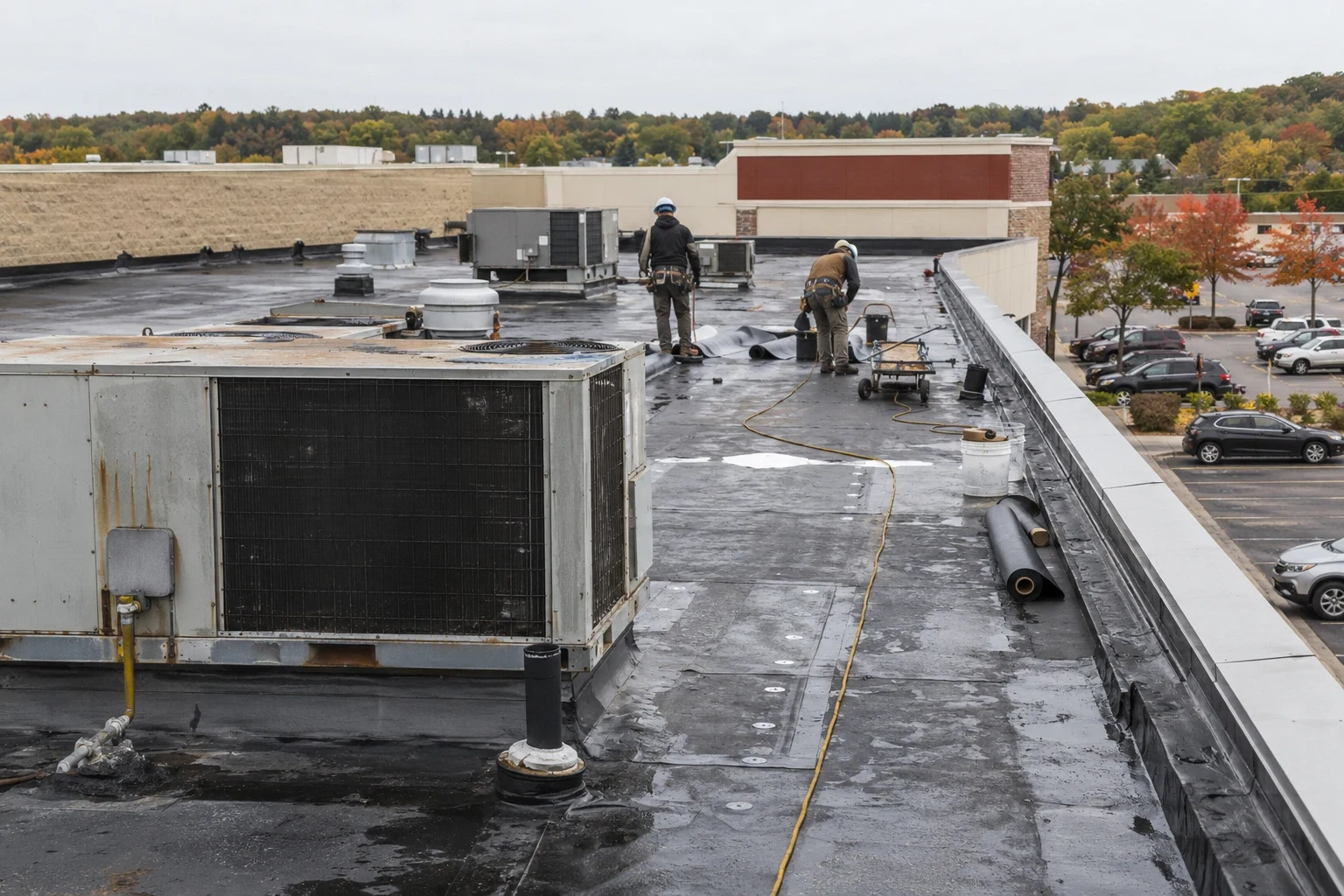
A retail or restaurant chain may use one brand standard across many locations, but roofs differ by age, assembly, tenant fit-out, equipment, and repair history. A leak near a dining room, kitchen, stock area, or storefront needs a local investigation and a clear operating plan. We record each location separately, then provide portfolio summaries that do not flatten meaningful differences. Anchorage employment data shows retail and accommodation and food services among major local industries. That context explains why operating schedules matter; it does not describe any individual chain’s buildings.
Related Pages
What should a store manager report first?
Record the affected room or sales area, time noticed, whether water is active, and any immediate protection already installed. Add photographs and recent weather, but avoid moving electrical equipment or accessing a roof without authorization. Provide the location’s facilities contact and store hours. A commercial emergency response begins with safe containment and a planned inspection, not a promise that an unconfirmed source can be permanently fixed in one visit.
Use a standard ticket while preserving site-specific details. Include whether a kitchen, cold storage room, stock area, or point-of-sale system is involved. The chain’s operations lead decides whether to close or reroute part of the store. Roofing staff report the work boundary and water-protection status. This keeps customer-facing decisions with the operator and technical observations with the field team.
How can work avoid the busiest hours?
Confirm opening hours, deliveries, food preparation schedules, customer traffic, alarm requirements, and loading access. Plan where a lift can stand and which door can be used without blocking accessible routes or deliveries. A chain facilities contact can coordinate approvals across the brand, landlord, and local manager. A phased occupied-building plan may separate noisy or exposed work from store activity when conditions allow.
Do not assume after-hours work is automatically safer or available. Weather, lighting, rooftop access, labor, and security controls all matter. Before work starts, confirm who can authorize a schedule change and how the store receives updates. At breaks, secure temporary protection and leave drains clear. After each shift, send a concise note on work completed, unresolved findings, and the next planned visit.
What should a multi-location roof record contain?
Track each building’s assembly, known age, leak history, warranty paperwork, access rules, equipment, drain locations, and prior repairs. Mark the inspected roof area and tie photos to it. Use a consistent condition scale with definitions so district teams compare findings accurately. A roof asset register can identify repeat calls without assuming every site needs the same repair.
At a restaurant, note roof penetrations serving kitchen exhaust and other mechanical equipment. At a retail store, note skylights, sign supports, refrigeration lines, and tenant improvements. These are inspection prompts, not proof of failure. Coordinate with the equipment owner before disturbing a curb or line. The record should show where access was limited and whether the system could be confirmed visually.
Why review drains before a recurring leak returns?
Check strainers, bowls, scuppers, overflow routes, and visible leaders. Grease, packaging, leaves, and other debris can collect around drainage points, but the responsible party and cleaning method should be confirmed with the owner. A drainage inspection documents the condition and any authorized clearing. Do not discharge waste or alter a drain connection outside the approved work.
Anchorage’s winter climate includes recurring snow and measured snow depth, so roof visibility and drainage access can change seasonally. The operations team should follow its approved snow policy. Roof crews should not remove accumulation without a defined safety and structural plan. When the roof clears, inspect outlets and low points, then compare them with interior reports and prior repair locations.
How can a chain standardize without oversimplifying?
Standardize intake fields, photo labels, repair closeout, warranty storage, and approval paths. Leave the technical recommendation tied to each site. One store may have a small isolated flashing issue; another may have a broad membrane concern. A property-management coordination plan can help when the chain leases space and the landlord controls roof work.
Keep landlord, tenant, and chain responsibilities explicit. The tenant may report the issue while the owner controls roof access or approves work. Define who pays, who selects the contractor, and who communicates with occupants before the repair is scheduled. Closeout should identify who accepted the work and any condition still needing landlord attention. That clarity prevents duplicate work orders and missed warranty notices.
When should the chain request a capital review?
Look for repeated calls, widespread wear, wet insulation findings, recurring drain issues, or repairs that cross multiple roof zones. Compare the cost and disruption of continued patching with a defined replacement scope. A capital review can group locations by need and show where more testing is warranted. It should not rank stores by a single age field alone.
Use the same evidence standard for each location: photographs, date, assembly confidence, repair log, access notes, and open questions. An investment summary can then show where risk is concentrated and what decision is due. Keep a site-specific appendix so a regional buyer can inspect the basis for each recommendation.
What makes Anchorage scheduling distinct?
Anchorage is a mixed-use service market with commercial areas in Downtown, Midtown, and along corridors such as Spenard. Adopted planning materials describe Downtown as a civic and employment center and Spenard as a corridor for commercial development, housing, and reuse. These places are broad orientation points, not target addresses. A Spenard Corridor visit is scoped only after the customer confirms its actual property and operating rules.
Regional labor data places retail and accommodation and food services among major employment sectors, but it cannot identify the hours or construction history of a particular location. We ask the store team directly. Weather and roof access also influence timing. A project calendar should name the specific approved work windows, point of contact, and contingency if precipitation interrupts the work.
When several stores report similar symptoms, compare the timing and weather but resist assuming one repair specification fits every roof. A restaurant exhaust curb, a retail skylight, and a storefront parapet each create different inspection questions. Map the reported area, inspect the local detail, and record whether the operator or landlord owns the next step. Chain standards can define photo naming, warranty storage, and approval thresholds; they should still leave room for site-specific conditions. Midtown’s commercial planning area and the Spenard Corridor include mixed property contexts, so a technician should confirm the exact customer site and its business hours with the responsible manager.
Share a short store-facing notice with the expected work window, affected route, and local contact. Keep it practical and avoid making a promise about the leak source before the inspection confirms it.
Hotels and food-service sites share operational access questions, so the hospitality roof guide may help regional teams align service notices. Landlords can also review property-management coordination for approval handoffs. Spenard planning includes commercial reuse and housing; a store’s own business hours and access contact still set the work plan.
Commercial Roofing Questions
Can a chain use one roof inspection form everywhere?
A shared form helps compare sites, but each location needs its own roof map, access notes, assembly details, photos, and recommendation.
Can roofing work happen while a store is open?
Sometimes, with owner-approved access, protection, customer-route controls, and safe weather. The schedule depends on the work and the site.
Does an interior stain mean the roof needs replacement?
No. It identifies an area to investigate. The source and scope should be established before recommending repair or replacement.
What if the landlord controls the roof?
The tenant or chain should follow the lease and notify the landlord’s authorized contact. Roof access and repair approval are confirmed before mobilization.
Discuss the roof decision with a field team
Share the roof plan, leak record, prior repairs, access requirements, and the decision deadline. We will define an inspection scope and identify what the available evidence can support.
Request a roof assessment or call 555-555-5555.