
Ponding Water Roof Repair in Anchorage, AK
Overview
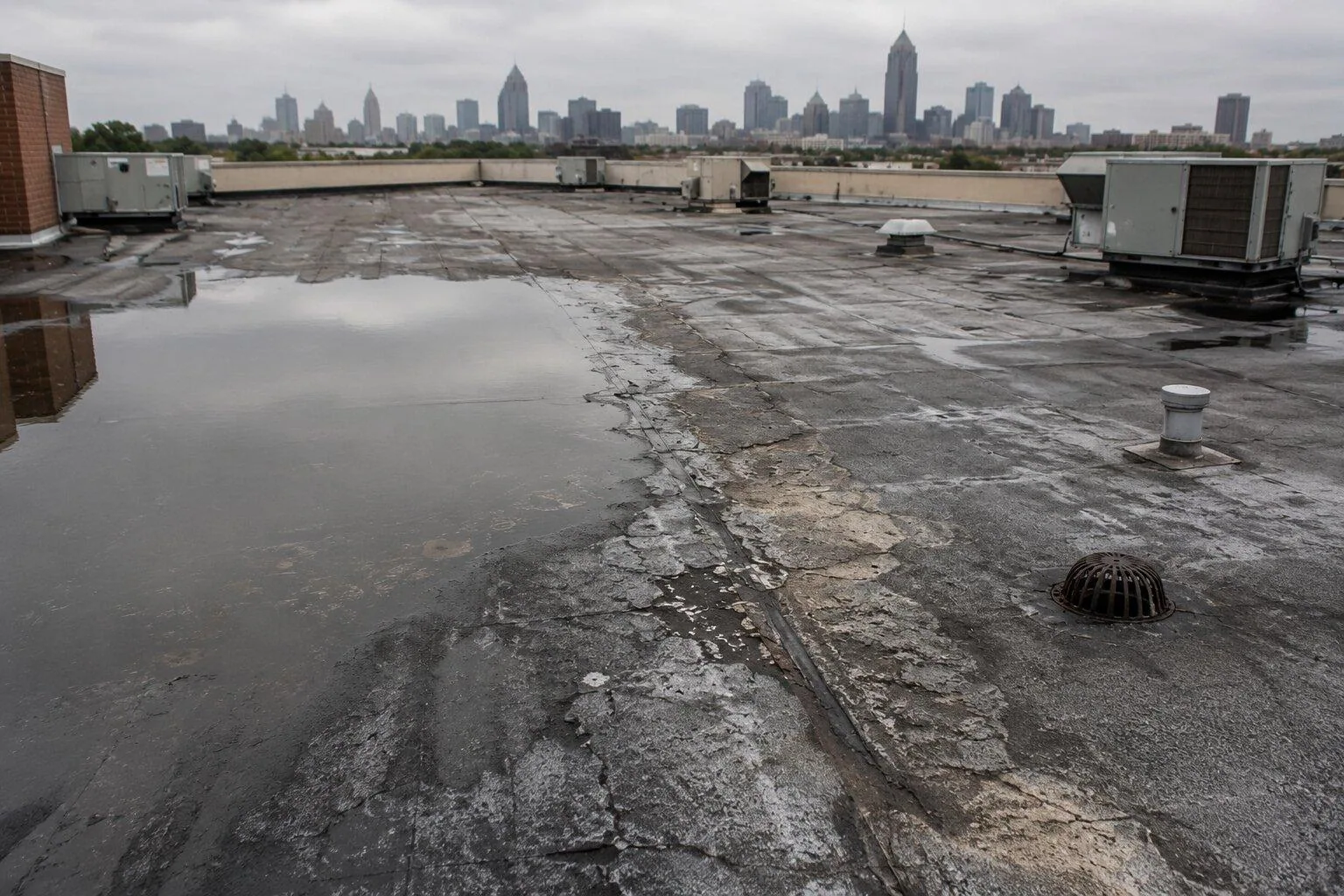
Water that remains on a commercial roof after surrounding areas have drained deserves a measured review, not an automatic patch or coating. The inspection should distinguish a blocked outlet from a low area, membrane concern, or changing roof geometry. Record when the water was seen, recent weather, nearby drains, and any interior symptoms. In Anchorage, snow and seasonal melt can change what is visible, so the report should state whether the roof was clear, wet, or covered. A repair decision follows the evidence and assembly, with structural questions referred to the appropriate professional.
Related Pages
What should the site team record first?
Note the date and time, approximate water boundary, depth only if it can be measured safely, nearby drains, and the time since precipitation or thaw. Photograph the area from a stable access point and mark it on the roof plan. Indoors, identify the room, ceiling location, and whether staining is new or recurring. Do not walk through standing water near electrical equipment or step onto an uncertain roof surface. A commercial roof inspection can map the condition and note limitations before repair is proposed.
Separate direct observations from assumptions. A puddle does not by itself prove a failed membrane, a blocked drain, or a structural problem. Record whether the water boundary changes after the roof drains and whether debris is visible at the inlet. If water is entering the building, the owner can authorize interior protection while a qualified roofer evaluates safe access. Keep the original photographs, timestamps, weather notes, and roof-zone label together so the next visit can compare the same location.
How do roof drains and scuppers enter the review?
Check accessible strainers, bowls, leaders, scuppers, and nearby flow paths for leaves, packaging, ice, or other obstructions. Clear only what the site authorizes and the crew can reach safely. A drain and scupper service can document whether water reaches the outlet and whether discharge continues beyond the roof edge. Do not push debris into a pipe or assume a clear strainer confirms that a concealed leader is open.
Drainage observations should include the outlet location, visible condition, and the water path leading to it. Note any separation, damaged seal, or low point around the bowl without covering it with an unapproved sealant. If several drains serve one zone, identify each one independently. The record should say which components were observed and which were outside the inspection scope. A plumber or other trade may be needed when a concealed line appears restricted.
What can cause water to collect away from a drain?
Roof geometry, insulation changes, substrate movement, previous repairs, and deflection can all affect drainage, but an inspection should not assign cause from appearance alone. Compare the area with available roof plans, repair records, and prior photographs. Mark the approximate low area and adjacent high points. A condition report can preserve that map for comparison and identify questions that need an engineer or design professional.
Do not add a tapered system, fill, or coating solely to make a puddle disappear. First determine whether the proposed work is compatible with the existing assembly, drainage design, and roof loading. A change in slope may affect adjacent drains, door thresholds, equipment supports, or warranty terms. When measured movement or structural performance is a concern, pause the roofing scope until the owner has obtained the required professional review.
How can the team tell whether the membrane is involved?
Inspect seams, patches, penetrations, flashing transitions, and the membrane surface around the water boundary. Look for open joints, punctures, displaced flashing, blisters, or repairs that have separated. Use a method appropriate to the roof system and permission granted for testing. A puncture assessment addresses a discrete opening; it does not replace evaluation of drainage or substrate conditions.
If the assembly is unknown, identify visible markings and consult existing project documents before selecting a repair material. Different membranes and attachment methods require compatible details. Avoid cutting, probing, or applying test chemicals without authorization and a defined procedure. Record the limits of any test and retain before-and-after images. If no breach is confirmed, the report should say so plainly and keep the drainage finding separate from an unverified leak theory.
How should interior leakage be connected to roof evidence?
Map each reported interior symptom to a roof zone, while recognizing that water can travel along decks, insulation, framing, or wall assemblies before it appears. Ask when the stain began, whether it changes during rain or thaw, and whether nearby mechanical systems have been checked. A leak investigation can compare these observations without promising that the closest roof feature is the source.
Protect contents or equipment only with the owner’s approval and appropriate building procedures. Do not remove ceiling materials or interrupt electrical systems without authorization. If moisture is active, document its timing and location and coordinate access with the facilities contact. A roof repair can proceed when the source and work boundary are sufficiently supported; otherwise, the next step may be additional testing or review by another trade.
What belongs in a ponding-water repair scope?
State the exact roof zone, observed condition, proposed repair, compatible materials, access needs, weather window, protection, and closeout method. If the issue is debris, describe the clearing and disposal. If a membrane detail is open, define its repair boundaries and test method. For an outlet concern, specify what is included at the roof surface and what concealed piping remains excluded. A repair proposal should distinguish confirmed work from allowances or investigation.
Include a contingency for conditions hidden beneath the surface and require owner approval before expanding the work. The scope should not promise that a visible puddle will never recur unless the drainage change has been designed and verified. Identify whether manufacturer or warranty approval is needed, and describe what evidence will be delivered at closeout. This keeps a small corrective visit from silently turning into an unreviewed roof redesign.
How do Anchorage seasons affect follow-up?
Snow cover, freeze-thaw transitions, and meltwater can obscure the membrane or alter the visible water path. Record the observed accumulation as a dated condition and do not extrapolate one roof-zone image to the rest of the season or another building. Arrange a return when the roof is safely accessible and the relevant drainage features can be seen. Related records may include Anchorage service-area coverage flashing failure review.
Anchorage’s Downtown is identified as its City Center in the municipal land-use framework, while the Midtown planning area includes its commercial core and adjoining neighborhoods. These district names help describe where service is available; they do not establish a customer location or site condition. For each building, preserve the roof-zone map, repeat photographs after comparable weather, and assign any unresolved structural or drainage-design question to the proper professional.
A follow-up should compare the same drainage point after a similar weather event and record how long water remained, if the owner has a safe observation method. That comparison is more useful than treating one post-storm image as a permanent condition. In Anchorage, snow cover can change what the roof team can see, so return timing matters. The service-area page for Downtown Anchorage describes a broad district only; this review remains specific to the roof plan, access, and verified conditions at the property.
Commercial Roofing Questions
Does standing water always mean the roof is leaking?
No. Standing water and a leak are separate observations. The inspection should map drainage and membrane conditions, then connect any interior symptom with evidence.
Can a roofer clear a drain during the visit?
If access is safe and the owner authorizes the work, visible debris may be cleared. Concealed piping or unsafe conditions require a different scope or trade.
Should ponding be fixed with a roof coating?
Not automatically. The team first needs to identify the cause, roof system, drainage design, and material compatibility.
What if the low area appears to be moving?
Document the change and pause roofing assumptions. The owner should obtain qualified structural or design review where warranted.
Map the water and drainage condition
Share the roof plan, timing of the water observation, nearby outlets, interior symptoms, and access constraints. We can document what is visible and define a safe next step.
Request a roof assessment or call 555-555-5555.