
Insurance Restoration Roofing in Anchorage, AK
Overview
A useful damage record distinguishes what was observed from what still needs testing. For a commercial roof in Anchorage, AK, we map the reported interior area, inspect corresponding roof zones, photograph visible conditions, and note any access or weather limits. The National Weather Service tracks snowfall, snow depth, temperature, and precipitation for Anchorage; those records provide seasonal context, not proof that a particular roof failed. The facility's dated observations and the roof itself are the basis for the repair scope. A restoration scope should separate event timing, observed roof damage, interior reports, and pre-existing maintenance notes. We ask what changed, when it was first noticed, which rooms were affected, and what temporary steps have already been taken. Dated photos and the roof plan help align the evidence. Our report describes roofing conditions and recommended work; it does not decide policy interpretation, coverage, or whether a carrier will approve a payment.
Related Pages
What the first report should separate
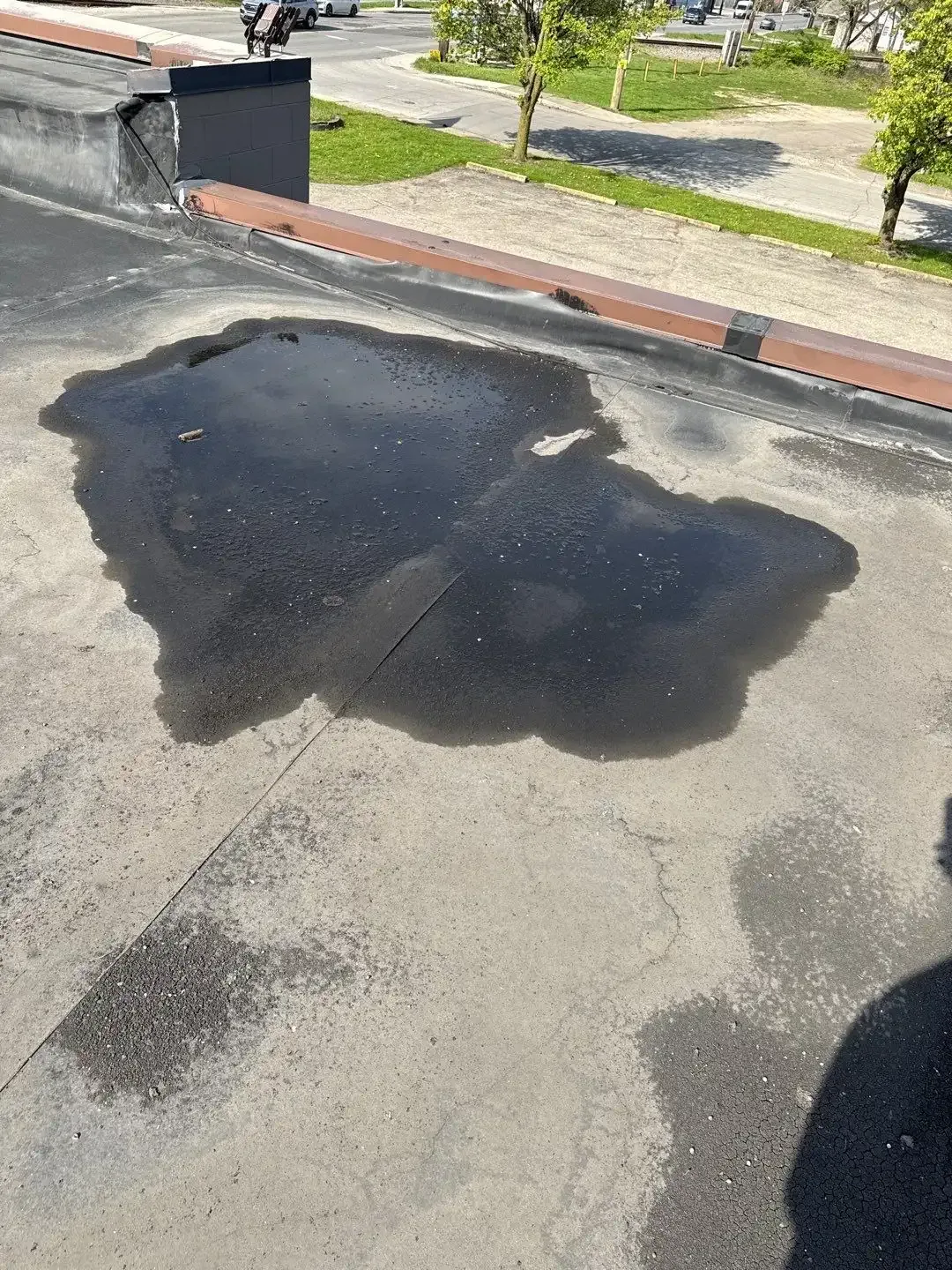
We document membrane punctures, open seams, displaced metal, flashing separation, blocked drainage, impact marks, and related conditions where present. Each photograph is tied to a roof zone and described without stretching what it proves. If a concealed layer could change the work, we identify a proposed test location and how the opening would be restored. That leaves the owner with a clear distinction between confirmed surface damage and an area that needs verification. A field record can show a puncture, seam opening, displaced edge metal, impact mark, or flashing separation when those conditions are visible. Each image should identify a roof zone and viewing angle. If damage is concealed, we propose a defined test and restoration detail for the owner's authorization. A report should avoid calling a hidden condition confirmed until it is verified. That protects the accuracy of both the estimate and the repair scope.
How an observed condition is recorded
A water stain may not sit directly beneath the opening. We align the room report and event timeline with the roof plan, drainage layout, seams, and exposed transitions. The report describes the path that fits available evidence and marks other possible routes for additional checks. If the building has multiple roofs or additions, each is mapped separately. This helps prevent a condition at one elevation or section from being treated as a finding across the whole property. Anchorage's climate data include recurring snowfall and snow-depth measures. Snow cover, clearing, thaw, and refreeze can affect roof access and what an inspector can see. We record those conditions and the date of the visit, then schedule a return if a critical area was blocked. Climate records help explain seasonal inspection context but do not prove that snow or ice damaged a particular assembly.
Which repair facts support a scope
Repair options should state the affected area, compatible material, preparation, flashing detail, and any temporary measure already performed. We identify the repair boundary and explain why it stops there or needs to extend farther. Replacement or a coating may be considered only when assembly condition and project requirements support it. The scope can separate immediate water control from permanent work and list any follow-up inspection needed after thaw, drying, or access improves. A local fact should not replace a building observation. Downtown Anchorage is mapped as a mixed civic and employment center; Midtown planning includes a commercial core with nearby business areas. The city setting can influence staging and access conversations, while the claim file still depends on the subject property's roof, service history, and observed damage. We do not transfer a finding from one district, facility, or storm report to another building.
Where weather context belongs
Anchorage commercial districts include Downtown's mixed-use City Center and Midtown's business areas, which can bring varied building uses and access constraints. Those planning facts help frame site coordination but do not establish a roof's age or construction. We record the facility contact, access limits, interior protection needs, and operational windows that affect restoration. A logistics or healthcare building can require different phasing than a retail or hospitality property, even when the roof material appears similar. Repair documentation identifies the proposed material, preparation, flashing method, boundary, and follow-up needed. If emergency protection was used, it has its own record and does not substitute for a permanent repair. The owner can keep a copy of the work scope, invoices, photos before and after, and any moisture verification. This file supports future maintenance even if the insurance question is still being reviewed.
What the owner should retain
Owners should retain the first report, dated photographs, roof plans, maintenance records, invoices for earlier repairs, and any correspondence about the loss. We can provide an inspection summary and a contractor scope describing visible conditions and recommended work. We do not determine coverage or promise insurer approval; those decisions belong to the policyholder and carrier. Our role is to make the roof work legible and technically specific, so the person handling the claim can evaluate the repair information. When a leak returns, compare the new symptom with prior photographs and the earlier repair location. The water route might cross a seam or transition before reaching the interior. We inspect the surrounding roof zone and note any condition that expands the repair. If hidden layers could alter the work, we identify a limited opening, its restoration method, and the choice the result may inform. A generalized observation such as 'roof damage' is not a repair boundary. If a follow-up is scheduled, keep the same roof-zone labels and photo directions on the return visit. A dated comparison can show whether a repair stayed stable or whether another inspection is warranted.
How the restoration path moves forward
After the initial review, we identify the next action: temporary protection, defined repair, moisture verification, or a broader roof survey. A property management teams can trace an active leak; public agency facilities can map suspected moisture where conditions suit the method, and commercial roof damage repair support a written condition record. When emergency response is needed, commercial leak investigation focus on safe access and limiting water entry before permanent details are selected. The owner receives a scope, photographs, and any open questions for the project file. The next step may be immediate water control, an inspection, a repair, or a roof-wide survey. A documented roof conditions report preserves dated findings; Downtown Anchorage service area provides a real local service area, and roof moisture surveys may guide moisture verification when conditions are appropriate.
Commercial Roofing Questions
Can you tell the insurer what is covered?
No. Our role is to describe roof conditions observed in the field and the construction work those findings support. The policyholder and insurer address coverage separately; open questions remain labeled until they can be verified.
What records should be saved after roof damage?
Keep dated photographs, roof plans, maintenance history, prior repair invoices, inspection notes, and communications about the event. Those records help connect the reported loss to the inspected roof zones.
Can a roof inspection determine the exact leak entry point?
Sometimes the cause is visible; in other cases, water can travel under the membrane or along transitions. We describe the evidence and identify any test or access needed to narrow the path.
Should temporary protection appear in the repair scope?
Yes. Record where it was used, what it was intended to control, when it was applied, and whether permanent repair remains. That prevents an interim measure from being confused with completed restoration.
What if roof access was limited during the first visit?
The report should name the inaccessible zones and why they could not be checked. We can schedule a follow-up under safe access conditions or propose an owner-approved method to verify those areas.
Build the roof record
Send the loss timeline, affected rooms, roof plan, prior work, photographs, and any access limits. We can document visible conditions and prepare a defined repair scope for the project file.
Request a roof assessment or call 555-555-5555.