
Silicone Roof Coatings in Anchorage, AK
Overview
A silicone coating may remain exposed to standing water, but it still needs a sound surface beneath it. We inspect the existing membrane or metal, coating adhesion, seams, drains, and flashing before proposing a recoat. In Anchorage, AK, recurring snowfall and below-freezing winter periods make the path from snowmelt to the outlet a key part of that review. The coating is only one layer in the roof system.
Airport Heights is a named Anchorage Bowl neighborhood, while Downtown Anchorage serves commercial, office, residential, and public uses. Building operations differ across those settings, so we confirm roof access and staging with the facility director. The surface condition and assembly determine what work is suitable. A commercial roof inspection can document coating wear and the roof details tied to it.
Related Pages
Will the coating bond to the existing roof?
Adhesion starts with the substrate. We identify the existing roof type, prior coatings, repair materials, dirt, chalking, and areas where the surface has separated. A silicone layer applied over loose material can release with that material rather than protect it. Cleaning, drying, priming, or removing failed coating may be needed before a new application can proceed.
A test area helps confirm that preparation and the proposed coating work together. We select a representative location, prepare it as specified, and allow the test to cure before evaluating adhesion. If the old coating is incompatible or unstable, that result can change the scope. We record the test location and preparation so the production work follows the same conditions.
At transitions, the coating needs to tie into seams, penetrations, curbs, drains, and roof edges without leaving thin or exposed points. We inspect each detail separately because a sound field does not make a failed curb flashing sound. Where a roof has several earlier repairs, we map their materials and edges before deciding whether the entire field is ready for another layer.
What happens when water stays on the roof?
Silicone systems can tolerate ponding better than some coating types, but standing water still deserves a close look. We check drain bowls, scuppers, overflow routes, low areas, and coating edges around the water line. Debris, ice, or a blocked outlet can hold water against a detail and conceal a seam. The drain and the surrounding roof need inspection together.
Alaska climate records track snowfall and snow depth as recurring seasonal conditions. Once melt begins, we inspect whether water can reach the intended outlets and whether the coating remains intact where snow or ice has collected. A frozen drain changes access and observation, so roof work must follow a safe winter inspection plan. A drain and scupper service can correct outlet issues that direct water toward coating edges or penetrations.
Coating does not change the roof’s slope. If water remains because the substrate has a depression, the correction may involve reshaping a local area before recoating. If the deck has deflected or an outlet elevation is wrong, the owner may need a broader drainage or assembly decision. We show the observed water path, not just the length of the ponding mark.
Which preparation does the surface need?
Preparation removes contaminants and loose material that interfere with adhesion. We inspect for dirt, biological growth, old sealant, chalking, rust, and coating that has lifted at a seam. Pressure washing or another cleaning method must suit the roof material and protect openings below. The work plan should identify how water will be managed and how the surface will dry before coating.
Metal roofs need attention to rust, fasteners, and panel movement. Membranes need a check for open seams, exposed reinforcement, and prior patches. At a roof edge or parapet, coating should reinforce the detail without covering a drain opening or interrupting an intended termination. A spray foam roof requires preparation that protects the foam profile and closes any exposed or damaged areas before the coating goes on. An acrylic roof coating has different drainage and weather limits, so we match the product to the roof and expected water exposure.
Weather affects surface preparation and application. We confirm substrate temperature, moisture, and the product’s application limits for the planned work window. Cold conditions or precipitation can delay coating; rushing a wet surface can compromise the bond. The facility schedule also matters when cleaning, lifts, or work at entrances could affect operations.
Does a damaged detail need repair first?
Yes, failed seams, loose flashing, open penetrations, wet insulation, or damaged metal need correction before the field is coated. A coating may reinforce a prepared detail, but it cannot restore a failed attachment or dry wet insulation. We remove unsound material, repair the roof assembly, and create a stable surface for the coating tie-in.
Downtown Anchorage’s City Center designation brings commercial and civic uses into a mixed setting. For an occupied building there, the scope should make clear how crews will protect entries, rooftop equipment, and areas below the work zone. A commercial roof repair can address an isolated failure before a coating project extends over the surrounding field.
When a leak is active, emergency roof repair can stabilize the opening, followed by a permanent repair after the water path is confirmed. We document what was opened, what materials were installed, and where the new coating will connect. If the existing roof is too wet or unstable, commercial roof replacement may be the more appropriate path.
How should the recoat scope be written?
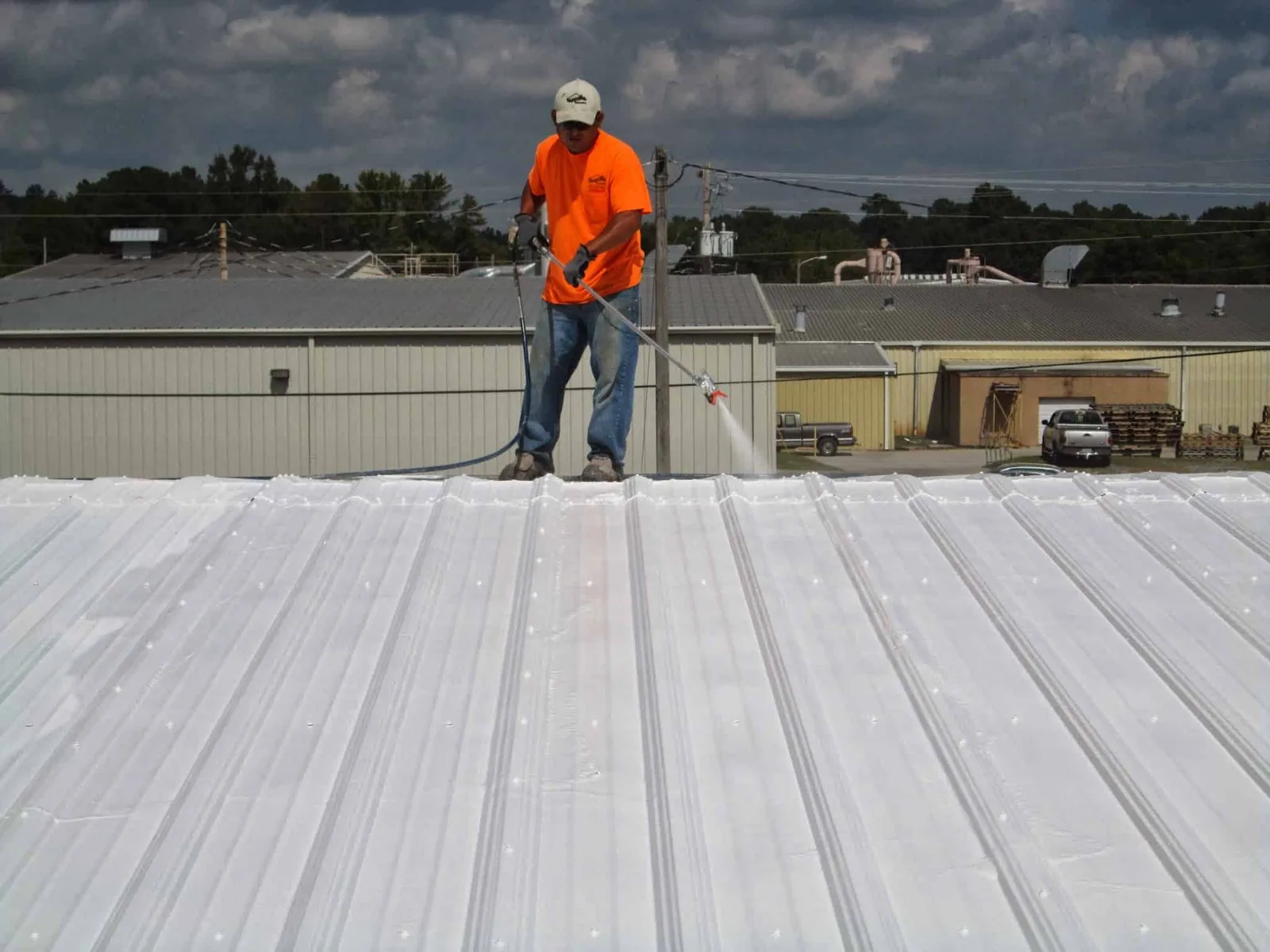
A useful scope names the coating system, preparation method, test areas, repairs, reinforcement details, and application conditions. It should identify the roof sections included and explain how coverage and finished thickness will be checked. That makes it easier to compare proposals and inspect the completed work. We also note exclusions such as wet insulation or concealed deck damage that must be resolved before coating can continue.
The application sequence should protect drains and avoid leaving thin spots at edges, seams, curbs, and penetrations. We check coverage across the field and verify that reinforced details have the specified material. Silicone residue can affect later maintenance and coating choices, so product details belong in the service record. The next seasonal inspection can then check the same roof zones and repair edges.
Keep photos of the original surface, repairs, test patches, and completed coating with product information and maintenance records. A Airport Heights service-area inspection or an inspection in another part of Anchorage should follow the building’s own access plan and roof condition. The coating decision should be based on the observed assembly, not an assumption that a fresh surface solves every water issue.
Commercial Roofing Questions
Can silicone coating go over an existing silicone layer?
It may, if the existing coating is clean, adhered, compatible, and the substrate below remains sound. We test representative areas and repair failed details before applying another layer. A loose or contaminated surface needs preparation beyond simply covering it.
Does silicone solve ponding water?
No coating changes the roof’s slope or clears a blocked outlet. Silicone can tolerate standing water when the system is correctly selected and applied, but we still inspect how water reaches the drain and whether the surrounding assembly is sound. Drainage correction may be part of the work.
How do we know if a roof needs a recoat or replacement?
The decision follows coating adhesion, moisture below the surface, roof attachment, and the number and condition of prior repairs. We inspect representative areas and document any test openings. Dry, stable sections may be recoated; widespread wet or failed materials can favor removal.
What should we expect during coating preparation?
The crew cleans the surface, removes unsound material, repairs open details, and confirms the roof is dry enough for application. We protect drains and equipment, then verify that the prepared surface matches the coating requirements. Building access and weather can set the work window.
Check adhesion and the meltwater route
Share the roof plan, coating history, leak dates, prior repairs, drainage concerns, and access limits. We will inspect the substrate and details, then outline preparation, repair, recoat, or replacement options that fit the existing assembly.
Request a roof assessment or call 555-555-5555.