Commercial Roof Coating in Anchorage, AK
Overview
A coating can protect a roof only when the layers beneath it are suitable to remain. In Anchorage, AK, freeze-thaw transitions and recurring snow make the substrate, drainage, and installation window part of the decision. We inspect the membrane, repair history, attachment, insulation, and details before recommending restoration. If the assembly is wet or unstable, covering it can carry the existing problem into the next layer.
The commercial district in Midtown and industrial areas near Ship Creek include buildings with different roof configurations and operating needs. We assess each roof rather than assuming a coating fits every property. When a coating is appropriate, we define the preparation, repairs, reinforcement, and application conditions. A roof inspection establishes the baseline before product selection.
Related Pages
Is the existing roof a coating candidate?
We look for a dry, stable substrate with attachment that can support the restoration system. The inspection checks membrane condition, seams, blisters, splits, prior patches, penetrations, perimeter metal, and areas where water has remained. Infrared patterns may identify locations for testing, but test cuts are needed to confirm hidden moisture. If insulation is wet, the repair boundary must be addressed before coating work begins.
Drainage also matters. A coating does not correct a low area, missing slope, blocked outlet, or weak flashing transition on its own. We inspect drain bowls, scuppers, sumps, overflows, and the route water follows during a thaw. If standing water or movement is present, the proposal identifies whether it needs a separate correction before the coating can be installed.
Anchorage climate normals include snowfall and snow depth. That makes the timing of preparation and cure important: the substrate must be clean, dry, and within the selected system’s installation limits. The snow record is local context, not proof of a building’s condition. We confirm temperature, precipitation, roof access, and forecast with the project team before setting the work window.
What preparation makes the system work?
Preparation begins with cleaning the surface and identifying areas that will not accept the coating. Loose material, contaminants, incompatible sealants, and unsound patches must be addressed. We check whether the existing membrane needs a primer and whether adhesion testing is appropriate. The scope records how the surface will be prepared and which test results govern the selected product.
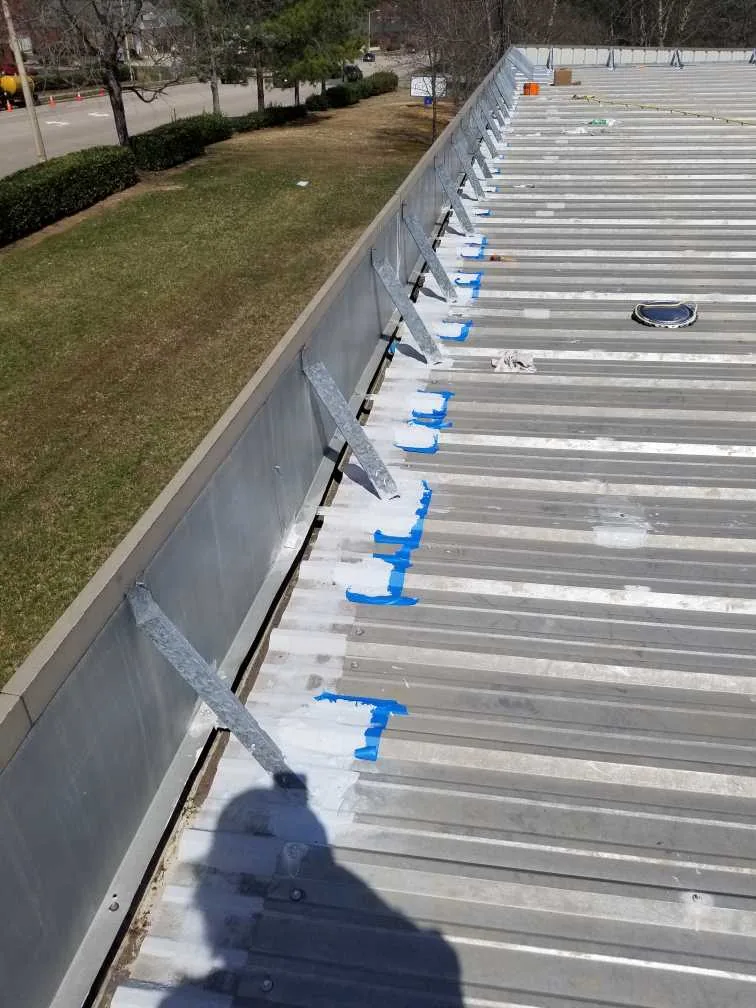
Seams, terminations, penetrations, and transitions need detail work before broad application. We reinforce or repair those areas using the system’s compatible materials, then check the result before moving into the field coating. At drains and scuppers, the detail must preserve an open water path and provide a sound tie-in. Our drainage correction may be part of the project if those components need more than cleaning.
Rooftop equipment and service paths create interruption points. We coordinate with the facility contact to identify areas that must stay accessible and any trade work that needs to happen first. A coating should not be applied over a detail that will be cut open later for mechanical work. The sequence includes those dependencies and protects each completed area from foot traffic until ready for service.
How does the coating fit the roof?
Silicone and acrylic coatings have different properties and installation requirements. We compare the existing membrane, slope, ponding exposure, climate window, and planned maintenance before choosing a system. The proposal identifies product type, primer, reinforcement, coverage plan, and application conditions. We do not treat a coating label as a substitute for a complete roof assembly review.
For a low-slope membrane, compatibility depends on the surface and the manufacturer’s written instructions. A silicone system may suit some conditions, while an acrylic coating may be appropriate in another application. We verify the substrate, adhesion, and details before specifying either option. If metal is involved, the movement and joint layout need their own review before applying a fluid-applied system.
Anchorage’s cold-season conditions narrow the periods when preparation and curing can proceed. We schedule around the system’s stated temperature and moisture limits, not a general promise about the calendar. If conditions change, the crew protects prepared sections and resumes when the roof can accept the material. The scope describes where a day’s work can begin and how the area will be closed if weather intervenes.
How can work continue around the building?
Coating projects often require clean staging, roof access, and a stable window without precipitation. We confirm the site contact, equipment locations, pedestrian routes, and delivery area before materials arrive. In Midtown, a commercial property may have tenant and service-hour limits. A roof near the Ship Creek industrial district may have delivery or yard constraints. The property manager provides the specific access plan.
Anchorage’s industrial land-use plan preserves areas for production, freight, warehousing, repair, and wholesale. These are citywide land uses, not evidence of what operates within a particular building. We ask the facility team about its operation, roof access, and equipment service schedule, then set a coating sequence around that information.
Work proceeds in manageable roof zones so each section can be prepared, detailed, coated, and protected. The daily plan identifies completed areas and any open tie-in. If a mechanical trade needs roof access, we coordinate before application so a new penetration does not disturb fresh coating. The closeout plan includes cure time, access restrictions, and the first inspection point.
When is another roof option better?
A coating is not a substitute for replacing wet insulation, correcting a failed deck, or rebuilding an unstable assembly. A targeted repair may be enough when damage is localized and the surrounding membrane is sound. If layers are saturated or attachment is compromised, selective tear-off or full replacement may be the more appropriate path. We compare those scopes against the inspection and test results.
The owner should see what each option includes: preparation, seam and flashing repair, reinforcement, coating area, drainage correction, temporary protection, and closeout documentation. We mark excluded conditions and the evidence that would trigger added work. That makes it easier to compare restoration with a recover option or a complete replacement scope.
After application, the roof record should note material type, work zones, detail repairs, weather conditions, and areas that need monitoring. A maintenance visit can check seams, edges, drains, and coating condition at planned intervals. Share the roof plan, system history, leak dates, access needs, and snow-management rules. We will inspect the assembly and explain whether coating restoration fits its condition.
Commercial Roofing Questions
When can a new coating bond to an existing roof surface?
Only if the existing assembly is stable, dry enough for the selected system, compatible, and properly attached. We inspect the membrane and details, test adhesion where needed, and confirm moisture with test cuts when the result affects the scope. Unsound layers must be addressed before coating.
Will a coating fix ponding water?
A coating can protect a prepared surface, but it does not create slope or correct a blocked drain by itself. We review low areas, sumps, scuppers, and overflow paths, then identify any drainage work that must happen before application.
Can coating work happen in winter?
The roof must meet the product’s temperature, moisture, and cure requirements. Anchorage snow and thaw conditions can limit preparation and application windows. We schedule from the actual roof and forecast conditions and protect prepared areas if the work must pause.
How do you choose silicone or acrylic?
We compare the membrane, slope, drainage, surface condition, compatibility, and installation window against the product requirements. Adhesion checks and detail review can affect the choice. The proposal names the coating system and preparation steps for the specific roof.
How long should the building stay off a coated roof?
The product’s cure requirements and the completed work area set when access can resume. We explain temporary restrictions for staff and service trades, then record the first inspection point. Any equipment work should be coordinated before coating begins.
Check the assembly before choosing a coating
Provide the roof plan, membrane history, leak records, test results, access rules, and snow-management procedures. We will inspect the substrate and details, confirm whether a coating can fit, and define preparation and application scope.
Request a roof assessment or call 555-555-5555.