
Johns Manville Commercial Roofing in Anchorage, AK
Overview
A JM product family can include a membrane, insulation, cover board, adhesive, or flashing component. The roof still has to function as one assembly. In Anchorage, AK, a leak may become harder to trace when snow hides the seam or meltwater follows a path below the surface. We begin with the roof plan, visible materials, prior repairs, and access rules. Then we separate the question of which JM system fits from the question of what the existing roof needs.
That distinction helps owners in Downtown Anchorage and the Ship Creek industrial corridor compare scopes without mistaking a product list for a field inspection. The Anchorage 2040 plan preserves industrial areas for production, distribution, and repair uses. That citywide context can affect site scheduling, but not a particular roof’s assembly. We confirm work hours and material access with each facility contact. A commercial inspection can document the membrane, insulation, and condition findings before the owner chooses a scope.
Related Pages
Which JM system family matches the roof?
Johns Manville publishes single-ply systems in TPO, PVC, and EPDM, as well as multi-ply SBS, APP, and built-up assemblies. Its roofing portfolio also includes polyiso insulation, cover boards, coatings, adhesives, vapor-control materials, and accessories. Those choices matter because a repair at a welded lap is different from a repair in a multi-layer asphalt roof. We verify the roof in front of us before bringing a named product into the proposal.
A replacement comparison should show the actual membrane or ply, attachment, insulation, cover board, flashing, edge treatment, and tear-off assumptions. The owner can compare that scope with a GAF commercial assembly or a Carlisle SynTec system only after the assemblies are written clearly. If the existing roof is EPDM, the repair detail should suit its seam method. A field review of the EPDM system can identify the lap, flashing, and substrate questions that affect repair.
What does the roof stack need to show?
Start at the deck and move outward. Record the vapor retarder if present, insulation type and condition, cover board, membrane or asphalt plies, and the way the perimeter is held. A test opening may be needed where records are missing or moisture is suspected. We agree on the location, document each layer, and restore the opening under a compatible detail. This is more useful than pricing a membrane from the roof’s color or the product name on an old invoice.
Johns Manville’s commercial line includes multiple insulation and board choices, but thickness, attachment, and compatibility depend on the project documents and roof condition. A compressible or wet layer can change fastener performance and the repair boundary. We check the deck for movement or corrosion where exposed, then photograph the transition between sound and affected material. A capital plan can keep those findings with the timing decision rather than turning a visual estimate into a fixed replacement year.
Where should drainage and flashings be inspected?
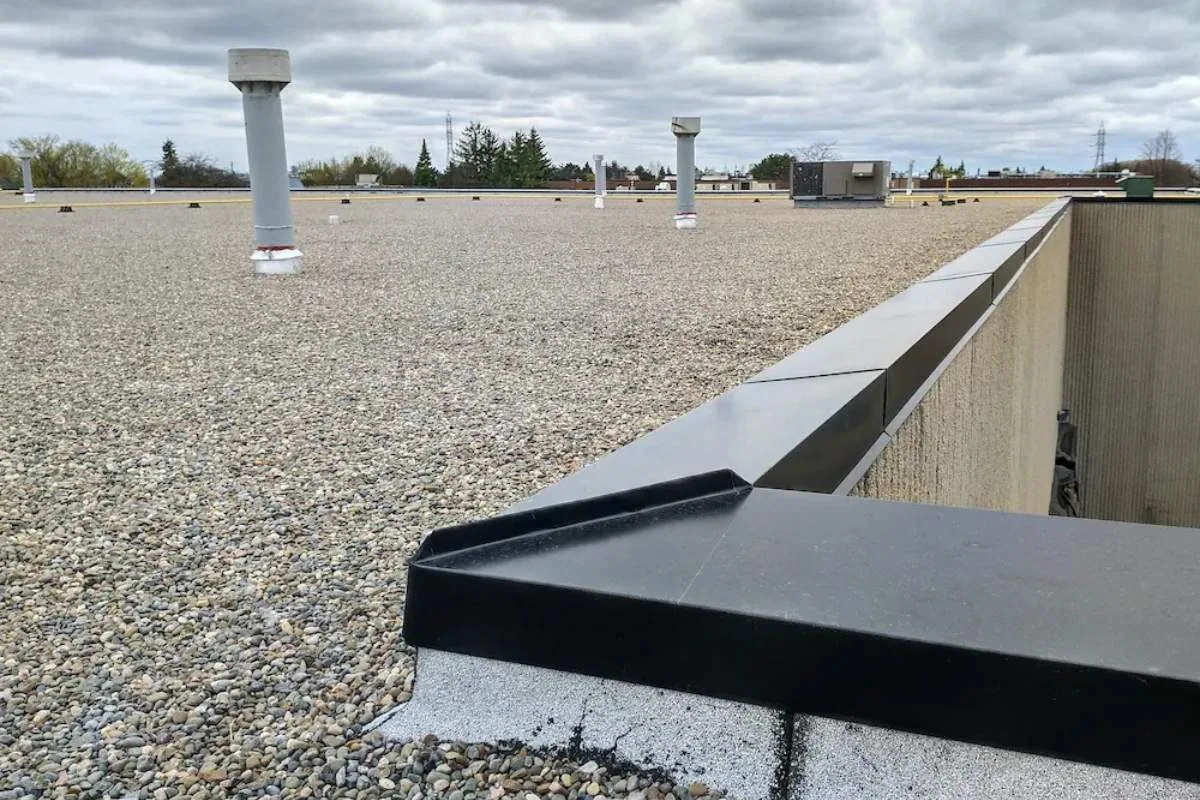
Water can enter at a drain, seam, wall, equipment curb, or edge, then travel below the membrane before it appears inside. We inspect the reported area and the route water could take across the assembly. At a drain bowl, check debris, clamping ring, membrane turn, and the slope around the opening. At a curb, inspect corners and the connection to the field sheet. A ponding-water review can distinguish a drainage issue from a membrane or insulation failure. At a wall transition, note termination height, counterflashing, and how the insulation meets the edge. At a membrane-to-metal change, the water path and fastening line should be visible in the detail. Those observations can reveal a repair item without rewriting the rest of the roof specification.
In a multi-ply roof, blisters, splits, open laps, or exposed reinforcement point to different repair questions than a TPO or PVC seam. We identify the affected layer and define whether the repair ends at one detail or extends through the roof system. Downtown’s City Center designation sits within a broader mix of commercial and public uses; a building’s own drain layout and rooftop equipment still determine the inspection route. If conditions support a larger scope, replacement planning should state what will be removed and what remains.
How does snow change the inspection record?
Anchorage’s 1991 to 2020 normals measure snowfall alongside snow depth; record winter access limits and revisit roof zones hidden by accumulation instead of treating an unseen detail as clear. Snow cover can hide a lap or drain, so the report should identify the areas that could not be reached rather than mark them as sound. When thaw conditions reveal a wet zone, we compare the interior symptom with the roof map, drainage direction, and likely entry detail. We do not treat a winter stain as proof that a specific JM product failed.
Winter access also affects staging, fall protection, and the ability to move membrane or board without damaging a finished area. The facility director provides the approved roof-access procedure and snow-removal rules. We plan the visit around that procedure and note any temporary protection that is needed before a complete repair can be scheduled. Ship Creek service coverage is a broad geographic reference; each property’s access window is set with its own operations team.
What should stay with the JM roof file?
Keep the assembly documents, product names, lot or delivery records when available, installation details, inspection photos, repair authorizations, and closeout notes together. Tag each item to a roof zone and date. If the owner later replaces a curb or adds equipment, the record should show how the flashing tie-in changed. A complete file helps the next crew select compatible materials and keeps old repairs from being mistaken for the original system.
We can prepare a condition report that distinguishes observed damage, concealed conditions, and items that need testing. The comparison may support a repair, recover, or replacement, but those options should remain separate until the layers are understood. Send the roof plan, leak dates, access limits, prior invoices, and any JM project documents. We will inspect the roof and write the work boundary so the facilities team can approve the next step with the evidence in view.
Commercial Roofing Questions
Does Johns Manville make only single-ply commercial roofs?
No. Its commercial roofing portfolio includes TPO, PVC, EPDM, SBS and APP modified bitumen, and built-up systems, along with insulation, cover boards, coatings, and accessories. We identify the installed assembly first, then recommend materials that suit the roof and project documents.
Can a JM cover board be added during a recover?
Possibly, if the existing layers, deck, moisture condition, attachment, and approved assembly support it. We inspect or test the roof before saying the substrate can remain. The proposal should list the board, fastening or adhesive method, and any limits around wet insulation or damaged deck.
What records help identify an older JM roof?
Closeout documents, material invoices, warranty papers, repair tickets, and marked roof plans are useful. We also look at seams, flashing, exposed edges, and any test opening. Product family and repair method should be confirmed before a crew applies a new material.
How should a facility team handle a leak when snow is on the roof?
Follow the approved access and snow-removal plan. Record the interior location and date, protect contents if needed, and avoid scraping or cutting into a covered area. We can document what is visible, then return to inspect the concealed drain or seam after safe access is restored.
What should a replacement estimate say about concealed conditions?
It should identify the layers assumed to remain, the limits of any testing, and how the owner approves work if tear-off exposes wet insulation or damaged deck. We define that decision process before mobilization so the crew does not expand the scope without written direction.
Make the JM assembly visible
Send the roof plan, JM closeout or product records, repair history, leak locations, and building access rules. We will identify the existing layers, document the roof condition, and prepare a scope that shows its assumptions.
Request a roof assessment or call 555-555-5555.