Carlisle SynTec Commercial Roofing in Anchorage, AK
Overview
Finding a Carlisle label on a roof does not answer whether the field membrane, edge, and curb details still work as one assembly. Carlisle SynTec lists single-ply options including Sure-Seal EPDM, Sure-Weld TPO, Sure-Flex PVC, and FleeceBACK membranes, along with insulation, adhesives, and accessories. In Anchorage, AK, the owner also has to plan around snow cover, thawing water, and limited winter access. We identify what is actually installed and map the condition before recommending a repair, recover, or replacement.
That is practical for properties connected to the Port of Alaska and the Ship Creek industrial corridor, where cargo and production activity can make access windows matter. The Port links marine freight to air, rail, pipeline, and road networks serving Alaska. That regional role is context, not a statement about a particular roof. We confirm loading areas, roof access, and operating limits with the facility director. A commercial roof inspection establishes the membrane and detail conditions before pricing.
Related Pages
Which Carlisle membrane is on the building?
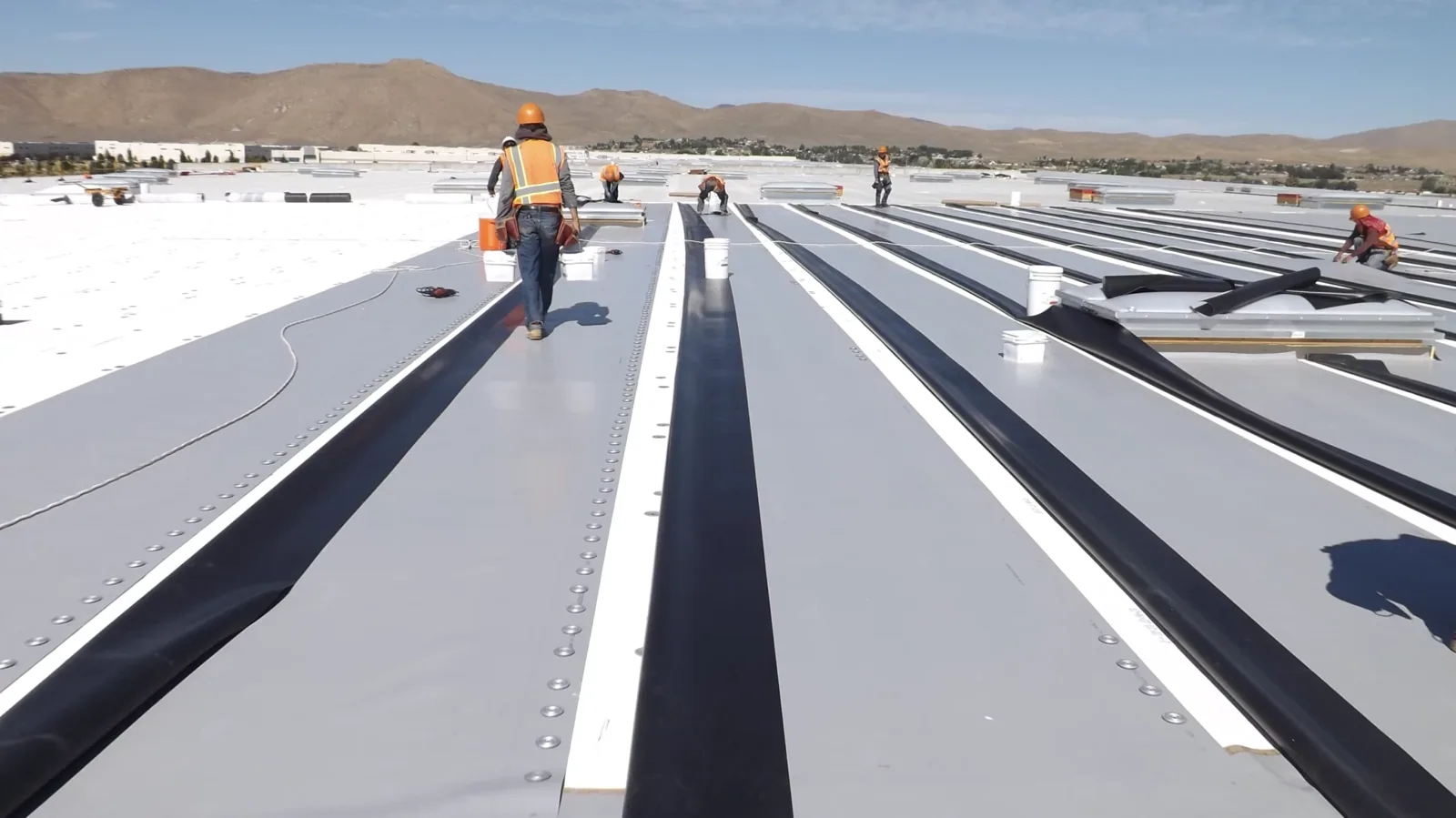
Sure-Seal EPDM uses a rubber membrane, while Sure-Weld TPO and Sure-Flex PVC are thermoplastics with heat-welded seams. The visible surface may not make the existing system obvious after years of repairs or a coating. We look for field markings, compatible flashing materials, seam construction, repair patches, and closeout records. A Carlisle-specific proposal begins with that identification, not an assumption based on a color or an old invoice.
Once the roof type is confirmed, we compare the manufacturer’s assembly details with the deck, insulation, perimeter, and penetrations. A GAF system review or a Johns Manville scope can help an owner evaluate bids that use different product families. The comparison should keep insulation, attachment, edge treatment, flashing, and tear-off assumptions visible. If these items differ, the proposals do not describe the same work even when both name a familiar membrane.
Where do EPDM and welded seams need different checks?
EPDM seam work often depends on an adhesive or tape system, so clean preparation and firm contact across the lap matter. A thermoplastic weld needs suitable heat, a clean surface, and a consistent pass at the seam. We do not apply one repair method to both. At corners and patches, we examine how the material turns, where the lap ends, and whether the neighboring sheet is sound enough to receive a tie-in.
Drain bowls, curbs, roof edges, and wall transitions deserve their own check because movement or trapped water can stress a detail even when the field looks intact. We photograph the condition before opening a repair, then record the prepared surface and finished boundary. When the owner needs a broader baseline, a written condition report keeps confirmed observations separate from suspected causes. If an active opening is allowing water inside, a bounded repair visit can protect the roof while testing continues.
What belongs in an assembly comparison?
Carlisle’s system offerings include membranes as well as insulation, adhesives, primers, and other roofing components. Those layers have to work together. We check the deck, existing vapor control, insulation thickness and condition, cover board, fasteners, and the membrane attachment method. A wet or crushed layer can affect the repair boundary and the decision to recover. If the owner’s records do not identify the assembly, a test opening can answer a narrower question than a full tear-off.
At a test cut, we document the membrane, cover board, insulation, vapor retarder, and deck in sequence, then note moisture and whether the deck is sound. The opening is closed under an approved detail. That evidence lets the owner compare the proposed Carlisle assembly with the roof that is actually present. It also keeps a replacement estimate from treating an unknown layer as a confirmed condition.
On the Port side of the Anchorage Bowl, delivery activity may make material staging and roof access an operating concern. Downtown Anchorage has a different mix of commercial, public, and office uses. The Midtown District plan also describes a commercial core beside neighborhoods, so work sequencing should follow each facility’s schedule rather than a single citywide assumption. A replacement assessment can set out removal, substrate, and insulation assumptions before the owner compares proposals.
How should a cold-weather visit be scoped?
A snow-covered seam cannot be probed as if the sheet were exposed. We check the roof-access rules, safe route, snow load procedure, and visible drainage before deciding whether a winter visit can answer the question. For Anchorage, the official 1991 to 2020 climate record tracks both snow depth and snowfall. Note when accumulation prevents a close seam check, then schedule a clear-weather return if the access route is limited. That local pattern affects what may be visible during an inspection, but it is not proof of a defect on any individual Carlisle roof.
If a thaw reveals water near a parapet or drain, the work record should identify the roof zone, interior symptom, and any temporary protection. Do not scrape ice across the membrane or direct meltwater into a seam. We return when access and visibility make a close inspection possible, then test the affected detail and trace the drainage path. For weather-related damage, a snow and ice roof review can document the condition before permanent repair is selected.
What does a usable Carlisle service record contain?
Keep the roof plan, membrane identification, repair dates, photos, warranty documents, and work authorizations together by building and roof zone. Note whether a prior visit checked the whole seam or only one location. If the roof has FleeceBACK or another fleece-backed assembly, preserve its product and attachment details so a future repair does not rely on memory. A record should show what the crew observed and what the owner approved.
We help the facility director compare the present condition with the system details and the proposed repair boundary. The EPDM assembly and a TPO assembly need different seam checks, even if the leak appears in the same roof zone. For properties in the central business area, Downtown Anchorage coverage is a broad area reference. Send the drawing, access rules, leak history, and repair closeouts so we can define the next inspection.
Commercial Roofing Questions
Can Carlisle EPDM and TPO use the same repair materials?
No. EPDM joints commonly use compatible tape or adhesive, while TPO seams are heat welded. We verify the membrane and any coating or prior patch before selecting materials. A field test or product record can prevent a repair from bonding to the wrong surface.
What should I compare when two bids name Carlisle systems?
Compare the assembly, not only the membrane name. The proposal should identify attachment, insulation and cover board, edge and flashing details, tear-off assumptions, and the work boundary. We mark exclusions and concealed-condition allowances so the owner can see whether the scopes match.
Can a Carlisle roof be recovered instead of removed?
That depends on the existing assembly, moisture findings, deck condition, and whether the proposed materials are approved for the substrate. We inspect and document those layers before stating that a recover is suitable. If wet insulation or incompatible repairs extend across the roof, removal may need a closer look.
What if the Carlisle membrane type is not known?
Start with closeout documents, repair tickets, and visible markings. We also examine seams, patches, flashing, and the field sheet before choosing a test. A repair should wait until the membrane identity is clear enough to select a compatible detail.
What should the Anchorage facility team do before winter roof work?
Provide the approved roof-access and snow-removal procedures, roof plan, drainage locations, and any known leak dates. We can then determine whether the visit can safely reach the relevant seam or drain. If snow blocks the evidence, we document the limit and schedule a clear-weather return.
Identify the Carlisle assembly before repair
Share the Carlisle product or system documents, roof plan, prior repair records, reported leak locations, and access procedure. We will inspect the assembly, map confirmed conditions, and define the work that fits the roof.
Request a roof assessment or call 555-555-5555.