
Commercial Metal Roof Retrofit in Anchorage, AK
Overview
A metal panel can shed water while a loose washer lets it enter at the fastener. Exposed-fastener roofs rely on many small connections, and each one can be affected by panel movement, aging washers, or corrosion. In Anchorage, AK, snow and thaw cycles add stress around fastener lines, laps, and eaves. We inspect the panels, attachment, underlayment, and structure before deciding whether to repair, restore, or install a retrofit assembly.
Anchorage preserves industrial uses in the C Street Industrial Corridor, while the International Airport Road Corridor connects airport activity with west and south commercial areas. The Ship Creek Industrial District sits beside Alaska Railroad yards and port-side industrial activity, while Airport Heights is a named neighborhood in the Anchorage Bowl. Those settings do not determine panel condition, but they can shape access and staging. The property’s actual panel profile and framing set the retrofit options. A commercial roof inspection can document the fasteners, leaks, and corrosion before the owner commits to a scope.
Related Pages
Which fasteners still hold?
We inspect screw heads, washers, panel ribs, sidelaps, endlaps, and the metal around each connection. A washer that has hardened or split may no longer compress against the panel. A loose screw can enlarge its hole as the roof moves. Corrosion around a fastener can weaken the panel itself, so tightening alone may not restore a durable attachment.
Fastener replacement needs to match the panel and supporting structure. A longer screw is not automatically a better choice if it misses framing or damages a concealed layer. We check the attachment path and replace deteriorated washers with compatible components. If repeated movement has elongated holes or torn panel metal, the repair may need a larger metal plate, seam treatment, or panel replacement.
Building crews sometimes add new rooftop equipment or run conduit after installation. Each new penetration needs a flashed transition and a fastening detail suited to the metal profile. We note unauthorized openings, abandoned fasteners, and repairs that cover more than one panel rib. The roof record should identify which connections were replaced and which remain under observation.
Where does water enter an exposed-fastener roof?
Leaks can begin at fasteners, sidelaps, endlaps, ridge caps, valleys, eaves, or penetrations. Wind-driven precipitation can reach an open lap, while water may travel along a panel rib before entering the building. We compare interior marks with the roof geometry and look uphill from the stain for a likely route. A patch centered above the ceiling mark can miss the actual opening.
We check panel laps for separation, missing sealant, or debris that prevents sheets from closing. At the eave, the metal should discharge water clear of the wall and protect the edge. Valleys must carry runoff without backing it beneath the panel. A drainage inspection can help when meltwater pools near a roof transition or outlet.
On industrial properties along C Street Industrial Corridor, loading and equipment activity can affect how crews reach the roof. Anchorage zoning preserves employment land there for manufacturing, storage, wholesale, and distribution uses. We plan work around the facility’s access routes and identify any loading operations affected by a lift or panel delivery.
Can a coating restore the existing panels?
A coating can help protect a metal roof when the panels remain structurally sound and the system is prepared correctly. It does not fix loose framing, severe corrosion, failed clips, or open laps by itself. We inspect panel attachment, rust, existing finishes, fasteners, and sealant before selecting a restoration approach. The surface may require cleaning, rust treatment, primer, and reinforcement at seams or fasteners.
Existing coatings can affect adhesion. We check whether the current layer is secure and compatible with the new product. A small test area may show whether preparation and bonding work as expected. Water should not be trapped beneath a coating, and all open seams need repair before the field receives a new layer. A silicone coating system has its own substrate and application requirements; the product should match the roof and drainage conditions.
Snowmelt and standing water can expose weak drainage, but a coating does not change slope. We inspect low areas and outlets, then include drainage correction if the water route is part of the failure. If corrosion has thinned the panel or attachment has failed, replacement may be more appropriate than coating over damaged metal.
What changes in a metal roof retrofit?
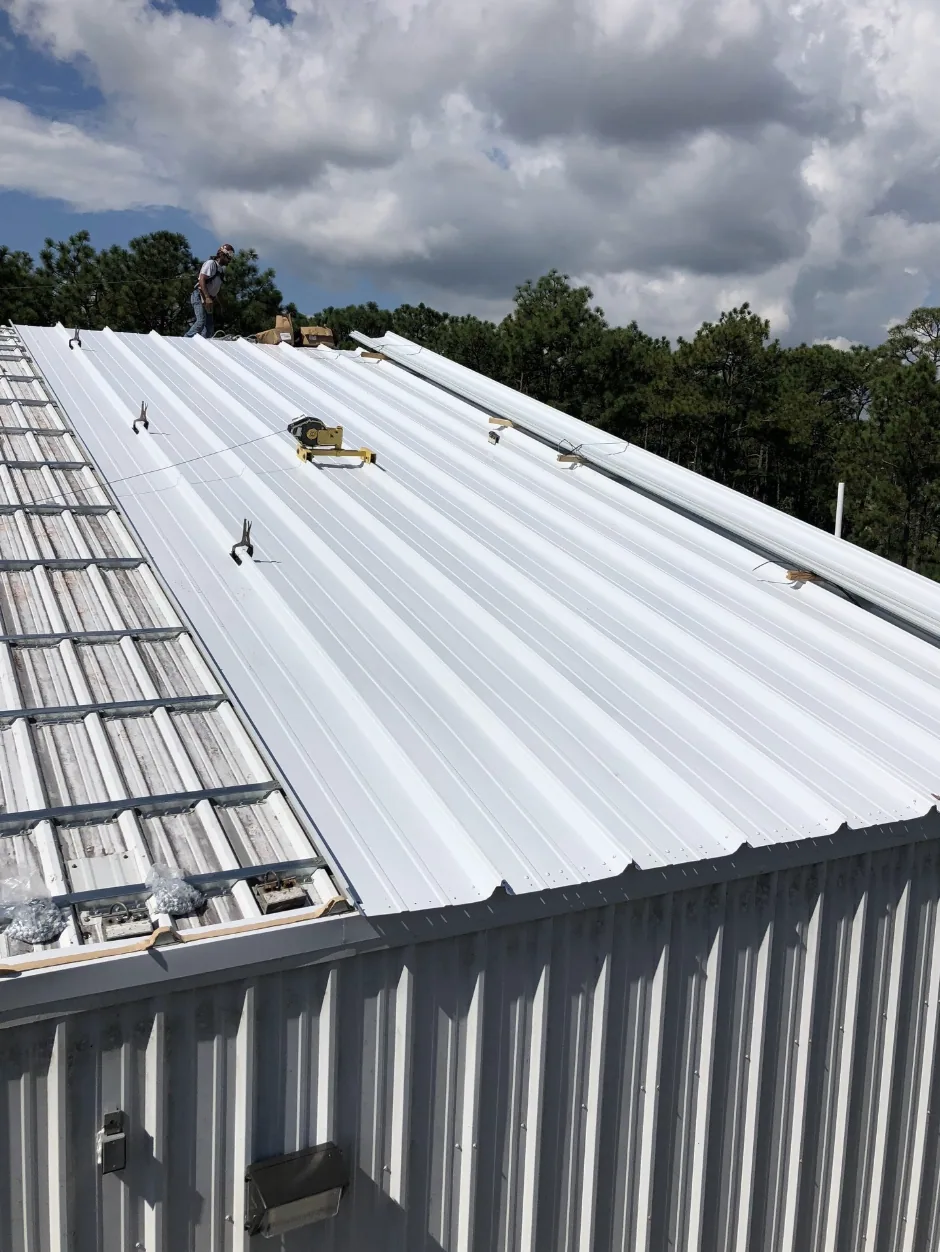
A retrofit may add a new roof assembly above the existing panels, using subframing or another attachment design. The existing roof must be evaluated for structural capacity, attachment, condition, and moisture before the new system is selected. We inspect the deck or framing, panel profile, fastener pattern, insulation, and interior conditions. Engineering review may be needed where loads or framing capacity require confirmation.
A new standing-seam system can use concealed clips that accommodate panel movement, but the retrofit design must connect those clips to the supporting structure. The space between old and new roofs can affect insulation, ventilation, condensation control, and access to drains. We document transitions at eaves, ridges, parapets, walls, and equipment curbs so water cannot enter the concealed cavity.
In the International Airport Road Corridor, airport-related activity connects with commercial and industrial areas. That context can influence staging and delivery windows; the building’s actual structural and operating limits determine the retrofit plan. We coordinate panel lengths, lifts, and access before material arrives. A standing-seam roof is one possible system, not a substitute for project-specific design.
When should the old metal be removed?
Removal may be necessary when panels are extensively corroded, framing is damaged, repeated repairs have failed, or moisture has affected insulation and deck. We identify which conditions are visible and which require opening the assembly. The scope should show how concealed findings will be recorded and approved, since removing metal can expose damage not visible from the roof surface.
For a smaller opening, commercial roof repair may replace panels or restore a failed lap. If a leak is active, an emergency roof repair can stabilize the area while a permanent detail is planned. A roof condition report can map fastener patterns, corrosion, water paths, and work priorities for later budgeting.
Keep panel specifications, coating records, fastener replacements, snow-removal notes, and photos together. A seasonal check should look for backed-out screws, split washers, rust at cut edges, and displaced trim. That record helps distinguish new movement from an older repair and gives the next inspection a clear starting point.
Commercial Roofing Questions
Can you stop a leak by tightening the roof screws?
Sometimes, but only if the screw, washer, panel, and supporting structure remain sound. A spinning fastener or enlarged hole needs a different repair. We inspect the connection and nearby metal before deciding whether to replace hardware, patch the panel, or remove a damaged section.
Does a coating fix rusted fasteners?
A coating can protect a prepared surface, but it does not restore a stripped connection or thin metal. We replace or repair failed fasteners, treat corrosion, and check the panel before coating. The substrate needs to be sound and compatible with the selected system.
Would the existing exposed-fastener roof support a second assembly?
A retrofit may work if framing, panel attachment, moisture, and load conditions support the design. We inspect the existing roof and document where the new system will connect. Structural review and drainage details shape whether an overlay is suitable.
Why do exposed-fastener roofs need regular checks?
Washers and fasteners are visible and can change as panels move and weather cycles. A check can catch a backed-out screw, split washer, loose trim, or corrosion before the opening grows. Record the location so the next visit can compare the same fastener line.
What should we provide before a metal roof assessment?
Share the roof plan, panel profile, leak dates, past repairs, coating information, snow-removal practices, and equipment changes. Those records help us inspect likely failure points and identify whether the roof needs a fastener repair, restoration, or a broader retrofit review.
Check the fastener line and panel support
Send the roof plan, panel profile, repair history, leak locations, and any coating records. We will inspect attachment, seams, corrosion, and drainage, then show which repairs or retrofit options fit the existing metal roof.
Request a roof assessment or call 555-555-5555.