SOPREMA Commercial Roofing in Anchorage, AK
Overview
SOPREMA’s commercial roofing range includes SBS and APP modified bitumen, PVC single-ply membranes, and PMMA or PMA liquid-applied systems. Those are different assemblies, not interchangeable names for a coating. In Anchorage, AK, the owner’s choice has to account for what is already on the deck, where snowmelt travels, and whether winter access limits the inspection. We identify the roof’s layers and details before comparing a repair, restoration, or replacement scope.
Downtown Anchorage and the Ship Creek industrial district are broad local references, while each building has its own loading, access, and drainage requirements. Alaska’s Port freight operation links shipborne cargo with air, rail, pipeline, and road transportation, a regional role that does not determine the roof assembly at a nearby property. That context may matter to property operations, but it does not establish a roof’s condition. We check the property record and discuss the work window with its facility contact. A commercial roof inspection can record the assembly before a system decision is made.
Related Pages
Which SOPREMA roof family fits the existing layers?
SOPREMA’s commercial portfolio spans multi-ply asphaltic sheets, PVC membranes, and liquid resins such as PMMA or PMA. Those materials form different roof assemblies. We first identify what is installed, including any later coating or repair, before comparing a patch with restoration or replacement. A product name in an old submittal is one clue, not proof that the current surface is unchanged.
For modified bitumen, we examine lap edges, granule wear, splits, blisters, and the turns at curbs and walls. A modified-bitumen assembly review can clarify the layered construction. For PVC, the field review follows welded seams, repairs, edge restraint, and penetrations; a PVC system inspection addresses those details. A resin repair depends on a compatible, clean base and the required reinforcement at a change in plane. We compare the visible roof with current product guidance instead of assuming a coating suits every surface. Moisture below the exposed layer may still require sampling or selective removal. The scope should identify what is confirmed, where further testing may be useful, the expected tear-off limits, and which decisions remain with the owner. This lets a property team compare system options against the actual roof rather than the label alone.
What does a liquid-applied repair require?
A liquid membrane needs a stable, prepared substrate and a detail that can hold its shape through the transition. We inspect the existing surface for loose material, moisture, contamination, movement, and incompatible coatings. At a drain or curb, the repair must turn up the detail and tie into sound material. If the substrate is wet or separating, a liquid layer may hide the symptom without correcting the assembly beneath.
Before work begins, the crew identifies the approved primer, reinforcement, and application sequence from the current product documents. A test area can confirm preparation where adhesion is uncertain. We also document weather and surface conditions at the time of installation because they affect how the material is applied. For a roof with several recurring details, a restoration assessment should show which areas are eligible and which need replacement instead.
How do plies and flashings manage water?
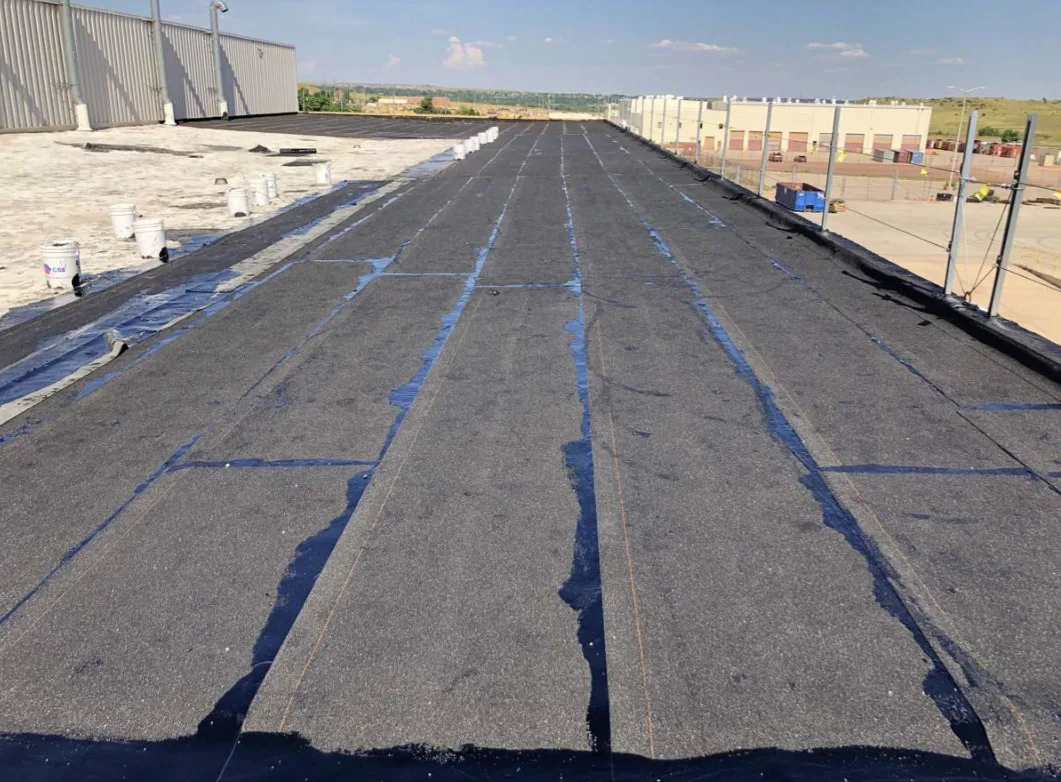
On a multi-ply roof, each layer and lap should shed water toward the drain rather than create a pocket at a curb or parapet. We follow the lap direction, inspect the cap sheet, and check whether flashing remains attached at the wall. A blister may be isolated, but a split with wet insulation underneath changes the repair boundary. We open only an owner-approved area and record what is found beneath the surface.
The Anchorage 2040 plan preserves industrial land for production, distribution, and repair uses. That citywide land-use fact does not tell us what sits under a particular roof. Around the Port and Ship Creek, a facility’s access and loading rules can affect how tear-off materials are staged. We confirm those logistics with the owner before building the sequence. If the roof needs a broader scope, a replacement plan should spell out ply removal, deck inspection, insulation, and the new flashing details.
How should snow and thaw enter the decision?
The 1991 to 2020 Anchorage climate normals include separate data for snowfall and snow depth. Identify any drift that blocks roof access so a later visit can inspect the covered area. A covered drain or lap is not available for a close inspection, so we record the limit and return when the area can be reached safely. The facility’s snow-removal procedure governs access and clearing. We do not assume that a roof needs a new system merely because snow was present during a leak report.
When water appears after thaw, compare the interior mark with drain locations, seams, and the roof’s low points. Document whether the surface is wet, whether the drain is blocked, and whether moisture is confirmed in the insulation. A repair can protect a defined area while testing continues elsewhere. For frozen or winter-related damage, a snow and ice roof assessment can make the visible evidence and inaccessible zones clear to the property team.
What should a fair product comparison include?
Keep the assembly, attachment, insulation, tear-off, flashing, and access assumptions on the same page of the bid comparison. If one proposal describes an SBS multi-ply roof and another prices a PVC recover, the owner is comparing different work. Each option should show how drains, curbs, edges, and existing wet areas will be handled. We identify exclusions and the approval required if concealed deck or insulation damage appears after opening. If the bidder proposes a GAF commercial system or Carlisle SynTec assembly, compare its layers and attachment with the SOPREMA option before reviewing price or schedule.
Anchorage 2040 places Downtown as the municipality’s City Center, while its industrial land-use framework preserves production and freight areas. Those settings can mean different staging and occupant coordination, but the building-specific roof plan sets the route. Ship Creek service-area coverage refers to a broad district. We can place current findings in a documented report before the facility director selects a system and authorizes the work.
Commercial Roofing Questions
Is SOPREMA liquid-applied roofing the same as a roof coating?
A liquid-applied membrane is specified as a complete system with substrate preparation, primer where required, reinforcement, and defined thickness or coverage. A coating may serve a different protective or restoration purpose. We review the product documents and existing roof before describing which option applies.
Can SBS or APP modified bitumen be installed over an old roof?
A recover depends on the old assembly, moisture, deck, attachment, and approved compatibility. We inspect or test those layers and check how added material would affect drainage and edges. The estimate should identify what remains and how concealed damage would be handled.
How is a PVC seam repaired compared with a multi-ply lap?
A PVC membrane uses heat-welded thermoplastic seams. Modified bitumen uses ply laps and an application method suited to its membrane. We identify the actual roof before setting preparation, patch size, and flashing detail so the repair is compatible.
What if snow covers the area we need to inspect?
We document what is blocked, follow the owner’s access and snow-clearing rules, and avoid treating a concealed detail as confirmed. Once access is safe and the seam or drain is visible, we can finish the inspection and revise the scope if needed.
What information helps compare SOPREMA roofing bids?
Ask for the proposed system family, substrate assumptions, attachment, drainage details, flashing limits, tear-off, and concealed-condition process. We can inspect the roof and produce a separate, documented scope so the owner can compare like with like.
Compare the system with the roof in place
Share the current roof plan, product and repair records, leak dates, and access rules. We will inspect the layers and details, then prepare a SOPREMA scope with clear assumptions and repair boundaries.
Request a roof assessment or call 555-555-5555.